





Dhurandhar The Revenge review: Power, politics and Ranveer Singh who swallows it all
Dhurandhar: The Revenge is fierce, political and deeply character-driven, refusing to play safe at any point. Ranveer Singh leads a film that knows exactly what impact it wants to leave behind.



cast Crew


Ranveer Singh

Arjun Rampal

R Madhavan
Dhurandhar: Revenge Expands, sharpens, and builds on its predecessor. What the first film hinted at has been executed as intended: more violence, greater scale, more emotional breakdown, and a far darker obsession with revenge.
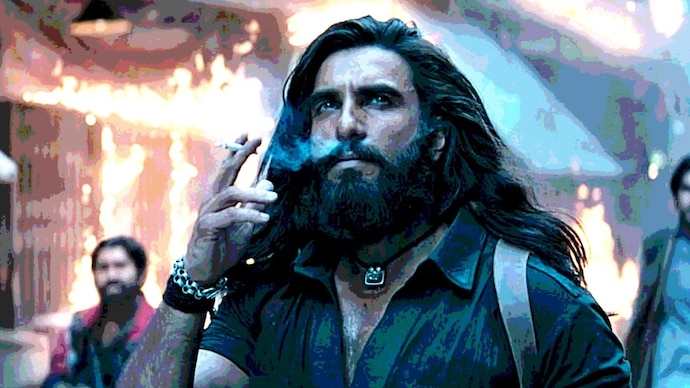
Aditya Dhar hands the film over almost entirely to Ranveer Singh’s Hamza Ali Mazari, and makes a clearly decisive choice. This is no longer just a story about geopolitics or espionage; It turns out to be a character study disguised as a war film. Hamza’s journey from Jaskirat Singh Rangi, an idealistic young soldier of Punjab, to the dreaded king of Lyari and back to becoming the Jassi of India, forms the emotional strength of the film. It’s this oscillation between identities that gives the film a rare, disturbing depth.
❮❯
edge Pursues his own cinematic vocabulary Further here. If the first film was about infiltration, this one is about destruction – systematic, relentless, almost clinical. Scene by scene, the film dissects the machinery of terror, with Hamza at the center, which pierces every nerve connecting Pakistan’s terror network to India. It’s an aggressive story, but it never loses control.
The narrative begins smoothly from where the first part ends and spreads across six chapters. Each chapter deepens Hamza. None of this makes him soft, but instead turns his weaknesses into weapons. As he grows up, his craze for films increases. There is a persistent, simmering claim: that the idea of India being weak has not only been challenged, but erased.
Ranveer Singh is extraordinary. If the robber (2013) revealed his restraint, Dhurandhar: Revenge Exposes his excesses, and he implements it. His display is not only of craft but also of strength. His calmness as Jaskirat seems terrifying, while his explosiveness as Hamza is almost mythical in its scale. There’s a certain abandon here – reckless, consummate – that elevates the film. Singh takes ownership of the film and gives his most emotional, most accomplished, most powerful performance yet.
The supporting cast finally got the space they deserve. Sanjay Dutt, Arjun Rampal and Rakesh Bedi have been given arches which do not appear decorative. Even Gaurav Gera and Danish Pandor justify their presence. Each of them brings a different texture: Dutt’s seriousness, Rampal’s controlled menace and Bedi’s amazing depth. There’s a satisfaction in seeing him play these roles to perfection that makes you wonder why his abilities were unused for so long. This is no ordinary casting coup, but Dhar’s confidence in him is visible in his every scene.
The film constantly travels between borders, geographically and politically. It names names, takes inspiration from real events and keeps its fiction dangerously close to reality. From gang wars in Pakistan to India’s internal changes, from the context of demonetisation to the Babri Masjid verdict, Dhar pieces together a world that is informed, even if it borders on speculative. There are moments when you wonder if he really knows more than he lets on. As if he knows more about the seriousness of the country, its functioning and politics than other filmmakers of this era. And that tension works in the film’s favor.
What stands out is how the film presents its politics. It doesn’t hide, dilute or soften your gaze. There are clear ideological markers, unmistakable references like Invincible”tea seller“And a certain one”honest“The Ruler of Uttar Pradesh, even has moments of overt admiration for the power structures, but he doesn’t let the narrative collapse under that weight. It remains engaging because Dhar never lets the message overpower the storytelling.


Technically, the film is remarkably assured. The edge moves between extreme close-ups and sweeping top-angle shots in the same sequence with such ease that it seems almost invisible. What could have been a stylistic excess here becomes grammatical. The editing is tight despite the film’s length, and the sound design, especially the background score, maintains the film’s momentum.
Music plays an important role. track like Tamma Tamma people (police officer1990) and hey hey (bombay rockers2003) Act like a nostalgic insert, add more depth, make the narrative older, more fun. Without them, the film would risk becoming too heavy, too consuming. With them, it is effective.
And then comes the final task.
Dhar saves his most daring move till the end. The wonder that you feel the film is hinting at is something else entirely. It pulls the ground out from under you. This is where Dhar reveals his sharpest tendencies: he knows when to hold back, when to provoke and when to ask for applause. He understands his audience, but more importantly, he also understands the current situation of the country.

Dhurandhar: Revenge Not micro cinema. It’s loud, unapologetic, and absolutely sure of itself. But within that emphasis lies design, control, and a clear cinematic voice. It talks about a “new India”, but more importantly, it attempts to shape what a “new Hindi cinema” might look like: bold, extreme, and unwilling to explain itself.
This is a film that doesn’t ask for your consent. It demands your attention. And just when you think you’ve got it figured out, it leaves you with a warning, almost a dare: And trust us, you’re still not ready for it.