





Can drones deliver blood in emergency? India test gives hope, flag hurdles
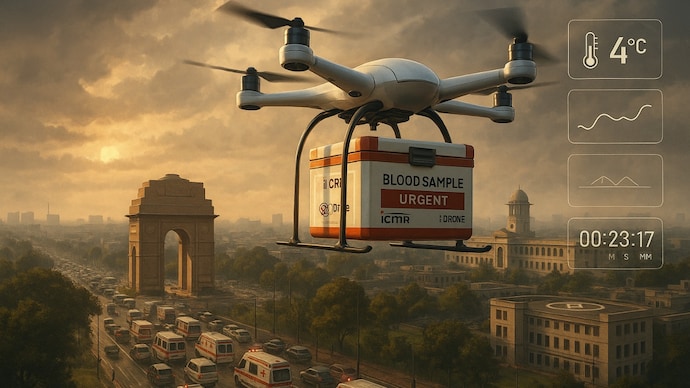
A blood bag, defeating the chaotic traffic of Delhi, covered a distance of 35 km in 15 minutes. The June 1 ICMR report on the basis of trial shows that drones can revolutionize emergency medical distribution. Now the actual test is whether science, regulation and infrastructure may unite to make the promise come true.



In short
- The drone defeated the ambulance; Gave blood 35 km away in 15 minutes
- Cornia, vaccines, even hard blood, drone boon for emergency
- Big promise, some challenges; Cost, weather, rules drone back hold back
In a race against time, the drone defeated the ambulance.
A drone successfully transported blood bags from GIMS Hospital in Greater Noida to Lady Harding Medical College at the center of Connaught Place, Delhi. Although this experiment was done in 2023, the ICMR team of scientists – who monitored the drone because it was covered 35 km distance in just 15 minutesOne hour faster than a traditional ambulance – recently published a detailed report.
The ICMR study published in June, titled ‘Edging Drone Technology for Blood delivery: A Faizibility Study to It’s to evaluate efficiency and stability’, said that drones are a promising option to transport life -saving blood and its components. The study concluded that drones could safely and efficiently to serve as vehicles with the first reaction in medical emergency conditions.
This study comes from about 70%of months after drones at the time of delivery of eye tissue. A drone covered a distance of 38 km from Sonepat to Jhanjar In just 40 minutesA road trip takes two hours.
In Delhi, The drones have also taken to fight mosquito -borne diseases.
However, ICMR scientists warned that more scientific evidence was required to assess the challenges, and the blood quality transported using drones was assessed.
And, there are such challenges, some natural, others who need to iron, such as regulatory barriers, weather conditions, battery life, maintenance, maintenance, security concerns, costs and better integration with existing healthcare systems.
Why the use of drones for blood transport is complex
Drone is bringing revolution in healthcare by providing cost effective, rapid distribution of medical supply in remote and underscourse regions. In India, the Ministry of Health and Family Welfare aims to make Health Services “ready for future through I-Drone initiative”.
But transporting blood through drones is more challenging than transporting organs because blood requires strict temperature control and careful handling to maintain its quality and safety, while organs require separate protection and sometimes are triggered by demands.
According to the ICMR study, the drone test for blood transport was largely successful. This indicates that blood and its components can be transported safely by following the guidelines installed.

What does ICMR study say on drone blood delivery?
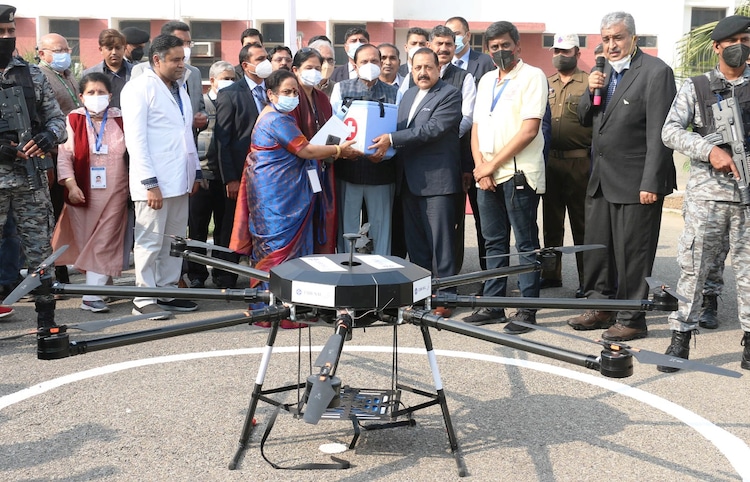
In the study, four types of blood components (such as whole blood, packed red blood cells, fresh frozen plasma, or platelets) were safely moved using drones with special temperature-controlled boxes. Drone delivery was very faster than using a van. Drone delivery took just 15 minutes, while a van took more than an hour for the same distance.
A special drone that can take like a helicopter and take the ground and fly up to 40 km, was used to carry 4 to 6 blood bags with cool gel packs, weighing about 4 kg, and all flights followed India’s drone safety rules.
There was no damage to blood during transport (called hemolysis). The temperature remained within a safe range during the flight and later. ICMR studies stated that some small changes were seen in some blood components, these changes occurred with both drones and vans transport, and overall, blood quality was safe.


“Therefore, the drone is a possible option to detect in tropical countries as the first response vehicle in emergency,” it said.
The study states, “But more scientific evidence is required about practicality, operational challenges and effects on blood quality after transport through drones.”

Challenges using drones for blood distribution?
ICMR confirmed that if strict guidelines are followed, blood and its components can be transported safely through drones. It recommended to maintain blood component-specific temperature to prevent hemolysis or bacterial contamination using special cooling systems and real-time monitoring to ensure blood integrity.
The study recommended rigorous verification of drone vibrations to avoid damage to red blood cells, plasma, or platelets, and emphasized that pre-oblique investigation is important. Compliance with aviation rules and coordination with air traffic control was also said to be important for safe beyond the visual line of visual operations in rural areas.
A PAN-India also requires strong regulatory framework.
India’s diverse topography of high mountains and humid plains can affect drone performance.
Current high costs of drone technology, urban crowd and obstruction of limited rural blood bank infrastructure studied 2025 at the Journal of Transport and Public Health.
He said, drones will never replace ambulances soon, but they can carry them forward when they matter most. There will be all the differences in crunch conditions like Fogi Parvat, traffic jams, drones that deliver blood to the needy. However, challenges can clip the wings of medical drone delivery in India. The study shows that it is Drone is not just monitoring or strike equipment Or wedding photography. They are now ally in saving life. To fly that promise, gamechanger must get a real chance.