



After Madras High Court ban on Jan Nayakan, RGV calls Censor Board outdated
Filmmaker Ram Gopal Varma has called the Censor Board outdated amid the Jan Nayakan certification controversy. His comments come as the Madras High Court has temporarily stayed the U/A certificate of the film.
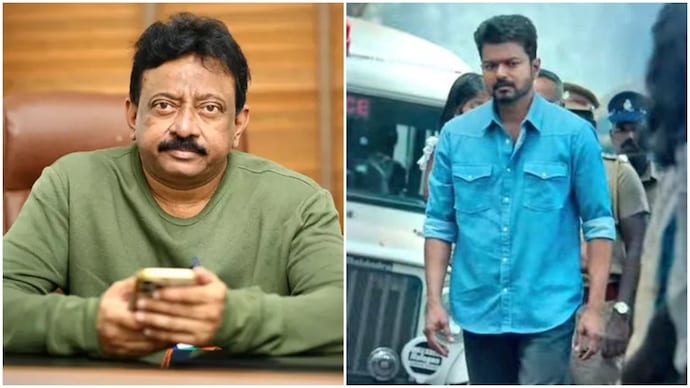

Filmmaker Ram Gopal Varma has taken a dig at the ongoing feud between Vijay Jan Naygan And the Central Board of Film Certification (CBFC) has described the censorship system as “outdated” and “irrelevant” in the current media landscape. His comments came hours after the Madras High Court issued a temporary stay directing the CBFC to issue a U/A certificate to the film, effectively stalling its release.
In a long post shared on Friday, Verma wrote, “The censor board is outdated,” adding that it applies not only Jan NayganBut for India’s censorship model at large. “It is really foolish to think that the Censor Board is even relevant today,” he said, arguing that the institution “has served its purpose” and survives only because “it is too lazy to debate its relevance now.”
Verma questioned the logic of police surveillance of cinema at a time when online access to unfiltered and harmful content is widespread. He wrote, “We live in a time where a 12-year-old can watch a terrorist being hanged with a phone and a 9-year-old can watch hardcore porn.” He said social media platforms host “political poison, communal poison (and) character assassination” without filters, while cinema is scrutinized for “one word, one shot, or one cigarette”.
Calling the board’s interventions “theatrics,” he wrote, “It is a ritual of authority where scissors take the place of thinking, and moral posturing masquerades as responsibility.” Verma argued that censorship does not stop performances, “it only insults the audience,” and said that authorities should trust citizens to decide what they want to see. He said, “Age classification makes sense. Warnings make sense. Censorship doesn’t make sense.”
His comments reflect a long-running industry debate that has now reignited Jan Naygan Controversy. The film was scheduled to release on January 9, but the High Court temporarily stayed the issuance of its U/A certificate after the CBFC appealed against the single-judge order. During the hearing, the bench questioned the makers for announcing the release date without obtaining certification and said they “cannot fix the date and put pressure on the system.” The court also said that the CBFC should have been given a fair opportunity to oppose the release of the film.
Varma’s post expands that flashpoint into a larger critique of how cinema is treated compared to the internet. “Censor boards were born in an era of scarcity when images were scarce, access was limited and the state controlled the media,” he wrote, adding that such control is impossible today. “Defending the relevance of the Censor Board today is like insisting on a watchman for a building whose walls are already broken.”
The filmmaker urged the industry to collectively question the system and not just raise concerns when individual films are affected. He wrote, “The painful question is whether executives have the courage to admit that they are obsolete, and whether we as a film industry collectively have the willingness to question them.”
Read his full post here:
“The sensor board is out of date
not just in terms of
Censor issues of @Actor_Vijay’s #JanaNayagan But overall, it’s really silly to think that the censor board is still relevant today
It has long served its purpose, but is now being kept alive by the laziness of debating its relevance, and it is the film industry as a whole that is primarily responsible for this.
We live in a time where a 12-year-old can watch the execution of a terrorist filmed on a GoPro with a phone, a 9-year-old can stumble upon hardcore porn, and a bored retiree can read extremist propaganda, indulge in conspiracy theories, from anywhere in the world, uncut, uncensored, pushed by algorithms. All of this is available instantly, anonymously, and without any gatekeepers.
Also, from new channels to YouTubers and other apps, everyone in every sector of society talks about hate speech..If you quote that age-old notion that cinema is a powerful medium, don’t ignore the fact that the reach of social media is much more than cinema.And it is full of political venom, communal venom, character assassination, live, uncensored shouting matches in the name of debate.
And in this reality, the belief of the Honorable Censor Board that cutting a word, cutting a shot or blurring a cigarette in a film will “protect the society” is a joke.
Censor boards were born in an era of scarcity when images were scarce, access was limited and the state controlled the media. Cinema halls were the center of crowd. There were editors in newspapers. There was a television schedule. Then control made sense.
But today, any kind of control is impossible because no one can decide anymore what people should or should not see.
In times like now, censorship does not stop performances, it only insults the audience.
We are expected to have the smarts to decide who will rule over us, but not what we want to see or hear???
What the Censor Board actually does now is not security, but mere theatrics. It’s a ritual of authority in Oscar-worthy performances where scissors take the place of thinking, and moral pretense goes around in the guise of responsibility.
The same society that freely scrolls through graphic violence on social media suddenly becomes “concerned” when a filmmaker shows something in a theater.

This hypocrisy is dangerous.
Censorship assumes that people are children forever, as if they have no idea what things children have access to?
Cinema is not meant to be a classroom where lessons are taught. They are mirrors, viewpoints, expressions and opinions for entertainment
The job of the authorities is not to edit or curtail them, but to trust citizens enough to make decisions for themselves, which is the core point of freedom of speech and expression guaranteed under the Constitution.
If the argument is “think of the children or adults who are like children” then it requires very little intelligence to understand that they cannot be protected from blunt scissors wielded by committees whose own personal tastes masquerade as public morality, not to forget their own biases and agendas.
The age classification makes sense. The content warnings make sense. There is no censorship.
Continuing to defend the relevance of the Censor Board today is like insisting on a watchman for a building whose walls have already been breached and everyone can see what is inside.
The world has already moved on to so many platforms that are unfiltered and unsupervised, and so the painful question is whether the authorities have the courage to admit that they are obsolete, and even more so, whether we as a film industry collectively have the willingness to question them about this.
So instead of raising this issue from time to time over a particular film, the fight should be against the particular thinking system that created the Censor Board.
The debate over censorship, certification and artistic freedom has arisen repeatedly over the past decade, but Verma’s intervention comes at a time when one of the country’s biggest stars is fighting the board in court – ensuring that the conversation will continue beyond the outcome. Jan NayganCertification of.
The case has now been posted for January 21, with the Pongal release window no longer possible.