





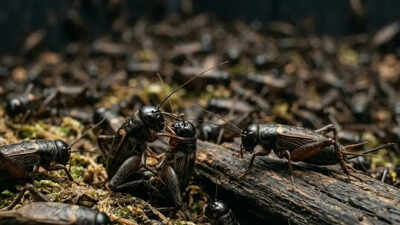
Research shows that 370 billion are cultivated acheta domesticus may feel pain
Researchers found that house crickets (Acheta domesticus) don’t just respond immediately to heat or injury; They display ‘flexible self-protection’. After an injury, crickets were observed repeatedly grooming and protecting a specific site of injury, a study reported in the journal Proceedings of the Royal Society B. This behavior indicates that the insect’s nervous system is processing the injury as a permanent, negative state rather than a transient response. This difference is important in animal sensation research, as it suggests the presence of a felt experience of pain.
Why does cricket behavior suggest true emotion?
Nociception simply involves the detection of noxious stimuli. Pain, on the other hand, is how we emotionally experience that loss. Research shows that crickets do more than sense danger; Their protective actions vary depending on the situation. When scientists applied varying degrees of heat or mechanical stress, the crickets showed a preference for protecting injured organs. This behavior indicates a brain response similar to that of vertebrates. It seems that crickets can process sensory details into a complex internal state similar to pain, a study reported in the journal Proceedings of the Royal Society B.


370 billion reasons to rethink animal welfare
Every year, 370 billion crickets are raised in farms, potentially causing enormous amounts of suffering, according to the Journal of Insects as Food and Feed. Currently many farmers kill these insects by cutting them into pieces, boiling them or freezing them slowly because they believe that crickets do not feel pain. Should crickets have the ability to experience pain, these methods could represent a significant animal welfare issue. Therefore, the research points to the urgent need for the industry to create humane ways to kill crickets and provide better living conditions. This approach should mirror the standards applied to farm animals such as cows and pigs to reduce the crisis on a larger scale.
Why were invertebrates left behind?
The discovery of insect pain creates a significant regulatory void. Most animal welfare laws around the world explicitly exclude invertebrates, leaving billions of sentient creatures without legal protection. Ethicists are now calling for a precautionary principle approach: if there is a reasonable possibility that an animal may suffer, we should act as if it does. This could lead to new international standards for the housing, transportation and killing of insects, which would fundamentally change the economics and operations of the global alternative protein market.