



Indian scientist identifies key gene that may help in early detection of pancreatic cancer
An Indian scientist has discovered a gene which, if detected, could help in early diagnosis of pancreatic cancer.
A Lucknow scientist has identified a special gene that may help in early detection of pancreatic cancer, especially pancreatic ductal adenocarcinoma (PDAC), one of the most aggressive pancreatic cancers.
Because of the high mortality rate, especially for pancreatic ductal adenocarcinoma (PDAC), early detection remains a significant challenge.
Dr Anupam Dhasmana, working at the University of Texas at Rio Grande Valley, US, has identified a new protein, called carcinoembryonic antigen-associated cell adhesion molecule 7 (CEACAM7), which may offer hope for early diagnosis.
Dr. Dhasmana recently published his findings in the peer-reviewed Journal of Advanced Research, and explained that this biomarker is normally present only during the fetal stage (early stages of life) and disappears in later stages of life, and reappears only in the early stages of pancreatic cancer.
Dr. Dhasmana’s research demonstrates the importance of CEACAM7, a potential early diagnostic marker for PDAC. Pancreatic cancer, particularly PDAC, is often diagnosed at an advanced stage, making effective treatment difficult.
CEACAM7: A game-changer in pancreatic cancer detection?
The study suggests that early detection of CEACAM7 may help identify high-risk patients, especially those with a family history of the disease.
Early detection will help doctors initiate timely treatment, thereby increasing the chances of survival.
When asked how CEACAM7 compares to other known cancer markers such as S100A4, Dr. Dhasmana explained that while S100A4 is a proliferative marker (helps cells grow rapidly) that is frequently seen in a variety of cancers, CEACAM7 stands out due to its presence particularly in the early stages of pancreatic cancer.
This makes it an invaluable tool for early detection.
“Our main focus was to align CEACAM7 with established biomarkers such as S100A4,” says Dr. Dhasmana. “By doing so, we aim to add CEACAM7 to the list of important markers for detecting early-stage pancreatic cancer.”
The study findings are promising, but they still require further investigation.
Dr. Dhasmana said larger-scale studies are needed to validate the role of CEACAM7 in different ethnic groups and its clinical significance in pancreatic cancer.
They also aim to explore its molecular links with pancreatic cancer.

“Our next step is to confirm the presence of CEACAM7 in a larger population and investigate more closely its role in early-stage pancreatic cancer. We have already shown that it can increase the sensitivity of existing biomarker panels,” says Dr. Dhasmana.
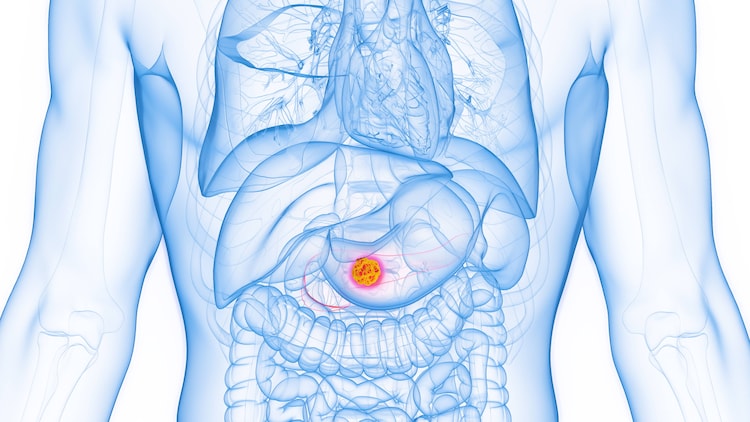
He said that identifying pancreatic cancer in its early stages is a difficult task, because pancreas is an internal organ located behind the stomach, hence its direct inspection is difficult.
Pancreatic Cancer in India
Diagnosing pancreatic cancer in India presents unique challenges. Being the world capital of diabetes, the Indian population has a higher risk of developing pancreatic cancer, especially in individuals with type 2 diabetes.
Dr. Dhasmana said that the new diabetes test combined with CEACAM7 and other clinical markers can serve as an effective screening tool.
“There is a two-way relationship between diabetes and pancreatic cancer,” he said. “There is a need for greater awareness among physicians about how diabetes affects cancer outcomes. CEACAM7 may be particularly useful in identifying at-risk populations, including people with a family history of diabetes or pancreatic cancer.”
Dr. Dhasmana’s work is an important step in the fight against pancreatic cancer.
Their research provides a precise timeframe to identify people at risk for pancreatic cancer and begin management protocols.