



That one ghost scene in Satluj proves why Diljit Dosanjh is at his best
In Sutlej, the sight of a silent ghost says more about fear, justice and prudence than the pages of dialogue. It’s a haunting masterclass of restraint from Diljit Dosanjh that stays with you long after the movie is over.

SatlujStarring Diljit Dosanjh, is no longer available to stream in India. But the film leaves a lasting impression. In particular, one scene from the film has stayed with everyone who has seen it. It’s tucked away at the end of Honey Trehan’s Jaswant Singh Khalra story, at a point where the film takes risks that few Hindi dramas would attempt. A police procedural about a missing human rights activist suddenly turns supernatural, and somehow never loses its emotional edge.
❮❯
Spoiler alert: If you haven’t seen the movie yet, despite all the buzz, it may reveal more than you expect. If you have, you already know where this is headed.
The scene follows Kuljeet, a police witness played by Jagjit Sandhu, who had earlier agreed to testify against the associates who kidnapped and murdered Khalra, but backed out at the last moment. He told investigators that he had lied, that the police were never involved in Khalra’s kidnapping. It’s a betrayal, not dramatic but deeply troubling. And soon, late one night, Kuljeet woke up and saw Jaswant Singh Khalra standing in his room.
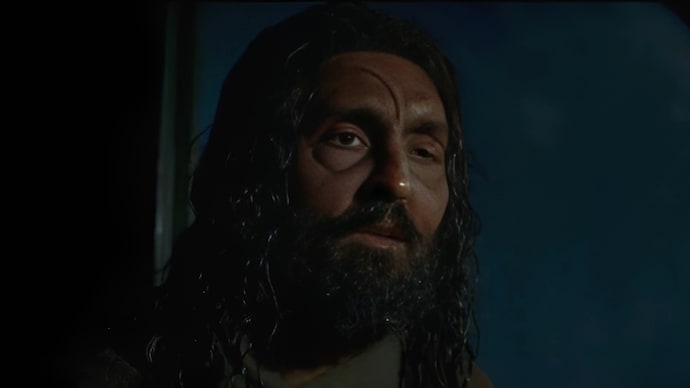
Diljit Dosanjh, playing the character of Khalra, does not raise his voice even once. His swollen face bears the scars and bruises of a man who has clearly undergone unspeakable violence, and his words, when they come, are almost conversational in their terror.
“I have come straight from the river,” he says, telling Kuljeet that he has come straight from the river. He is not alone there, he says; there are countless others like him, children, women, the elderly, and one by one more will keep coming.
He tells Kuljeet that in winter, when the river freezes, the cold begins to seep in from both outside and inside, seeping through his open wounds until it is completely filled with water. “see this,” he says showing the wound to Kuljeet. “it’s completely filled with water, friend (These wounds get filled with water).” Kuljeet cannot bear to watch. He closes his eyes and turns away, and when he opens them again, Khalra has disappeared.
There are no screams, no swelling background score, no manufactured scares. Just one man directly addressing another man’s crime, in such simple language that it doesn’t seem like a scary scene at all, and yet it comes across as one of the most disturbing passages in recent Indian films.
The scene works because of both Dosanjh’s restraint and Trehan’s careful construction. until this moment, Satluj Follows the structure of a police procedural centered on Khalra’s disappearance. The sudden shift towards surreality could have felt forced, but it doesn’t.

The scene doesn’t feel artificial as both Diljit and Sandhu play the scene with complete sincerity based on guilt, grief and fear rather than treating it as a moment of shock or spectacle.
Confrontation does its job. Panicked, Kuljeet returns to the CBI the next day and asks to give his testimony again, this time truthfully. Investigator Samudra Singh, played by Arjun Rampal, is skeptical and bluntly asks him why he should be trusted now. Kuljeet’s reply is the scene’s quietest line, and perhaps the film’s clearest thesis. He says that earlier he was afraid of the police. When asked what had changed, he simply replied that he now feared God.
Dosanjh presents the entire scene without raising his voice. There is no anger in his Jaswant Singh Khalra, no vengeful energy of the kind that usually happens in Hindi cinema when a wronged man returns to face the guilty. Instead, he plays it almost softly, describing the coldness of the river and the wound that never heals as if he were making small talk, and that frankness is what makes it devastating. It’s a subtle performance that lets silence talk. It’s terrifying and stays with you long after the credits roll.
The horror of this scene is as much on the surface as it is within it. This is the horror of the situation, the guilt and self-conscience. Khalra appears as a ghost, not to scare Kuljeet from her, but to scare him about what he has done by hiding the truth and participating in the murders of innocents. This scene has been shot almost completely in darkness. As the camera pans from Dosanjh’s expressions to Kuljeet’s expressions, the lighting highlights only the faces.
It is a scene constructed almost entirely with restraint, a ghost story told without any special effects or background music, instead featuring two performances that rely as much on silence as dialogue. For a film that has otherwise been dogged by censorship controversies and its sudden removal from OTT, it is this visual, more than any statement or press note, that makes the strongest case as to why. Satluj Worth seeing. A scene worth remembering in a film worth a comeback.