



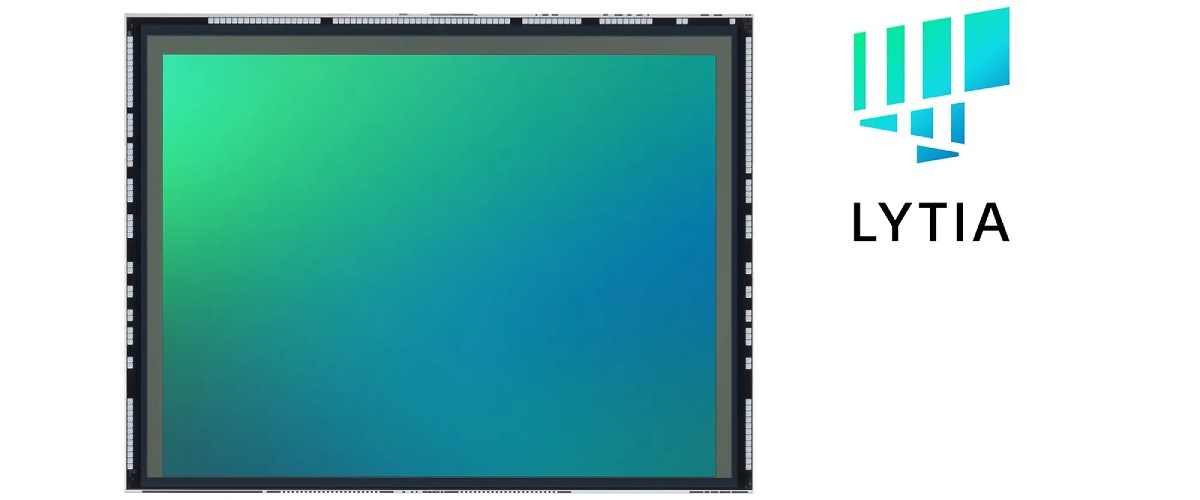
Sony recently announced its first LOFIC image sensor, the Lytia 910. “LOFIC” stands for “Lateral Overflow Integration Capacitor”. In other words, it solves the problem of photodiodes being saturated with too much light by placing a capacitor next to each diode – this significantly increases the absolute efficiency of each pixel.
According to Sony, the Lixia 910 will have a dynamic range of 100dB – with a single exposure! For comparison, a sensor like the Litia 901 requires multi-frame exposures to reach 100dB.
The Sony Lytia 910 supports Triple Conversion Gain (TCG) HDR. This means that each pixel is read three times – with low, mid and high conversion gains. The three readouts are then combined into a single HDR image.
This sensor thus avoids the common problems with the multi-frame approach to HDR, things like motion artifacts. It takes only one exposure but gives three readouts. It’s also great for HDR video – the new sensor will be capable of capturing 4K 60fps HDR video. LOFIC sensors are also less sensitive to flickering light sources (which is why they are used in automotive cameras).
Additionally, there are ultra high conversion gain circuits on the sensor, which kick in when there is not enough light – Sony says these help reduce random noise by about 30% compared to its previous sensors.
The Sony Lytia 910 is a 1/1.28″ sensor with 50MP resolution. It has a Quad Bayer filter and 1.22μm x 1.22μm pixels.

Mass production of the 910 will begin this summer, so we expect to see the new sensor used in the smartphone launching in Q4.
By the way, this is not the first LOFIC sensor. In 2024, the Honor Magic6 Ultimate featured OmniVision’s 50MP OV50K. The Xiaomi 17 Ultra has another 50MP LOFIC sensor, OmniVision’s Light Fusion 1050L.
Before we wrap up, let’s take a quick dive into the world of rumors. A few weeks ago, we saw a report that the Vivo digital chat station – Last year, the leakster reported that Sony would be releasing a 1/1.3” LOFIC sensor.