



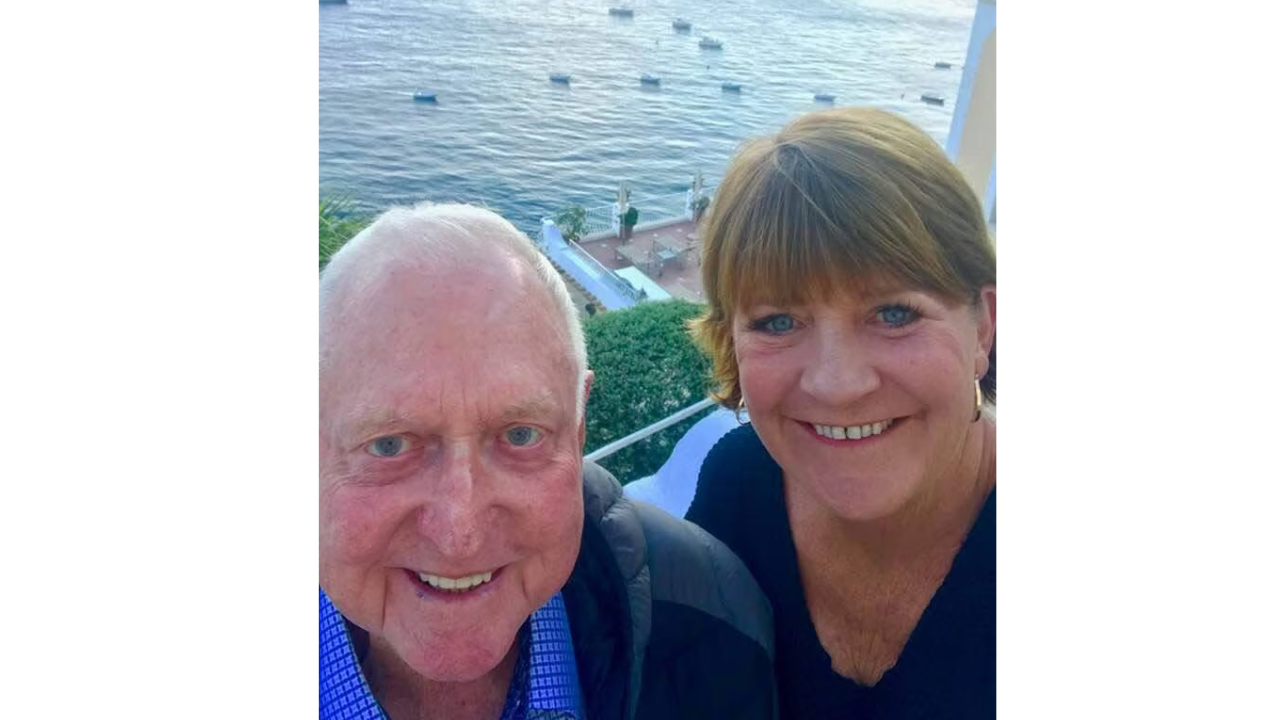
Australian couple Quentin and Kylie Burt have donated more than A$100 million to charitable causes over the past two years, including a recent A$40 million contribution to FightMND. Despite becoming some of Australia’s biggest private donors, the Brisbane-based couple insist they are not trying to build a reputation as philanthropists. Quentin Burt, who made his fortune through civil construction company QH&M Burt, says charity is simply about supporting people and causes that can make a real difference.
Why did the Australian couple donate more than $100 million?
The couple recently donated AU$40 million to FightMND during the Big Freeze event in Melbourne. The charity was co-founded by former AFL player and coach Neale Daniher, who was diagnosed with motor neurone disease (MND) in 2013.MND is a progressive neurological condition that causes damage to the nerve cells responsible for controlling muscles. There is currently no cure for this disease, making research funding critical to developing treatments and improving patient care.Burt said he was inspired to support FightMND after reading Daniher’s book and learning more about the challenges facing patients and their families. Their decision was also influenced by personal experiences, including the death of an employee shortly after an MND diagnosis and a close friend who suffered from a similar degenerative disease.The FightMND contribution is just one part of the couple’s recent charitable efforts. Reports indicate that Quentin and Kylie Burt have donated more than A$100 million over the past two years.Among his largest contributions was a reported $57 million donation to the Redtails Pinktails Right Tracks program, an initiative focused on creating sporting, educational and employment opportunities for young people, particularly Indigenous Australians in remote communities.His contributions span medical research, youth development and education, suggesting a focus on projects that can create long-term social benefits rather than short-term publicity.
From a dairy farm to a construction property
Quentin Burt’s story is one of important social dynamics. Growing up on a dairy farm north of Gympie in Queensland, he has described his family’s circumstances as poor during his childhood.After becoming the first child in his district to enroll in high school, he began his career as a cadet railway engineer. In 1973, he launched QH&M Burt with modest resources and won his first contract to build a car park for Australia Post in Brisbane.Over the following decades, the company became one of Australia’s largest civil construction fleet operators and completed billions of dollars worth of infrastructure projects. That success ultimately provided the resources behind the couple’s charitable donations.

Why do they reject the philanthropic label?
Despite his donations, Birts does not see himself as a philanthropist. Quentin Burt has argued that generosity should not be measured by the size of the donation.He compared his contribution to a child saving a small amount of money for charity, saying that both were examples of people who give what they can. In their view, the desire to help matters more than the dollar amount associated with the donation.The couple also say they do not actively seek out causes to support. Instead, they are attracted to individuals and organizations with a clear vision and proven commitment to solving problems.
Focused on impact, not identity
The most important aspect of Birt’s approach is his preference to stay out of the spotlight. Quentin Burt revealed that the FightMND donation was originally intended to remain anonymous before details were made public.For the couple, the real credit goes to the researchers, teachers and community leaders working directly on the issues. Their role, he says, is only to provide assistance where it can help achieve meaningful results.