


Mass layoffs at Washington Post, Amazon fires reporter, but where is Jeff Bezos: Story in 5 points
Mass layoffs at The Washington Post have shaken its newsroom, raised questions about editorial direction, and exposed Jeff Bezos’ persistent silence as the newspaper struggles to find a sustainable future.
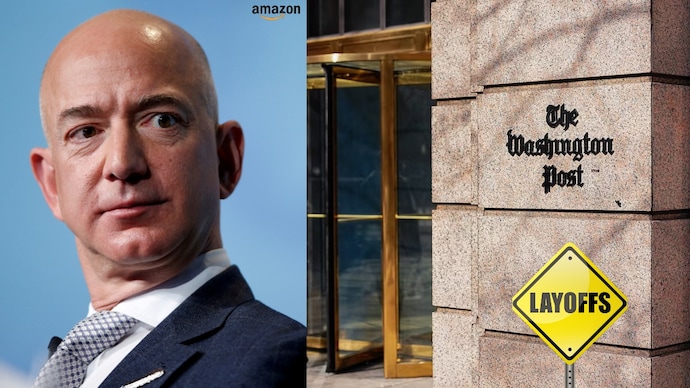

The Washington Post, once seen as a rare media success story under billionaire ownership, is facing one of the darkest chapters in its history. Hundreds of journalists and staff were shown the door in a single day, entire bureaus were closed and even journalists covering war zones were let go. At the center of the storm is newspaper owner Jeff Bezos, whose silence is now becoming as vocal as the layoffs. What’s really going on here is explained in five clear points.
Mass layoffs at Washington Post, Amazon fires reporter, but where is Jeff Bezos: Story in 5 points
1. The Washington Post newsroom underwent a brutal reset
The Washington Post confirmed a sweeping restructuring this week, cutting nearly 30 percent of its workforce, including more than 300 newsroom employees. Employees were asked to stay home and join a video call, where leadership described the move as painful but inevitable.
Executive editor Matt Murray told staff that the organization was “very much rooted in a different era”, acknowledging that the newspaper was losing large amounts of money and that its readership had declined sharply. Entire desks were damaged, and no departments were spared, which is a clear indication that this was not a limited trim, but a deep reset.
2. Star reporters, war correspondents and historical desks were wiped out
The scale of the cuts stunned newsrooms. Journalists covering race, culture, technology, books, international affairs, and even active war zones lost their jobs.
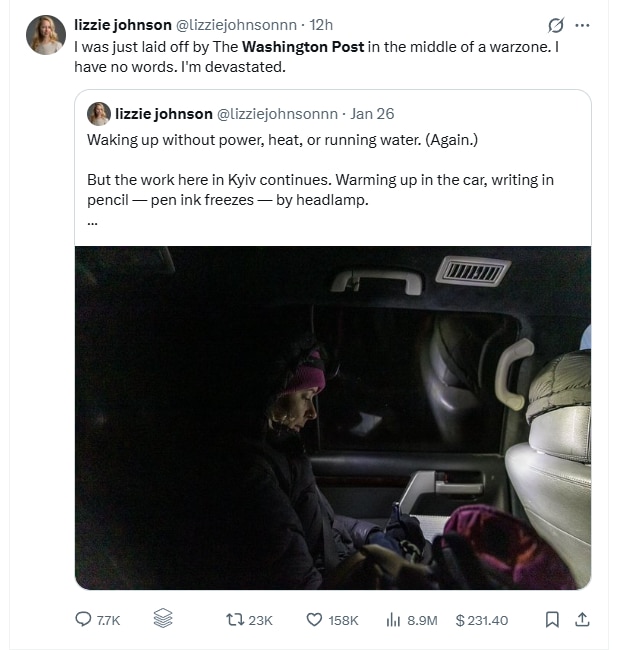
Ukrainian reporter Lizzie Johnson revealed that she was fired from her job while reporting from the conflict zone. The Jerusalem and Ukraine bureaus were closed. The once powerful Metro desk, famous for its role in the Watergate investigation, was reduced to a shadow of its former self.
Many senior editors were so uncomfortable overseeing the process that at least one department head was reportedly asked to fire rather than participate.
3. Firing of Amazon reporter adds a layer of irony
Among those fired was Caroline O’Donovan, a Washington Post beat reporter covering Amazon, the trillion-dollar company founded by Jeff Bezos.
O’Donovan repeatedly noted that readers were surprised that the Post covered Amazon so aggressively, despite Bezos owning both entities. Bezos’s ownership was disclosed in almost every article he wrote. His final story, published just days before his exit, focused on layoffs at Amazon, an irony that was not lost on readers or journalists.
His dismissal has intensified criticism that the newspaper’s restructuring is not just financial, but also political and ideological in nature.
4. A struggling business, not an isolated failure
Although the layoffs are shocking, Post’s troubles are not unique. Print readership continues to decline across the industry, digital traffic has become unpredictable, and generative AI has changed the way people consume news.
Under publisher Will Lewis, appointed by Bezos in late 2023, the Post has experimented with AI-powered comments, podcasts and aggregation tools. The leadership says the goal now is to focus on areas where the newspaper still performs well, such as national politics, governance and national security.

Still, many journalists argue that cutting key reporting talent weakens the journalism that has built the Post’s reputation.
5. Jeff Bezos’ silence is now the loudest statement
Perhaps the most striking part of this episode is Jeff Bezos saying nothing.
Bezos once spoke passionately about the Washington Post and said it was one of the achievements he would be most proud of in his life. He publicly celebrated the Pulitzer win and defended the newspaper during intense political pressure.
But Bezos has remained silent during this wave of layoffs, and even during earlier controversies. His last major public comments about the newspaper came months earlier, when he limited the focus of the opinion section and hinted at vague “ideas” for the future without sharing details.
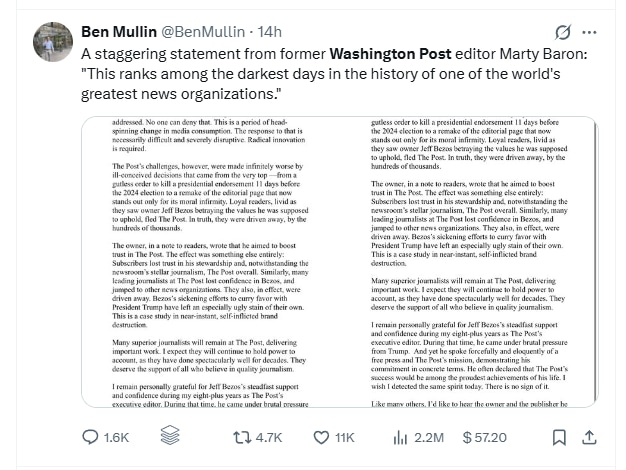
Former executive editor Marty Barron echoed this sentiment, calling it one of the darkest days in the Post’s history and saying he no longer saw the same commitment from its owner.