


Sridhar Vembu compares Big Tech to East India Company, says it’s time for technological sovereignty
Sridhar Vembu, founder and chief scientist of Zoho, believes that India should work to reduce its dependence on foreign Big Tech to maintain its sovereignty. He says that Big Tech is like East India Company these days.
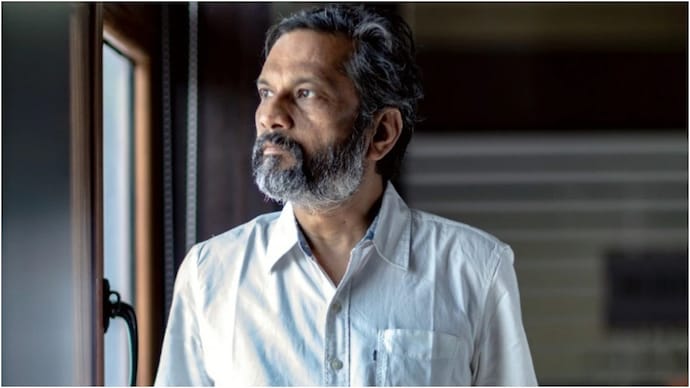

In 2026, when it comes to a country’s sovereignty, it is no longer just about fighter planes, borders or military might. Many countries are understanding this and Zoho Founder and Chief Scientist Sridhar Vembu hopes that India will also understand it. In a post on X alias Twitter on Tuesday, Vembu compared Big Tech to East India Company and expressed hope that India will reduce its dependence on foreign technology.
Vembu believes that India’s long-term economic well-being and national security could be compromised if the country continues to rely heavily on foreign technology platforms. He compared US-based big tech companies such as Google, Meta, OpenAI, Amazon and others to the East India Company, arguing that countries like India are currently supplying resources and data to US-based companies, while relying on their foreign-owned platforms for critical functions. This allows these tech companies to extract value from local markets and consolidate power and profits, which they then move out of the country.
According to Vembu, reducing dependence on foreign technology is no longer a choice but a strategic necessity, which governments, especially in India, should focus on to enhance economic resilience and create better national security. Drawing parallels with Europe, where countries like France are starting to work on technology sovereignty, Vembu suggests that India should also prioritize technological self-reliance.
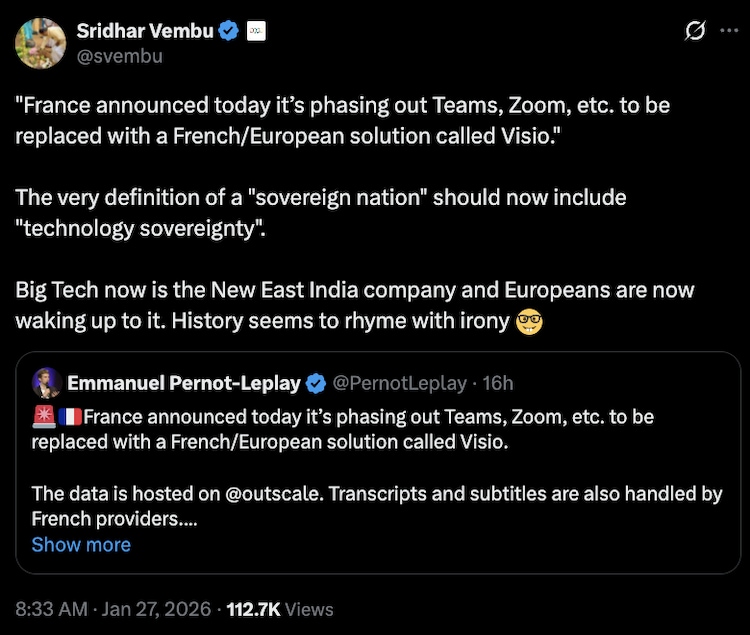
Responding to reports that France is planning to phase out platforms like Microsoft Teams and Zoom in favor of European alternatives, Vembu said the move reflects a growing recognition that digital dependence can undermine a country’s autonomy.
“The definition of a sovereign nation must now also include technological sovereignty,” Vembu wrote. “Big Tech is now the New East India Company and Europeans are now waking up to it. History seems to be in sync with the irony.”
This is not the first time the Zoho founder has argued in favor of India, focusing on technological sovereignty. He has long been vocal about the need for India to build and control its own technology stack, from enterprise software to strategic hardware. Vembu has repeatedly warned that over-dependence on multinational technology firms not only raises concerns about data security and policy autonomy, but also limits India’s ability to build deep, foundational technology products.
However the important thing to note here is that technological sovereignty also helps Zoho, given that the company competes with companies like Google, WhatsApp, and Microsoft.

Vembu expressed similar views in a recent conversation with PTI, where he stressed that technology sovereignty has become “absolutely critical” in an increasingly technology-led world. Speaking from Tamil Nadu, he said nations cannot claim true independence unless they gain control over critical digital infrastructure.
Apart from software infrastructure, Vembu also highlighted the importance of building domestic capabilities in areas such as semiconductor design. Addressing the Huddle Global Startup event last year, he highlighted the global chip shortage and US export restrictions on Nvidia chips. He argued that access to critical technologies could be restricted regardless of a country’s willingness to pay, underscoring the need for self-reliance.
Vembu had said, “We are ultimately acting as a big team or training ground for Silicon Valley. We sell our raw materials cheap – in our case, brains – and buy the finished products at a higher price, which are technology products. It’s basically colonial economics.” “The whole of India can only get 50,000 chips (from Nvidia), whether we are willing to pay or not. This is basically a form of digital colonialism, and that’s why we must reject it.”