



China upset with Salman Khan’s ‘Battle of Galwan’: Global Times attacks film on 2020 clash

In this special report, an unknown speaker discusses the controversy surrounding Salman Khan’s upcoming film ‘Battle of Galwan’. Directed by Apoorva Lakhia, the film depicts the June 2020 clash in eastern Ladakh and stars Khan in the role of Colonel Santosh Babu. The trailer drew a sharp reaction from China’s state-run Global Times, which accused the film of distorting facts and promoting nationalism. The report also highlights the bravery of Captain Soiba Maningba Rangnamei of the 16th Bihar Regiment, who was honored for his role in the standoff. Government sources, citing creative freedom, clarified that New Delhi has no role in the film.
latest video
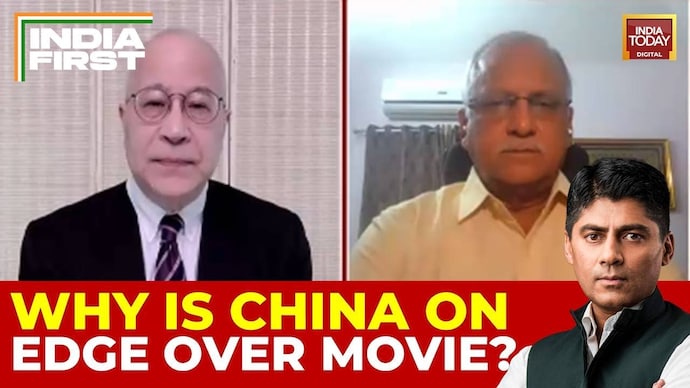
China upset with ‘Battle of Galwan’ teaser: Einar Tangen, Lieutenant General Narasimhan’s debate
In this special report of India First, the focus is on Global Times’ sharp reaction to the teaser of Salman Khan’s upcoming film ‘Battle of Galwan’. Einar Tangen, senior fellow at the Center for International Governance Innovation, and Lieutenant General SL Narasimhan, adjunct distinguished fellow at Gateway House, join executive editor Gaurav Sawant to discuss Beijing’s unease. Tangen suggests that China is ‘concerned’ about the appeal of nationalism amid global conflicts, while Lieutenant General Narasimhan describes the response as merely a teaser as ‘a bit of an overreaction’. The program explores the geopolitical implications of the film, reflecting the broader context of the 2020 Galwan Valley conflict and India-China relations.
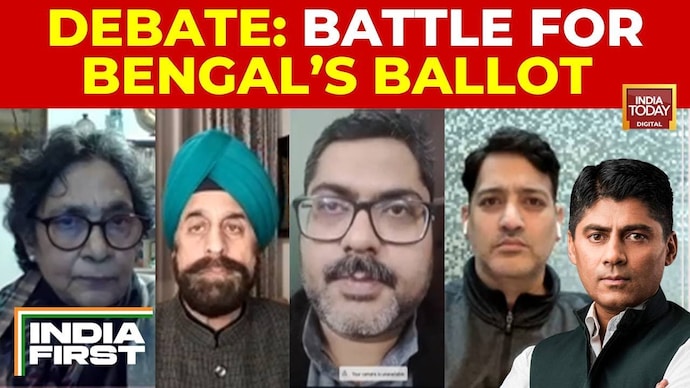
Amit Shah blames Bengal government for delay in fencing; Garga Chatterjee opposes infiltration claims
This special report focuses on the heated debate on illegal migration into West Bengal. Union Home Minister Amit Shah accused the Mamata Banerjee government of stopping the work of fencing the border in the 112 km long inaccessible area. Countering this statement, Garga Chatterjee, general secretary of Bangla Pokho, argues that the percentage of Bengali-speaking people has declined, dismissing the ‘Bangladeshi bogeyman’. Political analyst Rishi Bagri highlighted the arrest of Bangladeshi actress Shanta Paul with fake Indian documents as evidence of the demographic shift. The panel, including BJP’s RP Singh and senior journalist Shikha Mukherjee, discussed the SIR process and its implications for the 2026 elections.
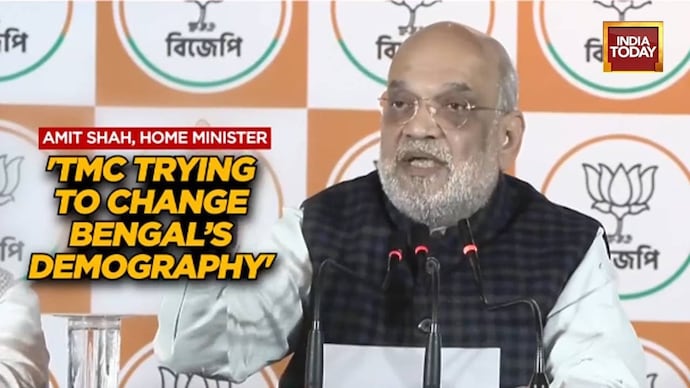
Amit Shah: Bengal government is refusing to give land to build 450 km of fencing; Analyst cites Shanta Paul case
Union Home Minister Amit Shah, while addressing Parliament, said that fencing work on the 450 km border in West Bengal is pending because ‘Bengal Sarkar Bhoomi Nahi Dete’ (Bengal government does not give land). He says the 112 km stretch of the border includes difficult terrain like rivers and hills. During the discussion, analyst Rishi Bagri cites the recent arrest of Bangladeshi actress Shanta Paul, caught with an Indian Aadhaar card, as evidence of uncontrolled infiltration. Journalist Shikha Mukherjee analyzes the political narrative linking ‘Ghuspetiya’ to demographic changes ahead of the 2026 elections.

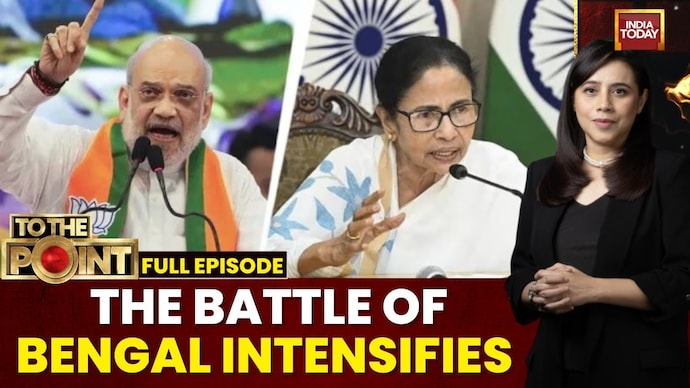
Amit Shah sets tone for 2026 Bengal elections: ‘BJP will identify every infiltrator and throw him out’
This special report details key political and social developments across India. In West Bengal, Union Home Minister Amit Shah kicked off the campaign for the 2026 assembly elections by accusing the Mamata Banerjee-led Trinamool Congress government of corruption and failing to protect women, citing the Sandeshkhali and RG Kar Medical College incidents. A political analysis has compared the organizational strength of Mamata Banerjee and the electoral strategy of BJP. The focus then shifts to the high-stakes Brihanmumbai Municipal Corporation (BMC) elections in Mumbai, detailing the strategies of new alliances such as the Thackeray cousins’ partnership and the Mahayuti and Maha Vikas Aghadi alliance. The telecast also covered the engagement of Priyanka Gandhi Vadra’s son Rehan Vadra and Aviva Baig. It concludes by noting the growing popularity of meditation festivals as a peaceful alternative to New Year’s celebrations.