



The conspiracy of Delhi Red Fort blast was revealed through messaging app Threema, what is this app and why is it banned in India?
Three doctors linked to the Red Fort blast used Swiss encrypted app Threema for secret communications. Authorities are investigating how the banned app helped in secret planning and evading Indian security measures.
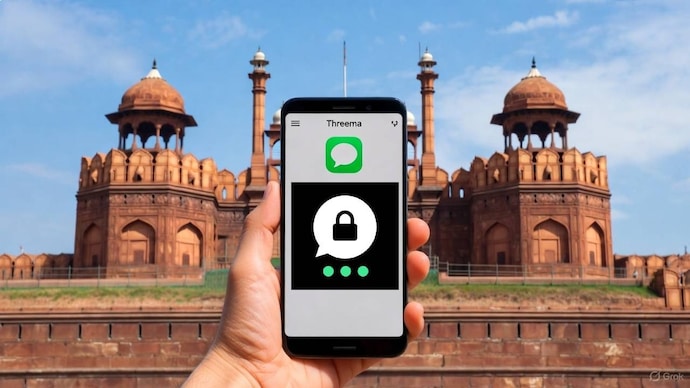

The deadly car blast near Delhi’s Red Fort earlier this week has now taken a frightening digital turn. Investigators have traced the alleged communication path of three doctors linked to the conspiracy, who were allegedly linked to an obscure Swiss messaging platform called Threema, from Faridabad’s Al Falah University. According to the police, the suspects Dr Omar Un Nabi, Dr Muzammil Ghani and Dr Shaheen Shahid were in constant touch through the encrypted app, using it to plan and coordinate the conspiracy that led to Monday’s blast. Officials say Threema’s high level of anonymity and lack of traditional identifiers make it an ideal tool to avoid detection. Let us know what this app is and how it works.
Inside Threema Network
Investigators believe the accused created a closed communication circuit using Threema architecture, which is designed for maximum confidentiality. The app does not require a phone number or email ID to sign up, instead, users receive a randomly generated ID that serves as their identification on the platform. Police say this layer of anonymity played a key role in helping the suspects stay below the radar.
The trio possibly went a step further and set up a private Threema server, allowing them to exchange files, maps and directions in a completely isolated environment, officials told PTI. “Elaborate planning, including space sharing and work allocation, is believed to have been conducted through this private network,” a source said.
The app’s design makes this type of secret communication extremely easy. Threema encrypts all data end-to-end, protects against storing metadata, and allows users to permanently delete messages from both ends. This means there is no chat history or backup to recover, making it a nightmare for forensic teams trying to reconstruct conversations.
Authorities are now investigating whether the group’s Threema server was hosted within India or abroad. Initial indications suggest that it may have been used to transmit coded instructions and controlled documents between members of the module. Ongoing forensic analysis of the seized devices aims to determine the full extent of the network and whether more individuals were involved.
Threema is banned in India
Threema’s role was revealed when agencies unearthed two Telegram groups linked to the same module. Metadata recovered from encrypted chats between Omar, Shaheen and Muzammil is now being analyzed, although investigators admit there is little to work with given the app’s minimal data footprint.
Threema has been on India’s banned list since May 2023, when the Ministry of Electronics and Information Technology blocked several foreign messaging apps under Section 69A of the IT Act. The government investigation found that some of these platforms were being used by Pakistan-based groups for propaganda purposes and coordination inside India.
The banned list included names like Zangi, Briar, Nandbox, SafeSwiss, Beechat, Element, Second Line, Mediafire, and IMO, all of which were chosen for their encryption-heavy frameworks that made them resistant to monitoring.
Despite the ban, authorities suspect that the accused managed to circumvent the restrictions by using VPN services to hide their location and re-direct traffic through foreign servers. Authorities also believe the suspects may have used the app freely while traveling abroad, including to Türkiye and the United Arab Emirates.
The investigators’ frustrations are compounded by Threema’s payment model, which allows users to purchase the app by sending cash to its office in Churerstrasse, Switzerland, or by paying via bitcoin, a setup that eliminates any traceable transaction records.
This combination of anonymity, encrypted communications, and decentralized payments has made Threema a favorite among privacy seekers, and a major headache for law enforcement agencies around the world.
As forensic teams continue to piece together the Red Fort blast conspiracy, it is clear that the digital front of modern terrorism has become as complex and unpredictable as the conspiracies themselves. And in this case, a Swiss-made app designed to protect privacy could become the perfect tool to hide a deadly plan.