



With AI, the era of industrial lies is coming in India
A fabricated press release about a listed company or a synthetic video of a bank CEO can trigger panic selling before regulators or fact-checkers can intervene. The same scale that is India’s digital strength also makes it ground zero for the risks of synthetic fraud.
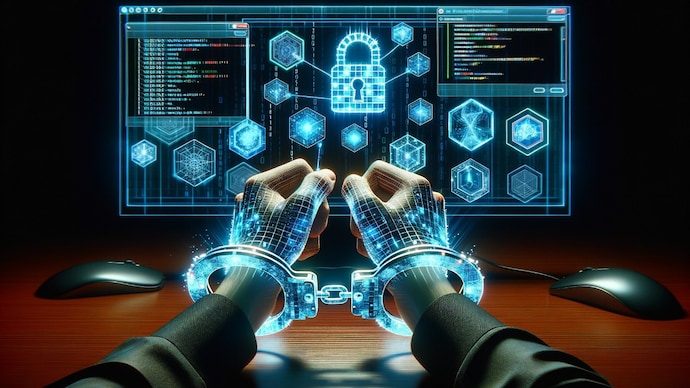

Trust has always been the silent infrastructure of society. It is what allows markets to clear, institutions to govern, and democracies to survive. Without it everything wobbles. Generative AI is now putting pressure on that infrastructure like never before. Disinformation is no longer hearsay or partisan propaganda: it has been industrialized. Lies can now be crafted in any language, wrapped in synthetic voices, packaged as “authentic” videos, and distributed on a large scale. Outrage is paid, engagement is monetized, and truth is considered optional. This is what I call the disinformation dividend: the profits extracted from deception are distributed to those who take advantage of them while the costs are borne by everyone else.
Why is India the epicenter of earthquakes?
With 850 million Internet users and more than 500 million WhatsApp accounts, no democracy has ever operated on this scale of digital interconnectedness.
There are many examples of threats that we have seen firsthand. For example, during the 2024 general elections, AI-generated video deepfakes circulated in both Tamil and Hindi of prominent politicians and candidates making statements they never made. For many voters, these clips were indistinguishable from reality.
Delhi Police reports increase in financial scams using WhatsApp voice cloning in 2023; Also fraudsters are imitating the voices of their relatives to transfer money to families. Additionally, when COVID-19 was at its peak, many district residents were panicked after seeing false reports sent through WhatsApp claiming that the disease could be cured with “home remedies”. Although each incident occurred independently, they demonstrated how India’s linguistic diversity, its penchant for social media, and its reliance on digital communications interact.
The threat to markets is equally real. More than 100 million retail investors in India trade through mobile apps. A fabricated press release about a listed company or a synthetic video of a bank CEO can trigger panic selling before regulators or fact-checkers can intervene. The same scale that is India’s digital strength also makes it ground zero for the risks of synthetic fraud.
Leadership and Civic Duty
Disinformation is not just noise; This is a false truth. Like counterfeit currency, it circulates rapidly, enriching those who create it, and destabilizing the systems through which it flows. Platforms benefit from clicks, traders benefit from volatility, states benefit from volatility, but society pays the price in distrust and polarization. Just as fake money erodes trust in the financial system, fake truth erodes trust in democratic and institutional systems.
Leadership is necessary to disrupt the spread of disinformation. Corporate India must treat narrative integrity like financial integrity. Press releases, earnings calls and disclosures must have digital watermarks, verifiable sources, and signatures proving authenticity. Companies that demonstrate this resiliency earn what is called a “trust premium” – a value today as important as ESG credibility.
Policymakers should move beyond privacy legislation. India’s Digital Personal Data Protection Act is a milestone, but it doesn’t touch synthetic disinformation. We need frameworks that treat narrative integrity as fundamental, impose liability on platforms that promote lies, and encourage innovation in verification. The media should stop pretending; Fact-checks that follow a few days later are powerless in the face of viral lies. India needs proactive truth infrastructure tools and multilingual verification centers that can operate at the same scale and speed (if not faster) as disinformation.
But this is not just the work of the leaders. Citizens are not passive consumers; They are amplifiers. The deer starts and stops with them. Every share, forward and click is a micro investment adding up to dangerous dividends. Digital citizenship now demands discipline: pause before sharing content that arouses anger or fear; Triangulate stories on reliable outlets; Demand transparency from platforms about why content is being recommended.
Take the WhatsApp stock tips that are regularly broadcast in trading groups. In many cases, these so-called “hot tips” have been linked to pump-and-dump schemes, where small investors were lured into buying penny stocks, only to suffer losses when the manipulators withdrew the money. These forwards, often equipped with fake charts or AI-generated reports, moved into the market because ordinary citizens believed them and hit “shares.” If more people had paused and verified before acting, the plans might have collapsed under their own weight. This is the new civic sanitation.
India’s choice and my hopeful prediction
India’s insecurity is also its biggest opportunity. The country that gave the world zero may now become the country that redefines digital trust. It’s not just about fighting counterfeits or stopping scams; It’s about shaping the rules of the digital century. Rules that are “of the people, by the people, for the people”. Imagine an India that transforms its scale into strength. A Bombay Stock Exchange where every disclosure is digitally watermarked and machine-certified, making it impossible to trade on fraudulent filings. Fintech startups are branding themselves not just on the basis of convenience but also on the integrity of design, exporting the “truth engine” made in India to the rest of the world. Universities and research laboratories are moving forward on watermarking and provenance tools, training a new generation of critical data guardians as cybersecurity professionals.
Also think about the citizen dividend. If every citizen learns to stop, verify, and demand transparency, India could develop the largest digitally literate democracy in history—not just in technical skills, but also in critical thinking. This would be massive flexibility: 1.4 billion people would act as custodians of the trust.
This is not an imagination. India already leads the world in digital infrastructure – from Aadhaar to UPI, to the scale of its IT services to the ambition of its startups.

If we can build payment rail for a billion people, we can also build truth rail. If we can leapfrog the banking system with mobile payments, we can leapfrog the disinformation economy with innovation in verification and transparency.
And here’s my personal prediction, speaking as someone who has been in the trenches of technology and governance: The price of truth will be seen in the markets themselves over the next decade. Just as companies are now valued not just on profits but on ESG credentials, I believe that within five to seven years companies will be valued on their ability to demonstrate narrative integrity. Investors will reward companies that can prove that their disclosures are authentic, their communications can be traced and their digital footprints cannot be tampered with. The “trust premium” won’t just be a metaphor: it will be a line item in market valuation.
The real danger of disinformation is that it makes the truth fragile. India’s real power is that it can make truth feel strong again through technology, governance and civic action. This is not just India’s challenge; This is India’s chance to lead the world. We have already seen how adversaries exploit this battlefield. During Operation Sindoor, a coordinated disinformation campaign was launched in Pakistan, sowing fabricated stories and manipulated content to incite division and undermine India’s institutions. It was a stark reminder that in today’s world, disinformation is not just a domestic nuisance, but a government weapon used to destabilize, distract, and undermine confidence in democracy. For India, resilience against such attacks is not optional; This is a matter of national security.
The benefit of disinformation is real, but it is not destiny. We can disrupt it, redesign it, and replace it with a very different type of trust dividend, a dividend. When truth becomes scalable, when institutions are transparent by design, and when citizens themselves become custodians of the digital commons, this is what we get back.
India has the scale, talent and democratic will to lead this transformation. If that happens, the dividend the world will remember will not be disinformation, but the dividend of trust. It will not simply protect its democracy or protect its markets. It will redefine what it means to be a digital society in the 21st century where truth is infrastructure, trust is capital, and flexibility is the ultimate competitive advantage. The world’s largest democracy may have proved a big truth; Even in the age of artificial lies, trust can be built stronger, deeper, and more enduring than ever before.
,
About the author
Aditya Vikram Kashyap is currently Vice President at Morgan Stanley, New York. Kashyap is an award-winning technology leader. His core competencies focus on enterprise-scale AI, digital transformation, and building ethical innovation cultures. The views expressed are solely his own and do not reflect any entity or affiliation, past or present.