

Why UK is banning high caffeine energy drinks for children under 16 years of age
The UK government plans to ban the sale of high caffeine energy drinks to people below 16 years of age. The ban will apply to any drinks with more than 150mg caffeine per liter.

The UK government has announced a plan to ban the sale of high-caffeen energy drinks to anyone under 16 years of age, citing increasing evidence of damage to the physical and mental health of children.
According to UK government data, every day around 100,000 children consume at least one high-caffeen energy drinks. Studies have connected these drinks with disrupted sleep, increase in anxiety, poor concentration and low academic performance. High-sugar versions are also bound to obesity and decay of teeth.
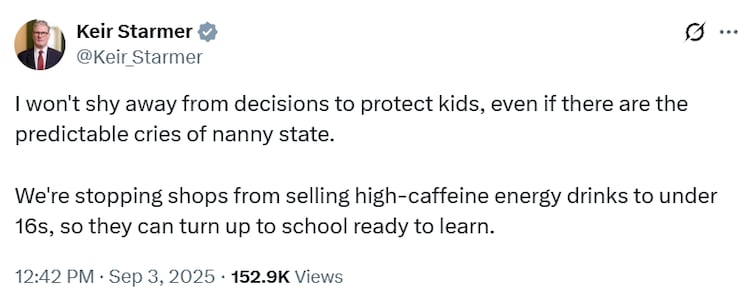
“I will not stay away from the decision to protect the children, even though the grandmother’s forecast weeping. We are stopping the shops from selling high -coffee energy drinks from selling high -coffee energy drinks, so they can convert shops in a school ready to learn.”
Health and Social Care Secretary Wes Streeting shared a similar concern for this step, supported by parents and teachers: “How can we expect children to do good in school if they have equal to four compartments of cola in their system on a daily basis?” He said that this step is part of the government’s plan for change, which focuses on the prevention of poor health to prevention of poor health.
Why the restriction?
Research suggests that one-third of children aged 13–16, and about one of the four aged 11–12, consumes a regular energy drink.
Teachers and parents have long complained that drinks contribute to poor classroom behavior, lack of attention and even decline in grade.
Children with disadvantaged background are also more likely to consume these drinks, which worsens health inequalities.
Britain’s Education Secretary Bridget Philipson said, “The harmful effects of caffeine-loaded drinks are partially behind the behavior of poor classroom.
What will be the ban?
The ban will apply to any drinks with more than 150mg caffeine per liter, and will cover all sales channels, shops, restaurants, cafes, vending machines and online. This lower-caffeine will not apply to soft drinks, tea or coffee.
While many large retailers have already voluntarily banned sales for under -16, small facility stores and online platforms have continued to sell children, making the government a constant implementation of nationwide rules.
How is the best to implement the ban to gather inputs from health experts, teachers, retailers, manufacturers and public to gather input now.
This measure is one of the several stages to improve the health of children under the UK government’s comprehensive plan.
Other initiatives include supervised toothbrushing programs for young children, free breakfast club and childcare support.
The government says that now acting will not only protect children from long -term health risks, but will also deliver tens of million pounds in health savings and promote future productivity.