



Which font? US State Department tells diplomats to stop using Voc Calibri, brings back Times New Roman
The Trump administration doesn’t like Calibri. Well, at least that’s what Secretary of State Marco Rubio said in his memo to diplomats.
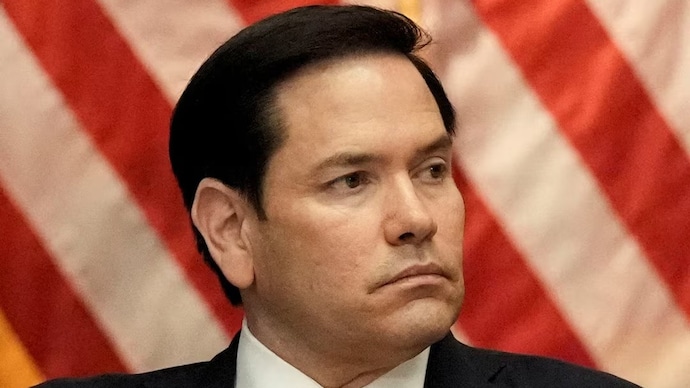

We live in strangely charged times when anything can be put into the left or right camp. Just when you think you’ve seen every possible topic of dispute, a whole new bingo card comes out. This time, it’s about fonts. Yes, font! It has now become a matter of particular concern to the US State Department as to what typography its documents should be presented in. Apparently, the Trump-led government believes the current Calibri font is “useless,” and so State Department officials have been ordered to return to the old classic: Times New Roman.
Starting December 10, diplomats across the US will have to replace Calibri and return to the classic serif typeface that served as the official font for government documents for nearly two decades. The decision reversed a 2023 policy under the Biden administration, which replaced Times New Roman with Calibri. This decision was probably made because Calibri is more “accessible” due to the lack of serifs, i.e. curly flowers. This also makes it more readable for people with weak eyes, which also leads to accusations that it is more “woke” than the classic font.
Now, US Secretary of State Marco Rubio, possibly because of Calibri’s connotations and because it was introduced by the Biden administration, believes the change was unnecessary and has described it as “useless”. So things are going back to more traditional formatting standards.
But why argue over a font?
To understand how we got here, you have to go back to why Calibri was chosen in the first place. In January 2023, the Biden-led government announced a change in the font used for official US State Department communications – from Times New Roman to Calibri. The reason was accessibility.
Times New Roman is a serif font, and those little decorative “feet” at the end of each letter stroke can create visual clutter and a feeling of crowding. This style can make it difficult for many people to distinguish different characters, especially those who are visually impaired. Details on digital displays may be blurry, hindering legibility and slowing reading speed for users who struggle with visual noise or suffer from conditions such as dyslexia.
In contrast, the former government argued that sans-serif fonts like Calibri are easier to read for people with low vision or dyslexia. Its launch was hailed as a DEI – diversity, equity and inclusion – step. Calibri’s wider spacing and clean, rounded shapes were meant to make government text more accessible.
US government says Calibri is too unofficial
But now the new US government argues that Calibri has made official documents a bit too informal for high-level diplomacy. So Secretary of State Marco Rubio has stepped in and decided to immediately restore the Times New Roman font, which he sees as a more traditional, formal visual identity.
In a memo he announced that the US Department of State was returning to Times New Roman to “restore courtesy and professionalism.” He even specified that everything should now be typed in 14-point size.

“Although the switch to Calibri was not one of the most illegal, unethical, radical or wasteful examples of the department’s DEI, it was nonetheless specious,” Rubio reportedly wrote in the memo. “Switching to Calibri achieved nothing except a decline in the department’s correspondence.”
Calibri designers are not happy
While many are happy with this decision – we told you we live in a time where fonts are also the subject of serious controversy – others are not. Dutch designer Lucas de Groot, who created Calibri, is worried. Speaking to The Independent, he described the reversal as “both tragic and ridiculous”. He explained that Calibri was designed to virtually replace Times New Roman as a more readable alternative for modern screens.
Now, whether you are Team Calibri or Team Times New Roman, one thing is clear: even fonts have now entered the political conversation and are indeed a very important topic for governments to focus on.