



Vishal Bhardwaj defends strong language in O’Romeo: Why should it be beeped at?

At the trailer launch of hey romeoFilmmaker Vishal Bhardwaj strongly addressed the debate surrounding strong language and violence in cinema, and said that the core of his film is deeply romantic. “Actually, it is a love story,” Bhardwaj said, describing the film as a one-sided romance set against a violent backdrop. “At its DNA, it’s a love story – the love story of Ustara.”
Responding to concerns about abusive language and aggression, Bhardwaj argued against sanitizing reality for the screen. He emphasized that muting conversations with constant “beep-beep” censorship reduces authenticity. According to him, society often displays double standards – readily accepting misbehavior and aggression in everyday life but holding cinema responsible for moral degradation.
Bhardwaj rejected this notion, saying, “Cinema is held responsible for every bad thing.” He rejected the notion that only films had the power to corrupt or reform the audience. “Cinema will spoil you, cinema will improve you – none of that is true,” he said, adding that films simply reflect society as it exists.
For Bhardwaj, hey romeo This is not an exercise in provocation but an honest depiction of emotion and atmosphere. “In my view, cinema is a mirror,” he concluded, “it shows you who you are.”
cast of hey romeo It stars Shahid Kapoor and Trupti Dimri in the lead roles, supported by a powerful ensemble cast including Avinash Tiwari, Vikrant Massey, Nana Patekar, Disha Patani, Tamannaah Bhatia and Farida Jalal, and will release on February 13, 2026.
other videos from bollywood
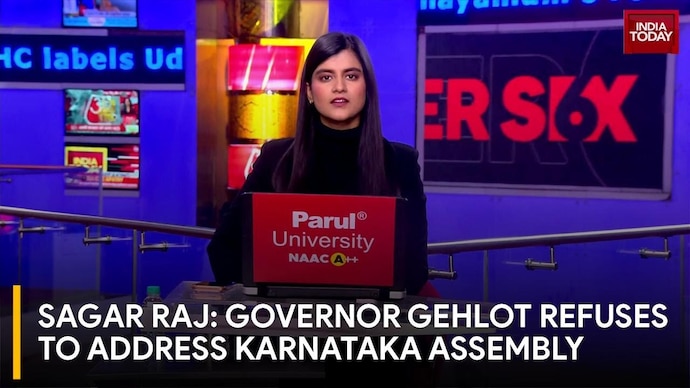
Karnataka Governor Thaawarchand Gehlot refuses to address Assembly, instead delivers speech
In this special report, Sagar Raj provides live updates from Bengaluru on the ongoing standoff between the Karnataka government and Governor Thawarchand Gehlot. The Governor has reportedly refused to address the joint sitting of the Karnataka Assembly to be held tomorrow, demanding specific changes in the speech prepared by the state government. Sagar Raj says that in relation to the special session called to protest against the issues related to BVG Ramji Bill and MNREGA, ‘at the last moment he has said that changes should be made in the speeches.’ Currently, Parliamentary Affairs Minister HK Patil, legal advisor AS Ponnana, and Speakers UT Khadar and Basavaraj Horatti are at the Raj Bhavan trying to convince the Governor to go ahead with the address. The development mirrors the constitutional confrontation recently witnessed in Tamil Nadu and Kerala, setting the stage for a potentially stormy assembly session in Karnataka.
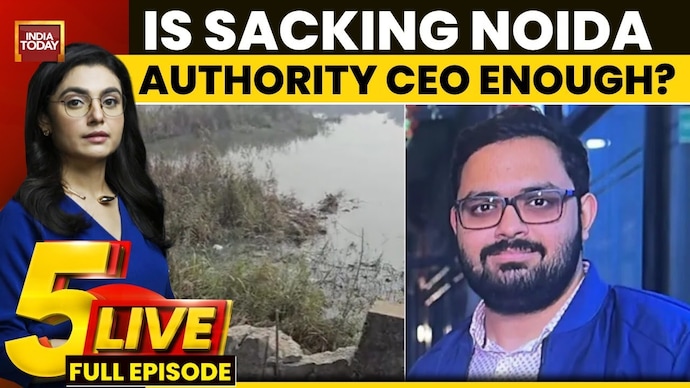
Noida technician Yuvraj’s death: Sonal Mehrotra Kapoor questions DM Medha Rupam on SDRF failure
In this special report and edition of Five Live, anchor Sonal Mehrotra Kapoor investigates the death of 27-year-old software engineer Yuvraj Mehta, who drowned after his car fell into an open construction pit in Noida Sector 150. The program details systemic negligence in which a similar accident occurred at the same location 15 days earlier without corrective action. While the CEO of Noida Authority was sacked and builder Abhay Kumar was arrested, the broadcast raises questions on the accountability of the SDRF and the local administration. Eyewitness Munindra Chaudhary testifies regarding the failed rescue efforts. Additionally, the bulletin addresses the rise in student suicides at IIT Kanpur, including insights from Director Manindra Agarwal on academic stress and mental health. Coverage concluded with the arrival of US President Donald Trump at the World Economic Forum in Davos, Switzerland. Trump is expected to promote his America First agenda and host a reception for global business leaders, including seven prominent Indian CEOs from companies such as Tata Sons, Infosys and Wipro.

Geeta Mohan on Donald Trump’s ‘America First’ agenda at World Economic Forum 2026
On this special report, Foreign Affairs Editor Geeta Mohan provides an update on US President Donald Trump’s arrival at the World Economic Forum 2026 in Switzerland. The President’s upcoming address is expected to focus on an ‘America First’ message, covering controversial topics such as the annexation of Greenland, the situation in Venezuela and ‘weaponization tariffs’. Geeta Mohan says Trump wants to discuss ‘Board of Peace’, with her camp suggesting the initiative could eventually ‘replace the UN’ The report also highlights Trump’s scheduled meetings with top Indian CEOs of companies like Tata, Infosys and Bharti Airtel on the sidelines of the summit. European leaders remain wary of Trump’s stance on NATO and his ‘war path’ regarding Greenland. The program explores the global disruptions caused by these policy changes and their potential impact on international relations and the rules-based world order.
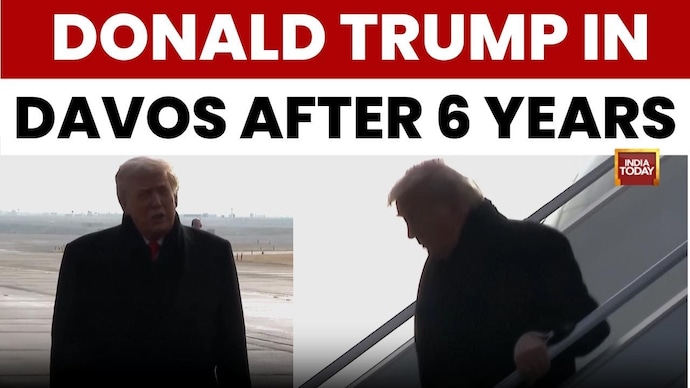
Rajdeep Sardesai on Donald Trump’s visit to Davos amid global uncertainty
On this special report, India Today Consulting Editor Rajdeep Sardesai provides an on-ground analysis from the World Economic Forum in Davos, as US President Donald Trump arrives for the summit. Referring to the contradiction between the Trump narrative and the rules-based world order advocated by leaders like Mark Carney, Sardesai says, ‘Davos provides a platform for the world to hear both views within 24 hours.’ The discussion highlights ‘cognitive dissonance’ between the forum’s dialogue topics and the reality of global conflicts, trade barriers and rising inequality. Sardesai says that while critics may see the event as merely a photo op in the ‘Trumpian era’ where the rules are being rewritten, the gathering remains an important space for engagement. The report also touches on Trump’s scheduled talks with the Indian diaspora and global CEOs, raising questions about the continued relevance of multilateralism in an increasingly volatile geopolitical landscape.