



The Secret Agent review: Wagner Moura’s film is terrifying and politically astute
The Secret Agent film review: Wagner Moura’s film explores life under Brazil’s 1977 military dictatorship through a chilling political thriller. The film depicts the lasting impact of surveillance and authoritarian fear on individuals and society.
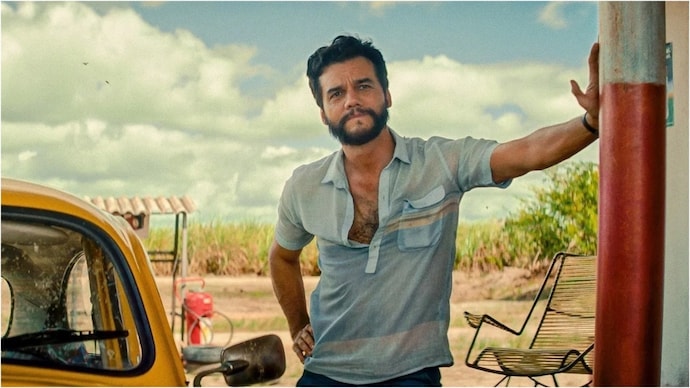

In secret agent, Kleber Mendoná Filho turns the political thriller inside out. The title alludes to covert operations and high-risk espionage. What unfolds instead is something much more disturbing, a slow, suffocating study of how totalitarianism seeps into ordinary life. The film is less about spies and more about the quiet terror of being watched, remembered and erased.
Set in 1977, the story follows Armando, played with extraordinary composure by Wagner Moura, during the height of Brazil’s military dictatorship. Once an academic, now a celebrity, Armando is forced to give up his identity as threats mount and tragedy strikes his family. He relocates to Recife under an assumed name, hoping to disappear into the sultry anonymity of the coastal city while remaining close to his young son.
❮❯
But anonymity is an illusion, as the film shows.
The film begins with a haunting vision of an unidentified dead body lying abandoned at a petrol pump, while life goes on. The story is simple, it is a world paralyzed with fear. Uniformed officers demand papers with bureaucratic indifference. Neighbors speak in hushed tones. Radios resonate with state-sanctioned narratives. Filho creates an environment where violence is rarely sensationalized; It is ambient, embedded in the architecture of daily existence.
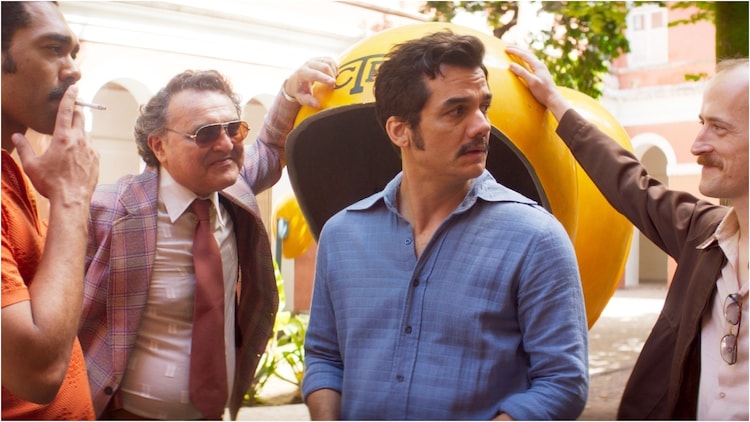
Recife, presented in sun-bleached yellow and uneasy shade, becomes both a refuge and a trap. Armando finds refuge with Dona Sebastiana, a flexible matriarch who does not fool him for safety, but gives him refuge. Around them are other dissidents, quiet sympathizers and potential informers. Carnival processions roll through the streets, but the celebration also feels delicate, as if the joy can be overshadowed.
Moura’s performance adds to the emotional weight of the film. He opposes melodrama and prefers silence instead. His Armando is constantly calculating how long to keep watch, when to lower his voice, whether to trust a stranger. In the scenes with his son, tenderness shines through the paranoia, reminding us what’s really at stake. Maura personifies a man living in fragments: father, fugitive, intellectual, ghost.
Filho’s direction depends on mood rather than pace. There are sudden bursts of brutality that reflect the unpredictability of life under surveillance, which is a genius cinematic move. The storytelling sometimes veers into impressionistic territory, blurring memory and present time, as if the film itself is grappling with how history is stored, and who gets to tell it.

Technically, the production is meticulous with the use of vintage cars, and the grainy interiors recreate the aesthetics of the late 1970s without romanticizing it.
but to call secret agent Just a period drama would be a loss, given how effectively Filho has integrated contemporary themes into it. Its themes of propaganda, the grip of institutions of power and the fear of dissent seem worryingly relevant even today. He doesn’t draw direct parallels, but he doesn’t need to. The parallels draw themselves.
By the time the film reaches its finale, it becomes clear that this is a story less about espionage and more about memory: how individuals survive systems designed to erase them, and how nations reflect on the chapters they prefer to forget.
Measured, sinister and politically astute, secret agent This is not an easy watch. But this is an important one.