





The Oscar Paradox: More Visible Than Ever, Less Seen Than Ever
Despite online discussion about the Barbenheimer incident and films like Sinners and One Battle After Another, the Oscars have recently struggled to recreate the global cultural experience the awards ceremony once commanded.



In India, waking up early often means getting in touch with your passion. For sports fans, odd hours usually signal a global sporting spectacle: the Olympics, the NBA Finals or the FIFA World Cup. Cinema lovers share a similar ritual. Every year, they gather in front of their screens waiting to hear a familiar line: “And there goes the Oscar.” Screens may have shrunk from television sets to mobile phones, but the ritual still endures.
❮❯
For decades, the Academy Awards has been one of the few cultural events that has been able to unite film audiences from different countries, industries and languages. When RRR won the Best Original Song award for Naatu Naatu at the Academy Awards in 2023, the reaction in India made it clear why the Oscars still matter. The moment was constantly replayed on television, celebrated on social media and discussed with pride by audiences who felt that the global platform had finally recognized Indian cinema in a meaningful way.
That kind of collective enthusiasm proves to be something important. The Oscars still hold tremendous symbolic power. But beneath that reputation lies a contradiction.
If the Oscars remain such a powerful cultural milestone, why isn’t the number of people coming to see the ceremony increasing, or staying stable? Before, the conversation about the Oscars would spill over into newsrooms, offices and living rooms around the world the next morning. Today, discussion begins immediately online, often while the ceremony is still going on. But it also ends very quickly. What once lasted days as a shared cultural conversation now vanishes in a matter of hours as yet another short-lived social media trend.
In 1998, when Titanic dominated the Academy Awards and won Best Picture, the broadcast attracted more than 55 million viewers in the United States alone. It is one of the most watched Oscar ceremonies in history. Fast forward to the modern era and the picture looks very different. The 2021 ceremony fell to a historic low of approximately 10.4 million viewers. In recent years, the numbers have improved slightly – to 16.6 million in 2022, 18.8 million in 2023 and about 19.5 million in 2024, boosted by the massive cultural conversation around “Barbenheimer”. Yet those figures are far below the heights the ceremony once achieved.

This trend raises an important question: Are fewer people interested in the Oscars now, or has the world around the Oscars simply changed?
end of monoculture
In the latter half of the twentieth century, major cultural phenomena emerged that media scholars often describe as “monoculture”. The audience enjoyed the same entertainment at approximately the same time. People watched the same television shows, watched the same movies, and watched the same awards ceremonies. Oscar flourished in that environment. They were not just an awards ceremony; They were a shared global viewing experience.
The harsh truth: that world no longer exists today.
Today, the Oscars compete not only with other television programs but with an entire digital ecosystem. According to Nielsen, viewers in the United States alone are expected to spend more than 16 trillion minutes watching streamed content in 2025. At the same time, platforms like YouTube, Instagram, Twitch, and TikTok provide endless entertainment options.
From an Indian perspective, audiences now have access to other internationally popular American awards shows – from the Golden Globes and BAFTAs to the Emmys and Grammys. The Oscars are no longer the only international award that India knows about.
The result is fragmentation. Instead of gathering around a single cultural event, audiences now consume entertainment through personalized feeds and algorithm-driven recommendations. Even Oscars-related content is increasingly being experienced through highlights, clips and live updates broadcast on social media rather than the full broadcast.
A viral acceptance speech on TikTok or X, or a red-carpet dress shared on Instagram, can instantly reach millions of people without anyone needing to watch the ceremony in real time. In that sense, the Oscars have not completely disappeared from the cultural conversation; They’ve just moved to different platforms. But whether that focus translates into a deeper, grassroots cultural conversation beyond algorithms remains uncertain.
Social media discussion vs actual discussion
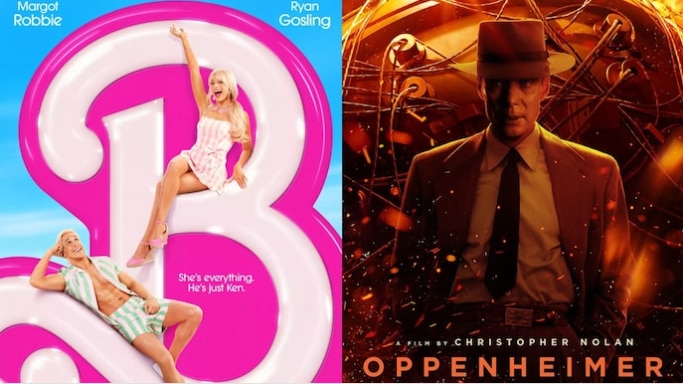
The irony is that the Oscars appear to be more visible online than ever. Take the “Barbenheimer” incident surrounding Barbie and Oppenheimer. The Internet was flooded with memes, debates, and fan-driven marketing surrounding both films. When awards season arrived, many assumed that such broader cultural conversation would translate into a major ratings rebound, with some even suggesting that the ceremony could rival the iconic Titanic era of Oscar viewership.
However, the reality was far more modest. Despite heavy online buzz, the Oscars struggled to cross the 20 million viewership mark that year.
The reason for this is becoming clear: conversations on social media do not necessarily translate into live viewership.
This year’s race also looked lively on the Internet. Films such as Sinners, Marty Supreme and One Battle After Another generated intense discussion in film forums, X threads and cinephile communities, where prediction charts, campaign stories and category debates continued to circulate.


Online, the excitement surrounding the awards race is almost reminiscent of an earlier era when Oscar speculation dominated film culture. But the question is whether that energy actually exists beyond digital spaces.
Social media often amplify the voices of dedicated cinephiles, critics, and industry watchers, giving the impression of a broader cultural conversation. However, the reality on the ground may be very different. Outside the film world, many audiences are only vaguely aware of the nominees, let alone deeply invested in who wins Best Picture. The Oscars may have a huge following online, but that visibility doesn’t always translate into the kind of widespread, everyday conversation that the ceremony once did.
A celebration in a changing culture
It is not that the Academy Awards are unaware of these challenges. In recent years, the Academy has experimented with ways to modernize the ceremony, ranging from introducing new categories to revamping the show’s pace and designing segments that generate shareable moments for digital audiences.
The ceremony is also expected to adopt a streaming-first broadcast model via YouTube, starting in 2029, an apparent acknowledgment that traditional television viewership continues to decline.
Additionally, the Oscars themselves have become more international. Non-English language films are now more frequently featured among the major nominees, reflecting the increasingly global nature of cinema and the growing influence of industries beyond Hollywood.

Yet as the ceremony has evolved, the cultural environment surrounding it has changed much more dramatically. The era when millions of viewers gathered around a single television broadcast for a shared global moment may never fully return.
In many ways, the Academy Awards aren’t the only ones facing a ratings problem. They are exploring a cultural landscape where audiences watch, discuss and celebrate cinema through completely different platforms and habits.
Today the real question is no longer whether the Oscars matter or not. The question is whether a single awards ceremony can still capture the world’s attention in an era where culture itself has become deeply fragmented. The same challenge is increasingly visible elsewhere, including in Indian cinema, where film awards once dominated television audiences but now struggle to generate mass enthusiasm.