



The Galaxy S26 series is launching soon and Samsung may have leaked a key feature of the Galaxy S26 Ultra ahead of schedule.
Samsung may have accidentally confirmed the Galaxy S26 Ultra’s biggest upgrade yet, as a new 60W charger quietly listed on its own website hints at a big bump in charging speeds.
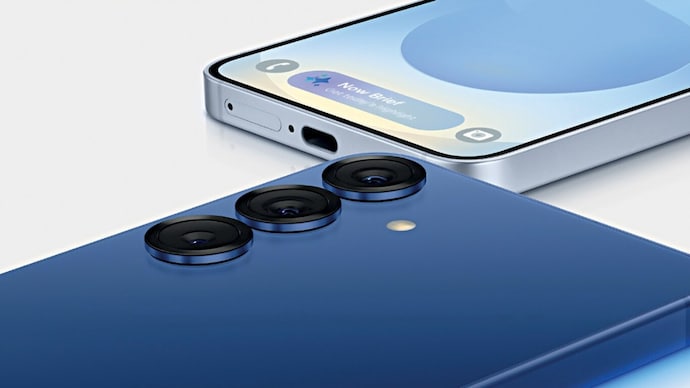

Samsung’s next flagship lineup is getting closer to launch, and the company may have inadvertently revealed one of the biggest upgrades coming to the Galaxy S26 Ultra. A new 60W power adapter quietly appeared on Samsung’s website, providing the strongest indication yet that the top-end model is finally breaking the long-standing 45W charging limit. With leaks around the battery also increasing, it looks like the Ultra variant could be getting a worthwhile power makeover, even if the rest of the lineup sticks to familiar territory.
Samsung may have leaked a key feature of the Galaxy S26 Ultra ahead of its launch
There have been rumors for months that Samsung is preparing to increase wired charging speeds on the S26 Ultra, and now a new silent product listing has given credence to the claims. The charger, spotted by @yabhishekhd and later detailed by @SamMobile, has the model number EP-T6010 and supports a full 60W output through a single USB-C port. What makes this brick different is its move to the USB PD 3.1 PPS standard, which is a step up from Samsung’s older 45W unit based on PD 3.0 PPS. The new version is also designed to draw minimum standby power at just 5mW.
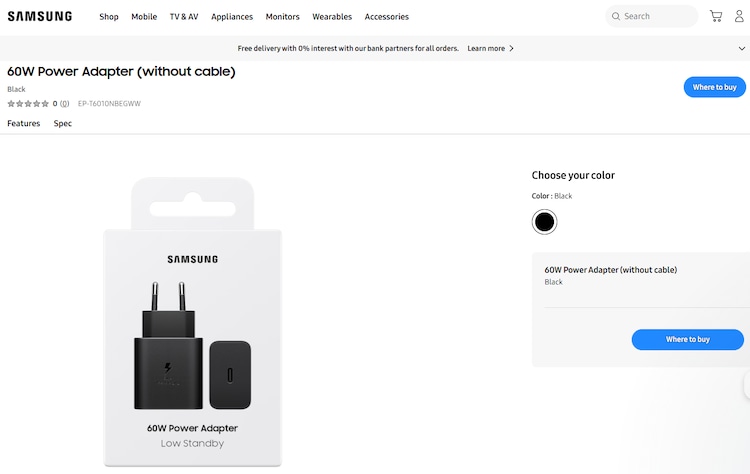
But the practical improvements are something S25 Ultra users will immediately appreciate. With older models, Samsung’s 45W charging speed only worked when paired with a 5A USB-C cable and a compatible charger. The new EP-T6010 avoids that restriction entirely by delivering its full 60W at 3A across the entire 5-20V range. In simple terms, even a regular high-quality USB-C cable should be enough to unlock the fastest speeds on the S26 Ultra, reducing the frustration of accessory compatibility.
Samsung will reportedly market it as Super Fast Charging 3.0. Internal references found in early One UI 8.5 firmware label this feature as “Level 4”, pointing to a more layered charging management system. Nevertheless, actual power consumption during charging may vary. Leaked details suggest the phone will initially run at around 55W on an empty battery, dropping to 45W when the charge reaches 15%, and slowing down after 70% to keep heat under control and preserve long-term battery health. Wireless charging has also seen some overdue improvements, with speeds increasing from 15W to 25W and built-in magnets enabling native Qi 2.2 compatibility.

Battery capacity has also been a point of debate. Some early whispers suggested Samsung may retain the 5,000mAh unit it has used for years. However, a new leak from China claims the S26 Ultra will have a 5,200mAh battery, which isn’t a huge bump but is still an upgrade after several generations of unchanged numbers. It’s not dramatic, but combined with fast wired and wireless charging, it can make the all-day power experience much more flexible.

Interestingly, these power improvements could become the highlight of the Ultra model this year. A report from Korea’s The Elec says that Samsung has decided to stick with the camera setup used in the Galaxy S25 series. Rising component prices have reportedly forced the company to abandon earlier plans for a new sensor, and the brand has instead preferred to keep pricing stable for the upcoming launch. This strategy appears to mirror Apple’s move with the base iPhone 17, which kept its starting price unchanged even after adding upgrades like a 120Hz display and higher base storage.
For reference, the Galaxy S25 series started in India at Rs 80,999 for the base model, Rs 99,999 for the S25 Plus, and Rs 1,29,999 for the S25 Ultra. Samsung is expected to follow the same three-model structure with the S26, S26 Plus, and S26 Ultra. The Ultra variant will likely enter mass production before the other two, but delays in the production schedule could push the global launch from Samsung’s usual January window to February 2026.