



Swara Bhaskar’s mother Ira criticizes Dhurandhar for violent portrayal of Muslims, Pakistan
Ira Bhaskar, mother of actor Swara Bhaskar, criticized Aditya Dhar’s Dhurandhar for its violent and stereotypical portrayal of Muslims, highlighting concerns over ideological bias in contemporary Indian cinema.
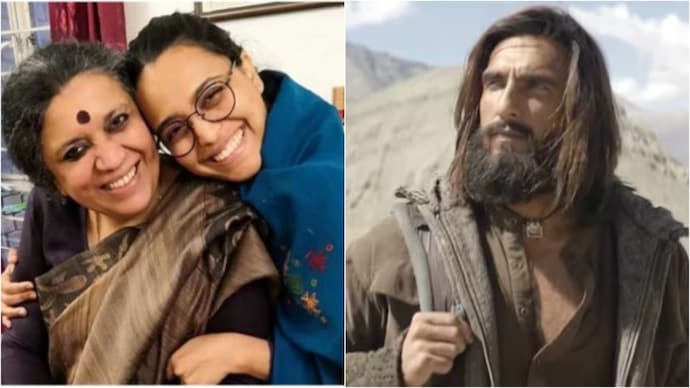

Film scholar Ira Bhaskar recently criticized Aditya Dhar’s Dhurandhar during a discussion where he examined the politics of contemporary Indian cinema.
This conversation was hosted by activist and writer Harsh Mander for his YouTube channel. caravan e mohabbatHarish Wankhede, assistant professor at the Center for Political Science at Jawaharlal Nehru University (JNU), was also included.
Ira Bhaskar raised questions on ideological message in Dhurandhar
Bhaskar, a former assistant professor of cinema studies at JNU and mother of actor Swara Bhaskar, talked about films that have faced bans or censorship in recent years. The panel discussed titles like Punjab 95 and Phule, which have faced hurdles related to certification and release.
❮❯
During the discussion, Bhaskar also mentioned the commercial success of stalwart And he criticized what he described as the ideological message in the film.
“I exemplify this stalwartWhich is earning crores at the box office. Since it is the most recent example of this, it is also performing very well at the box office. This is an example of a film made by a filmmaker who is ideologically convinced of Hindutva and the ideology of Hindutva,” he said, describing Dhar as a capable filmmaker and stalwart A good film.
Bhaskar has criticized the portrayal of Muslims in the film
Bhaskar further questions whether cinematic technique can be separated from the ideas the film promotes.
He said, “But what is the technicality, you know, I mean how should the technique be separated and how should the content be separated from the form.”
He also criticized the portrayal of Muslims in the film, saying that it reinforces certain stereotypes.
Bhaskar said, “It is extremely violent. And its violence is in service of the belief structure of that ideology that Muslims are very violent people. Pakistan is a very violent country. You don’t see any normal Muslims there. Everyone is a terrorist or a gangster.”
According to him, such films selectively use events and narratives to support a particular ideological viewpoint.

He said, “It is supposedly a fiction film based on true events. And it is selective like all films. It will only selectively choose what to put together to serve the ideology.”
The discussion also touched on how Dalits and Muslims are portrayed in Indian cinema and what these portrayals reveal about the broader political and cultural climate of the country.
The panel also considered the role of cinema that foregrounds themes of humanism, secularism and social equality, and whether such films will continue to find a place in the current landscape of Indian film production.
Meanwhile, after the blockbuster success of stalwartIts sequel, Dhurandhar: Revenge, It is set to release in theaters on March 19 and its paid previews will be available on March 18.