





Samsung’s memory division reported record sales for Q1, but this has led to discontent within the company, particularly in the Device Solutions (DS) business. DS is home to the memory business, System LSI (which designs chipsets) and the foundry business (which makes chips for Samsung and external customers).
Now Samsung faces the biggest strike in its history – with 48,000 workers threatening to walk out – which is set to start on Thursday unless an agreement is reached or the government intervenes. The strike is planned to last for 18 days.
SK Hynix is also based in Korea and is the world’s second largest DRAM chip maker after Samsung. SK is also profiting from the recent AI boom, but it is sharing it with its employees – most recently, the company lifted its bonus pay cap.
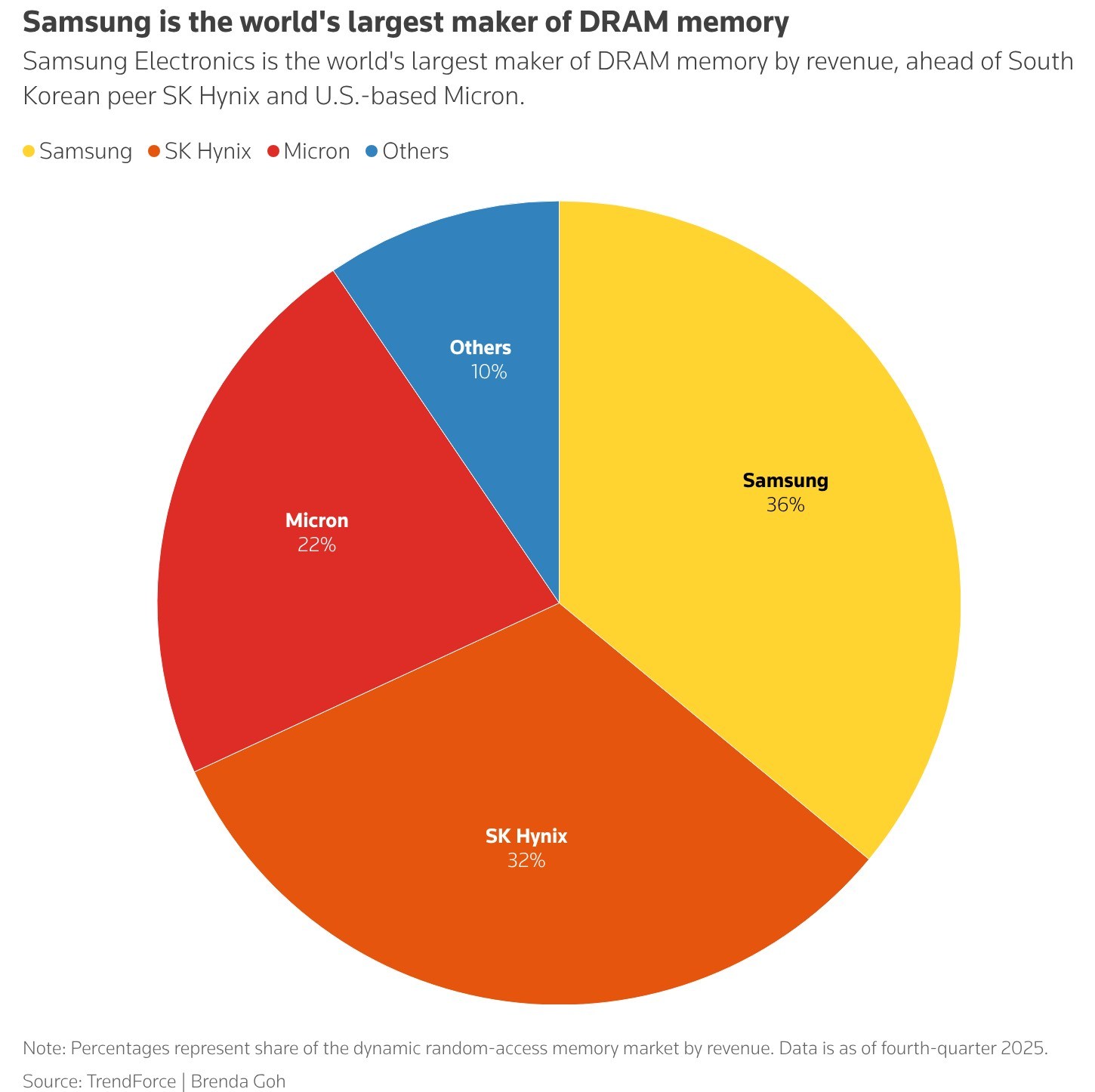
Samsung is the leading DRAM maker, followed by SK Hynix and Micron of the US (Source: TrendForce)

Last year, this resulted in SK employees receiving bonuses three times higher than their peers at Samsung. This is partly because Samsung has a cap on bonus payments that limits them to 50% of an employee’s annual salary.
This is one of the demands that Samsung’s union has made – they want the company to eliminate this limit. Also, Samsung must allocate 15% of its annual operating profit for bonuses.
There are additional considerations too – as mentioned in the opening paragraph, Device Solutions is home to three separate businesses. And while the memory is breaking sales records, the other two are not performing so well.
Samsung wants to focus bonuses on memory employees – the 27,000-strong workforce could get bonuses that are at least six times higher than what employees at LSI and the foundry business get. The union considers this unfair and is concerned that disgruntled employees may leave and look for work elsewhere (Samsung is already losing some employees to SK due to the disparity in earnings).


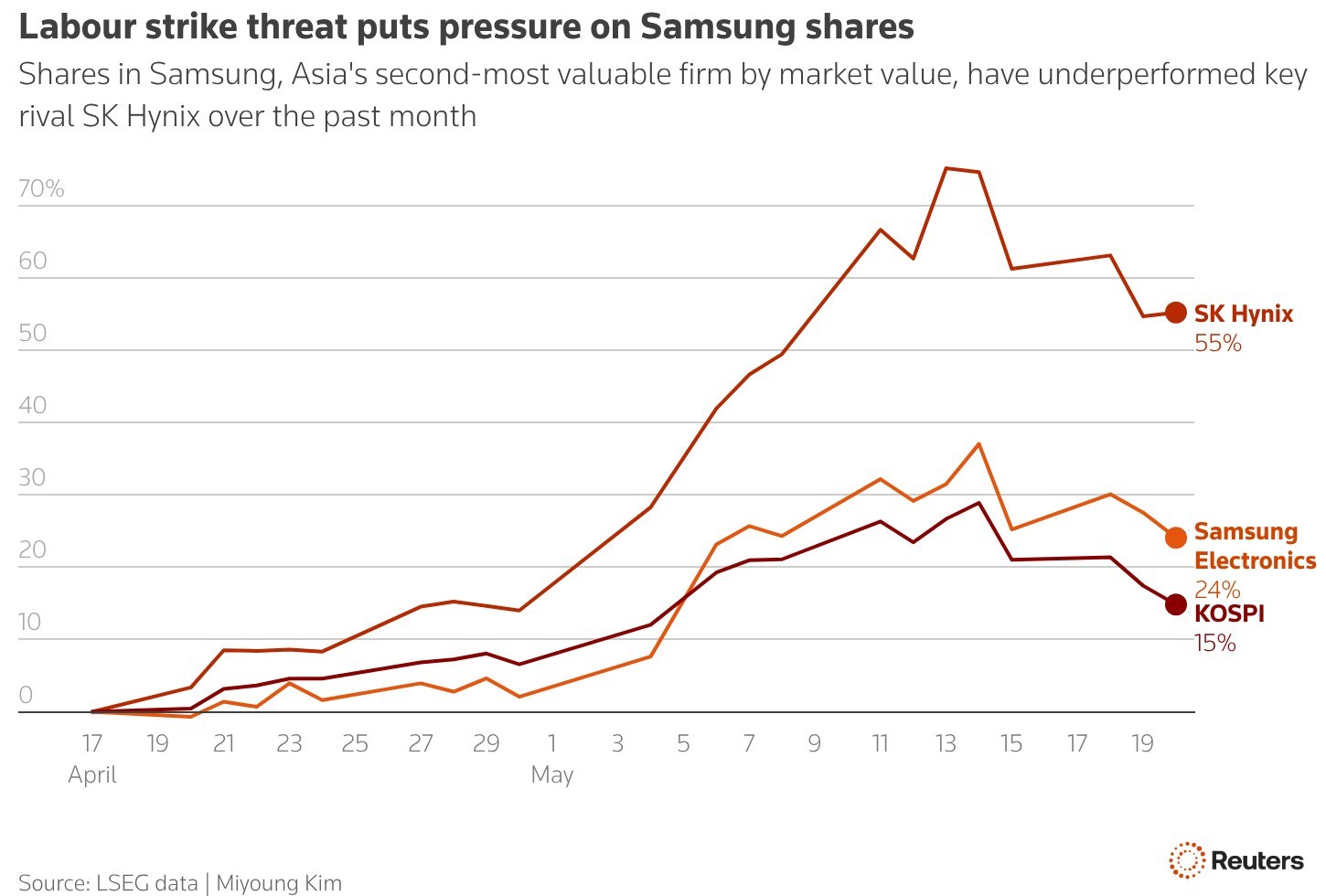
Samsung and SK Hynix share prices over the past three months (Source: Reuters)

Let’s put things in perspective for those who don’t know how huge Samsung is – Samsung makes up about a quarter of South Korea’s exports. An unnamed central bank official said the South Korean economy was predicted to grow 2% this year, but the strike could wipe out 0.5 percentage points of that growth. However, unless the strike extends beyond the 18-day period, the impact on the economy may be minimal.
Samsung has requested that a number of employees remain at their posts (7,087) to maintain essential operations at its facilities and prevent any damage to the production line. A court sided with Samsung on Monday and granted a partial injunction.
The Korean government could order an emergency arbitration, which would halt the strike for 30 days and give the government time to mediate talks between Samsung and its union.