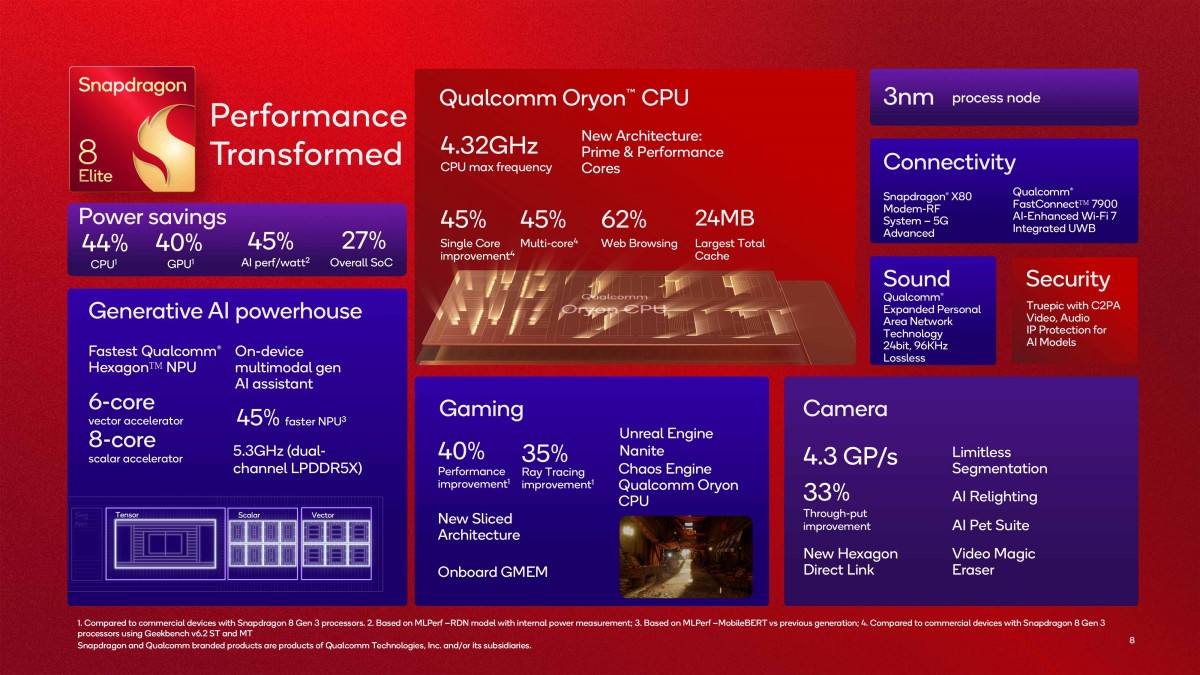
The Snapdragon 8 Elite represents a new hope in the mobile sector – it’s the first chipset in a long time to have custom CPU cores (and it’s not coming from Apple). The GPU is also completely custom and a new generation to boot. And Qualcomm has found a way to increase the clock speed to a greater extent than any other smartphone chipset. This all looks great on paper, let’s see if the expectations live up to the reality.
Here we’ll focus on how the 8 Elite compares to the previous two generations of the Snapdragon 8-series. We’re working on a separate post that will pit the Elite against its main rival, the Dimension 9400.
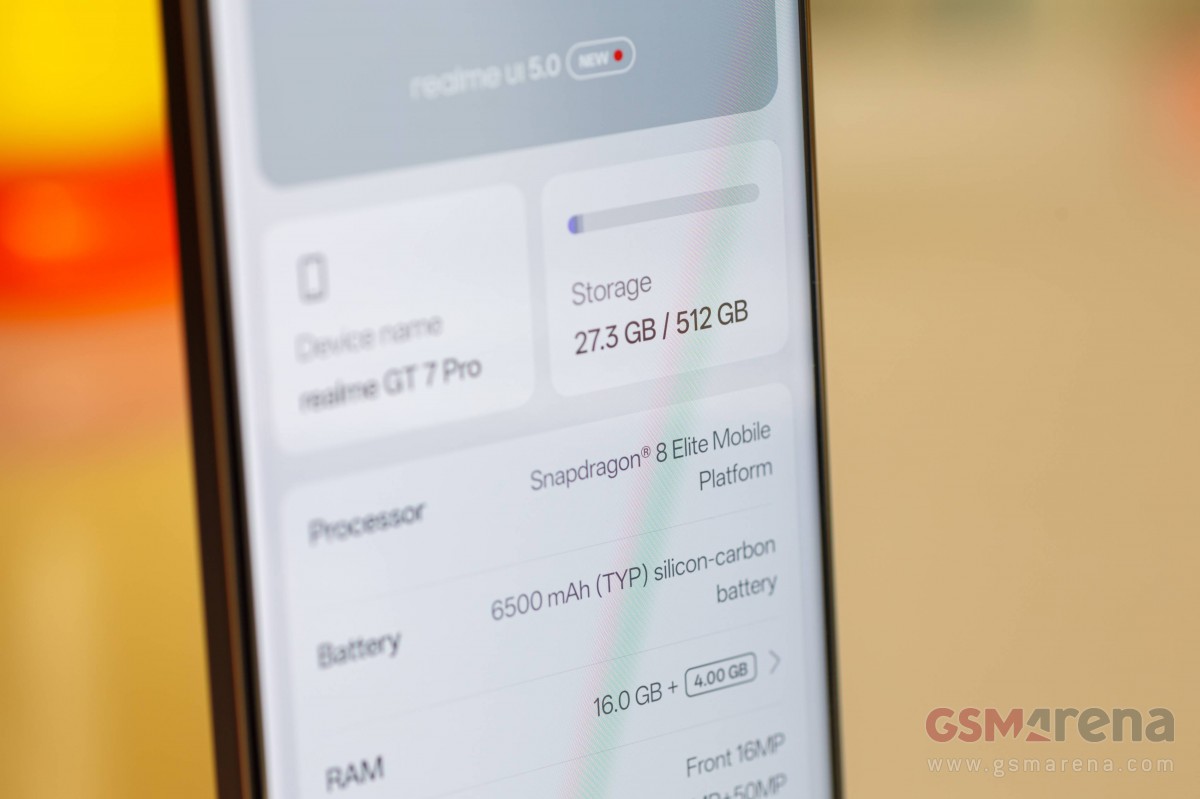
We will use Realme GT7 Pro for this test
We’ll be using the Realme GT7 Pro for the first round of testing the Snapdragon 8 Elite. And as mentioned above, we’ve picked some Snapdragon 8 Gen 3 and 8 Gen 2 phones for comparison. Some of these are gaming phones, so they should represent the best possible performance of the older chipsets. Finally, we should mention that we put the phone in GT mode (ie high performance mode) for these tests.
Let’s look at the CPU first as it is the biggest change this generation. It uses Orion cores, two versions of them – two prime cores and six performance cores. These are not Cortex cores like the MediaTek and Samsung chipsets, but Qualcomm’s in-house design. Note that these are not the same Orion cores that we saw in the Snapdragon X Elite in laptops, but second generation ones.
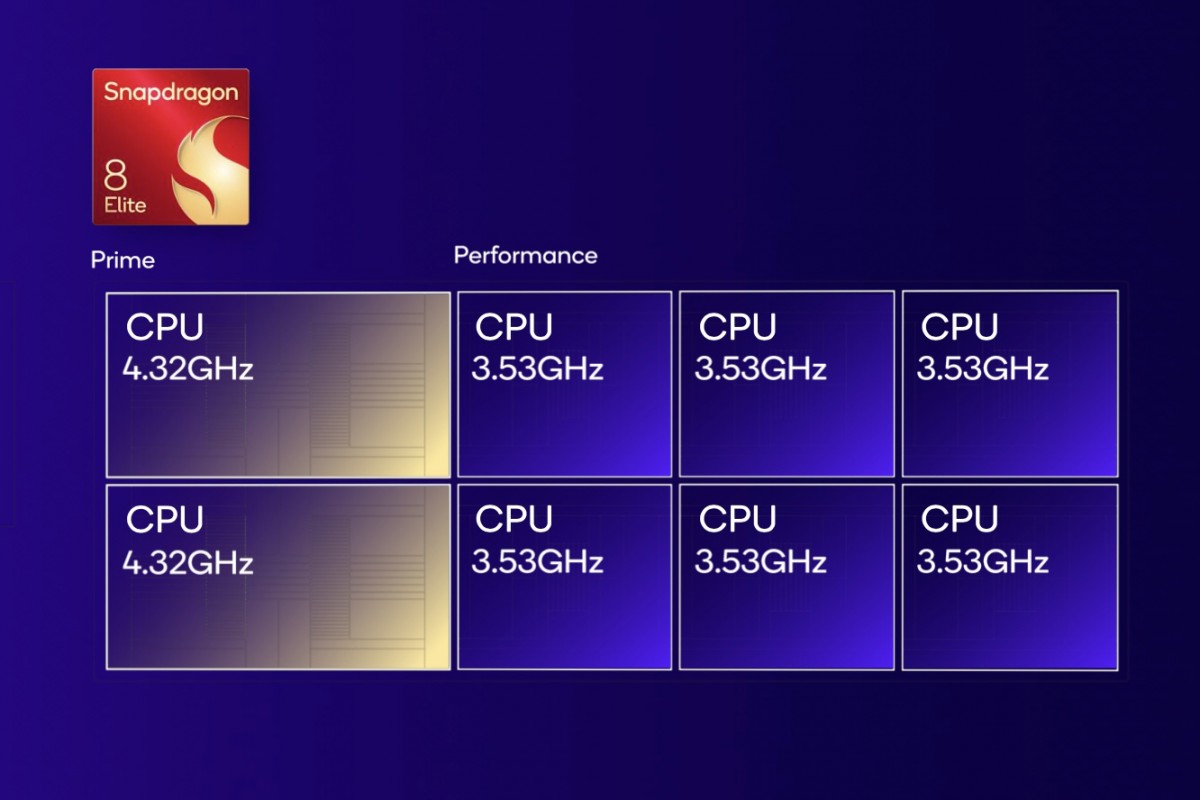
2x 4.32GHz Orion Prime Core + 6x Orion Performance Core
The two prime cores run up to 4.32GHz, which is extremely fast speed for a pocketable device. Apple’s A18 Pro broke the 4GHz barrier earlier this year, but only just – it runs up to 4.05GHz. The Dimensity 9400’s Cortex-X925 stays below 4GHz and clocks at 3.63GHz. Apart from laptops, the highest clock speed you can get on a mobile device is the Apple M4 at 4.4GHz in the iPad Pro (2024) tablet. But keep in mind that these are 11” and 13” tablets and it is very easy to keep them cool.
Looking at Geekbench 6, the phones neatly group themselves into generations. The 8 Elite represents a massive 31% increase in multi-core performance compared to the best 8 Gen 3 results – and they come from a “for Galaxy” chip overclocked in a gaming phone and S24 Ultra in maximum effort mode .
Turning to the single core test, this is where the higher frequency of the Orion Prime core should shine. And it shines over the rest with a whopping 36% lead. Looking at the second generation, the Orion posts double the scores of some 8th Gen 2 phones (Cortex-X3 Prime Core) or only 52% higher than the best 8th Gen 2 phones in their top performance mode.
geekbench 6
- multi core
- single core

realme gt7 pro
512GB, 16GB RAM

ROG Phone 8 Pro (X Mode+)
1TB, 24GB RAM

nubia red magic 9 pro
512GB, 12GB RAM

Galaxy S24 Ultra
512GB, 12GB RAM

Xiaomi 14 Ultra
512GB, 16GB RAM

ROG Phone 7 (X Mode+)
512GB, 16GB RAM

Xiaomi 13 Pro
512GB, 12GB RAM

oneplus 12
512GB, 16GB RAM

Galaxy S23 Ultra
512GB, 12GB RAM

oneplus 11
256 GB, 8 GB RAM
Let’s look at the graphics next. The Adreno 830 is built on a new architecture using a slice design with dedicated memory for each slice. The 830 has three of these slices clocked at up to 1.1GHz.
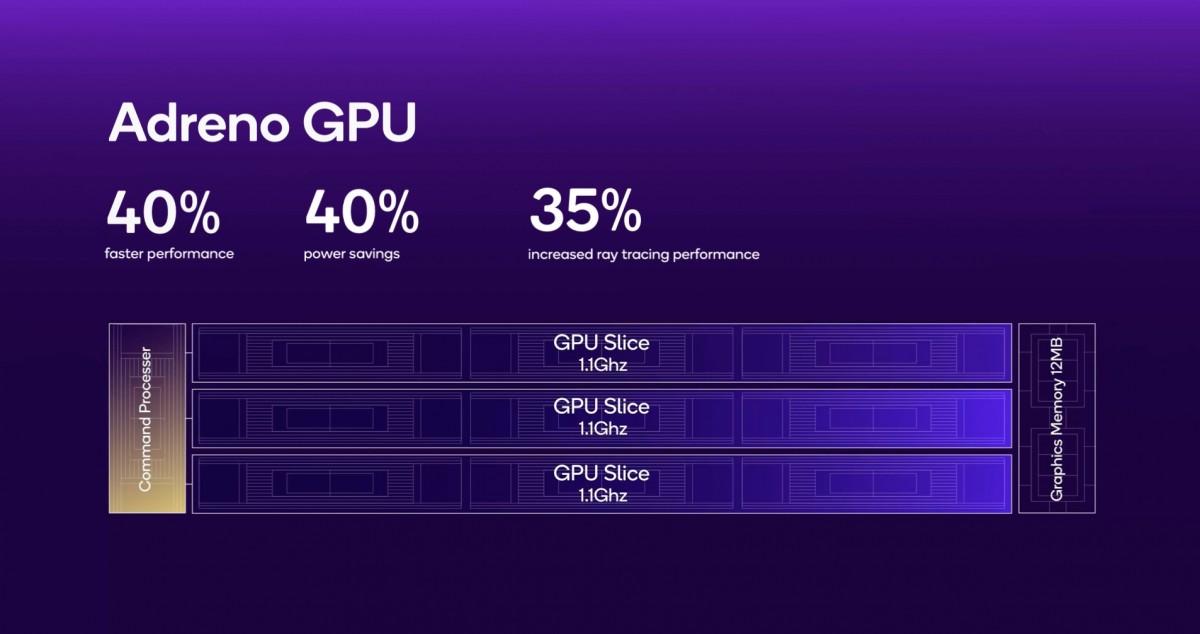
Three GPU slices up to 1.1GHz, plus dedicated memory
Once again, the generational divide is stark. The 3DMark Wildlife Extreme test (running at 2160p) posted a score 21% higher than the best score seen from the Snapdragon 8 Gen 3’s Adreno 750. Going back to Gen 2, the difference is a staggering 68%.
The 8 Elite brings the latest iteration of hardware-accelerated ray tracing. After being first installed on desktop, this technology is also gaining popularity on mobile. The two-year-old 8th Gen 2 GPU can only manage about half the score of the new Elite chip. The difference with Gen 3 is 26% less, but it’s still an impressive generational improvement.
3dmark
- Wild Life Extreme (2160p)
- Solar Bay (1440p)
realme gt7 pro
adreno 830
1264 x 2780 pixels
ROG Phone 8 Pro (X Mode+)
adreno 750
1080 x 2400 pixels
nubia red magic 9 pro
adreno 750
1116 x 2480 pixels
oneplus 12
adreno 750
1440 x 3168 px
Galaxy S24 Ultra
adreno 750
1440 x 3120 pixels
Xiaomi 14 Ultra
adreno 750
1440 x 3200 pixels
Galaxy S23 Ultra
adreno 740
1440 x 3088 px
ROG Phone 7 (X Mode+)
adreno 740
1080 x 2448 pixels
oneplus 11
adreno 740
1080 x 2340 pixels
Xiaomi 13 Pro
adreno 740
1440 x 3200 pixels

Finally, AnTuTu attempts to combine CPU, GPU, memory, and other tests into a single score that represents overall performance. Taking all this into account, there’s a lot of variability – a well-specced 8th Gen 2 phone can come close to an underperforming 8th Gen 3 phone. But once again, the Snapdragon 8 Elite – or rather the Realme GT7 Pro in which it is based – is ahead of the older models by some margin (about 25%).
AnTuTu 10
realme gt7 pro
512GB, 16GB RAM
1264 x 2780 pixels
ROG Phone 8 Pro (X Mode+)
1TB, 24GB RAM
1080 x 2400 pixels
nubia red magic 9 pro
512GB, 12GB RAM
1116 x 2480 pixels
Xiaomi 14 Ultra
512GB, 16GB RAM
1440 x 3200 pixels
Galaxy S24 Ultra
512GB, 12GB RAM
1440 x 3120 pixels
oneplus 12
512GB, 16GB RAM
1440 x 3168 px
ROG Phone 7 (X Mode+)
512GB, 16GB RAM
1080 x 2448 pixels
Galaxy S23 Ultra
512GB, 12GB RAM
1440 x 3088 px
This is not the end of this story, just the first chapter. We still have more testing to do, including the all-important sustained performance tests. We also needed to run tests with GT mode disabled (we ran some tests and the phone didn’t lose much performance).
We also encountered some hiccups during testing, but that may just be due to teething problems — the full Realme GT7 Pro unveiling is scheduled for November 4, though the company has already confirmed some details and let us know. Also allowing to run some tests on the review unit. We have it in the office.