





“We’re starting to see that memory is going to define the shape of the mobile market,” Qualcomm CEO Cristiano Amon said. Although the company doesn’t buy memory chips directly, its customers do – and their sales will be affected in the coming quarter.
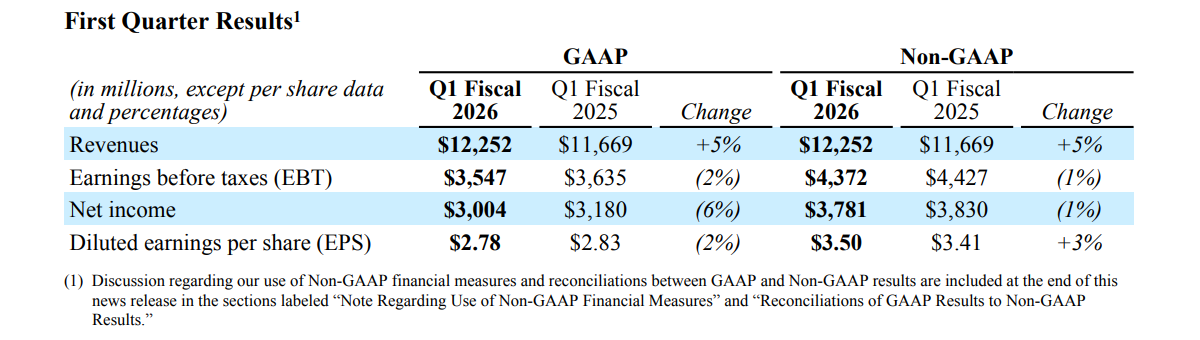
For its first fiscal quarter, Qualcomm beat estimates with revenue of $12.25 billion and adjusted earnings per share (EPS) of $3.50. Analysts polled by the London Stock Exchange had predicted revenue of $12.21 billion and EPS of $3.41.
Net income was $3 billion, or $2.78 per share. For comparison, last year’s first quarter saw net income of $3.18 billion, or $2.83 per share.

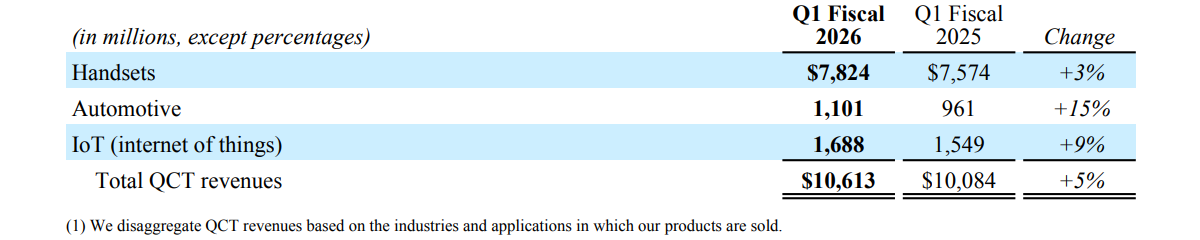
Qualcomm’s largest division sells smartphone chips – it reported revenue of $7.82 billion (up 3% from the previous quarter). Related to that is money from licenses on Qualcomm’s intellectual property (e.g. 5G patents), which brought in $1.59 billion.
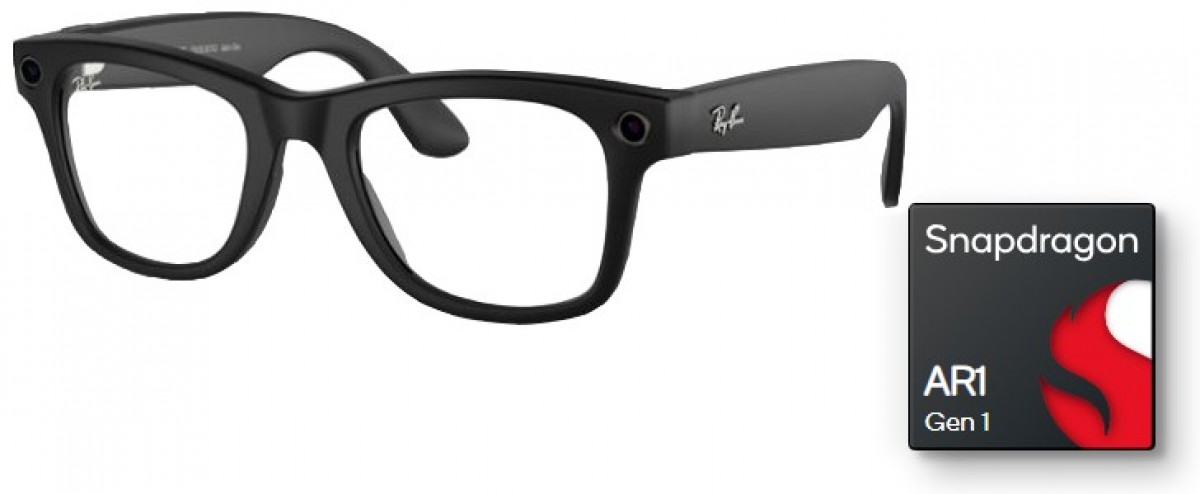
The Internet of Things division makes low-power chips for industrial applications and various smart gadgets (such as the Meta Ray-Ban glasses, which uses the Snapdragon AR1 chip) – this division reported a 9% increase in revenue to $1.69 billion.

Then there’s the automotive division, whose revenue grew even faster (up 15%) to $1.1 billion.



so far so good. However, the company’s forecast for the second quarter fell short of expectations – Qualcomm is predicting $10.2 to $11 billion revenue and $2.45 to $2.65 EPS, while analysts were expecting $11.11 billion and $2.89 EPS.
The final figures will depend on the purchasing strategy of smartphone companies – rising component costs could prompt them to raise prices, which would hurt sales. Flagship phones have larger margins, so this segment is better suited to make up for the memory chip shortage. And CEO Amon argues that Qualcomm is most competitive in the flagship segment.
Finally, Qualcomm continued its stock buybacks – in Q1, it bought 15 million shares worth $2.6 billion. Additionally, it paid $949 million ($0.89 per share) in dividends.