



Pakistan’s ‘Bleed India…’ strategy and explosive trailer of Dhurandhar
Ranveer Singh’s ‘Dhurandhar’ trailer combines an entertaining take on the “thousand cuts” strategy with high-octane action, creating a fantastical, espionage-driven narrative that finds its roots in Pakistan’s political history.
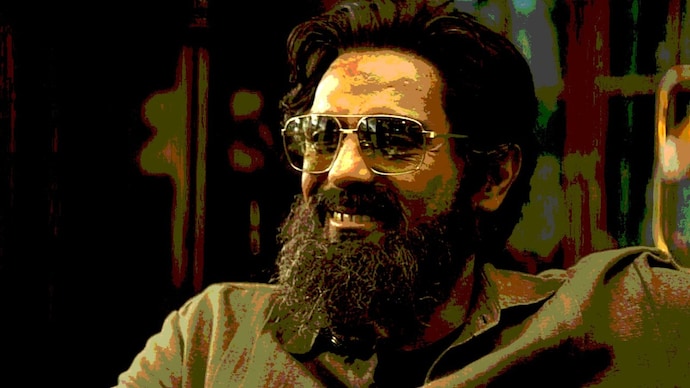

The trailer of ‘Dhurandhar’ starts with Arjun Rampal’s ISI operative Major Iqbal recalling former Pakistan President Muhammad Zia-ul-Haq’s infamous “Bleed India with a thousand cuts” line. Rampal’s character narrates how he was just six years old when he first heard Jiah use this phrase as a war cry, and it has stuck with him ever since. The scene then changes to a brutal sequence in which he tortures a man whose body is pierced with multiple fish hooks on his face, chest and legs.
While the trailer doesn’t reveal much about the film’s overarching plot, the opening scene makes its intention clear: ‘Dhurandhar’ is presented as an explosive commentary on the Pakistan Army’s long-standing military ‘strategy’ against India, as evidenced by the above line, which found expression in writing and rhetoric during the Zia years.
Although Rampal’s character attributes his ideology to Zia-ul-Haq, its roots lie in the words of former Pakistan Prime Minister Zulfikar Ali Bhutto. In his 1969 book ‘The Myth of Independence’, Bhutto saw conflict with India as a matter of self-defence. He wrote, “Confrontation as a measure of self-defense must be continued until justice prevails, no matter how overwhelming the circumstances.” This perception was heightened by Bhutto’s rhetoric, including a speech at the United Nations where she spoke of waging a “war of a thousand years” with India.
On September 22, 1965, during the Indo-Pak War, Bhutto addressed the United Nations Security Council and declared, “We will fight a war for a thousand years, a war of defense.” He was emphasizing Pakistan’s determination to continue opposing India despite battlefield setbacks and growing international pressure for a ceasefire.
Bhutto’s comments during and after the wars of 1965 and 1971 provided the political and ideological basis for what later evolved into the “thousand cuts” concept.
Although Bhutto did not openly advocate terrorism, his outline for a protracted conflict became the basis for an extended conflict strategy. His words, especially his 1965 UN address, are often considered the ideological precursor to what became known as the “Bleed India” strategy.
After Pakistan’s defeat in the 1971 war and the creation of Bangladesh, Islamabad recognized that conventional war was no longer a viable option. This laid the foundation for the shift towards proxy warfare.
The strategy took formal shape and was implemented by General Zia-ul-Haq. As military ruler and later president of Pakistan, Zia transformed Bhutto’s rhetoric into a covert strategy of low-intensity warfare, built on insurgents and proxy groups. Pakistan’s intelligence agency, the ISI, became the key executor of this policy, supporting terrorist movements in India, particularly in Kashmir, Punjab and, as has been alleged, in the North-East – an aspect which ‘Dhurandhar’ appears to underline.

“Kill India with a thousand cuts” eventually became the backbone of Pakistan’s military-intelligence strategy under Zia, which defined decades of covert conflict with India.
Based on the trailer, ‘Dhurandhar’ appears to weave this historical backdrop into a high-voltage fantasy tale led by Ranveer Singh’s fierce, battle-hardened hero. The film appears to place personal stakes, covert missions and cross-border tensions at the center of its story, using action and drama to combine the “true events” from which the film is “inspired”.
The film is written, directed and produced by Aditya Dhar, who also directed ‘Uri: The Surgical Strike’. It stars Arjun Rampal, Sanjay Dutt, R Madhavan, Akshaye Khanna and Ranveer Singh. Presented by Jio Studios, it is scheduled to release on December 5.