



OpenAI executive says coding and two other tasks will be the fastest to be automated by AI
As AI is reshaping workplaces at record pace, an OpenAI executive predicts that three job sectors are now at the forefront and emerging as most vulnerable to machine-led automation.
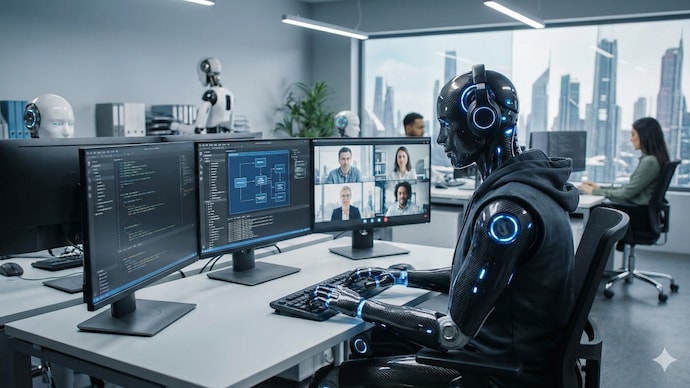

AI is already automating a wide range of tasks in offices, and in some areas change is happening faster than anyone expected. With automation accelerating at this pace, the question of which jobs are most vulnerable to AI is becoming increasingly prominent. According to a senior OpenAI executive, three roles in particular are at the forefront of being transformed by AI-led automation.
In a recent episode of the Unsupervised Learning podcast, OpenAI’s product lead for business products, Olivier Godement, said there are three job categories that stand out as the fastest-moving targets for automation: coding, customer service, and life sciences. He argued that these sectors are already seeing rapid deployment of AI tools that are reshaping workflows on a large scale.
Ollivier suggests that the pharmaceutical and life sciences industries are early candidates for deep automation led by AI. “My bets are often on life sciences, pharma companies,” he said, noting that the bulk of their processes – especially administrative and document-heavy tasks – are ripe for AI intervention. They suggested that the ability of advanced models to capture, organize, and analyze both structured and unstructured data could dramatically reduce the long timelines typically associated with bringing new drugs to market.
“Once you finalize a recipe and make that drug available in the market, it takes months, sometimes years,” he said. “Turns out the models are very good at this – very good at collecting lots of structured and unstructured data, aggregating, recognizing different changes in documents.” According to Ollivier, if technology continues to improve at its current pace, these traditionally slow processes could become far more efficient.
Besides pharma, he said two other sectors are already showing strong, real-world examples of rapid automation: coding and customer service. While he stressed that we have not reached the stage where “any white-collar job” can be automated overnight, he said the direction of travel is clear. Developer tools are becoming more capable, customer service models are becoming more reliable, and companies are more willing to deeply integrate AI into day-to-day operations.

He cited OpenAI’s ongoing work with T-Mobile as an example of what’s possible today. “I’m working closely with the people at T-Mobile to deliver an essentially better experience for our customers, and we’re starting to see pretty good results in terms of quality at meaningful scale,” he said. As improvements accelerate, he believes the industry “will be surprised in the next year or two” by how many tasks can be reliably automated.
And Ollivier is not alone in predicting which sectors will be first affected by AI-led automation. Earlier, Geoffrey Hinton – often called the “Godfather of AI” – warned that AI systems would eventually become “better than us at everything” involving intellectual labour. While physical jobs may remain untouched for a long time, Hinton joked that “becoming a plumber would be a good option”. He expressed particular concern for workers in roles such as paralegal support and call centres. “For mundane intellectual labor, AI is going to replace everyone else,” he said, adding that he would be “terrified” to work in a call center today.