‘Not worth it’: OpenAI scientist criticizes US military AI deal as users rush to cancel ChatGPT
Aiden McLaughlin, research scientist at OpenAI, believes – in a personal capacity – that his company’s AI deal with the Pentagon, which has been in the news for all the wrong reasons, was not worth it. He writes on
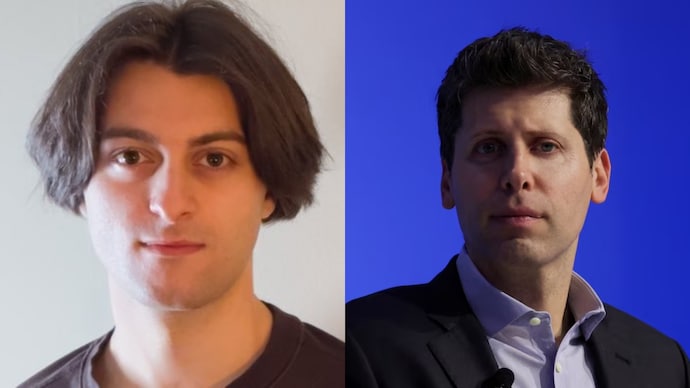

OpenAI is in a bit of a tough spot right now. Users have started boycotting ChatGPT after the company’s decision to sign a deal with the Pentagon for AI. While OpenAI CEO Sam Altman has made clear that the company will not allow the US military to cross red lines with its systems, it seems not everyone is happy with the deal, even inside OpenAI. Aiden McLaughlin, research scientist at OpenAI, has criticized the move, saying it is not worth it.
❮❯
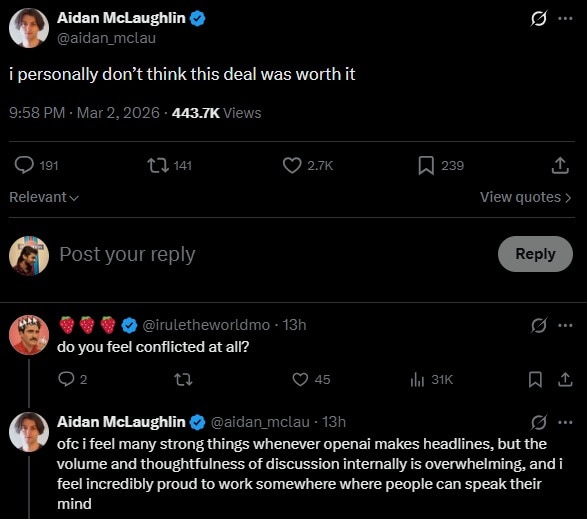
On X, McLaughlin shared a post giving a candid perspective on OpenAI’s deal with the US Department of Defense. “I personally don’t think this deal was worth it,” he wrote. In a follow-up post, he said internally, the amount of discussion and thoughtfulness around the deal has been “tremendous” and that he is proud to work for a company where people can speak their minds.
Eden’s comments come at a time when OpenAI is receiving criticism from online users, who – ever since the company struck a defense deal with the Pentagon – are abandoning ChatGPT for competing chatbots, particularly Anthropic Cloud. According to data released by Sensor Tower, ChatGate uninstallations jumped 295 percent over the weekend, while the cloud became the number one app on Apple’s App Store in the US.
Why is the OpenAI deal not worth it?
While Aiden McLaughlin did not explain the reasoning behind his opinion on the deal, the situation seems dire for OpenAI. Sam Altman recently admitted that even though the company had hoped to defuse the situation between the Pentagon and the AI industry, rushing into the agreement made it “opportunistic and sloppy.”
OpenAI announced its deal just hours after the US military canceled its contact with Anthropic and classified it as a supply chain risk, as it has done with China’s Huawei. However Altman believes the Dario Amodei-led startup should not be labeled a supply chain risk by the US government – something that would force all defense contractors to cut their ties with Anthropic.
Altman has clarified that the contract will not allow the US military to use OpenAI’s AI systems for large-scale domestic surveillance or the development of autonomous weapons – the same concerns that led to Anthropic’s termination.
However, a report from The Verge suggests that the agreement between OpenAI and the Defense Department is not as strict as Anthropic had demanded.
OpenAI scientist says company allows free discussion
A user on X asked McLaughlin if the current situation made him feel conflicted. The OpenAI researcher said he feels strongly about various issues within the company. “The amount of discussion and thoughtfulness internally is tremendous, and I feel incredibly proud to work in a place where people can speak their minds,” he said.

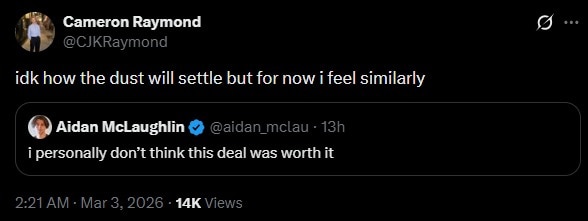
OpenAI security researcher Cameron Raymond quoted McLaughlin’s original post and wrote, “Don’t know how the dust will settle but for now I feel the same way.”
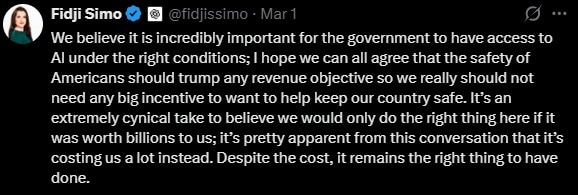
While Aiden McLaughlin doesn’t agree with OpenAI’s recent deal, some of his colleagues have a different view. “Regardless of the cost, this is the right thing to do,” Fidzi Simo, OpenAI CEO of the application, said in a separate thread on X.
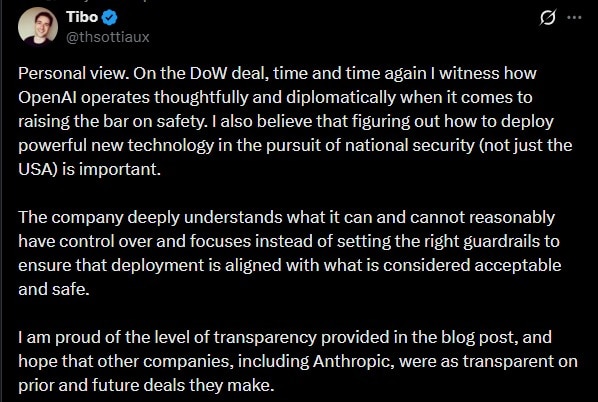
Additionally, OpenAI codecs engineer Tibo wrote that the company is “installing the right guardrails to ensure that deployments are in line with what is considered acceptable and safe.”