



New Year’s Eve strike alert: There may be major delays in Swiggy, Zomato, Amazon deliveries on December 31
The call for a pan-India strike by gig workers on December 31 could disrupt food and e-commerce deliveries as workers protest over wages, safety and job insecurity. Users need to be prepared as millions of orders will be placed through Swiggy and Zomato on December 31.
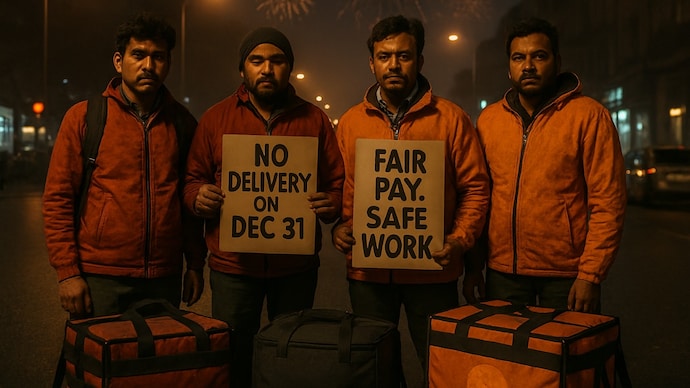

Food delivery and online shopping plans for New Year’s Eve may hit trouble this year, as delivery partners of some of the country’s biggest platforms have called for an all-India strike on December 31. The proposed protest could impact the services of food delivery, instant commerce and ecommerce apps including Swiggy, Zomato, Zepto, Blinkit, Amazon and Flipkart, at a time when demand is usually at its highest.
Deliveries likely to be delayed on New Year’s Eve as gig workers call strike
According to a report by CNBC-TV18, the strike has been called jointly by the Indian Federation of App-Based Transport Workers (IFAT) and the Telangana Gig and Platform Workers Union. The timing is important, as both December 25 and December 31 are among the busiest days of the year for these platforms, driven by festive meals, parties and last-minute shopping. If the strike sees widespread participation, customers may face delayed deliveries, limited availability of delivery partners or even temporary service disruption in some cities.
The unions say the decision to go on strike has been taken after no meaningful solution has been found to their long-standing concerns regarding working conditions in the gig economy. Delivery partners argue that while platforms are emphasizing faster delivery and higher order volumes, workers’ earnings have either stagnated or declined. Many claim that they are being forced to stay logged in for long periods of time, especially during busy days and festivals, to earn a basic income.
Security has emerged as another major flashpoint. Workers have particularly highlighted aggressive delivery timelines and targets under the “10-minute delivery” model, which they believe increases the risk of road accidents. They have also raised concerns about sudden account deactivation, where delivery partners could lose access to work without clear explanation or a proper appeals process. For many gig workers, lack of job security has become a major source of stress.
In their statement, the unions put forward a list of demands aimed at improving both earnings and working conditions. Top of the list is a transparent and fair pay structure, as well as eliminating promises of ultra-fast delivery, which, according to workers, puts lives at risk. They are also demanding an end to arbitrary account blocking and want platforms to follow due process before taking such action.
Other demands focus on basic safety and welfare measures. These include proper safety gear, accident insurance, and more reliable access at work, eliminating what workers describe as algorithm-driven discrimination. The unions have also demanded mandatory rest leaves, reasonable daily working hours and stronger technical and grievance redressal support within the apps. Furthermore, they want access to social security benefits such as health insurance, accident cover and pension schemes, which are absent for most gig workers today.

The protests are not just directed at platform companies. The unions have urged both the Central and state governments to step in more proactively to regulate digital labor platforms and ensure that existing labor protections are actually implemented on the ground. They are also demanding formal recognition of gig workers’ right to organize and engage in collective bargaining, which they say is still missing in practice.
The strike call comes at a time when the government is in the process of implementing labor reforms that include gig and platform workers within the formal framework. Under the amended Code on Social Security, digital platforms are expected to contribute between 1 to 2 per cent of their annual turnover to the social security fund for gig workers, subject to a cap of 5 per cent of the total payments made to them. While union leaders have acknowledged this as a step forward, they argue that the gains have still not translated into real support for workers, largely because of weak enforcement.
For consumers, the immediate impact of the proposed strike could be felt on December 31, especially in the evening when orders generally surge. While it remains to be seen how many delivery partners will participate and how the platforms will respond, customers may want to plan ahead for New Year’s Eve with the possibility of delays or limited service availability.