



Nepotism helps in entry, not success: Actor Amol Palekar on the reality of Bollywood
At Sahitya Aaj Tak 2025, veteran actor and filmmaker Amol Palekar said that nepotism can open doors, but only talent and hard work leads to real success. He also urged audiences to measure films beyond box office numbers.
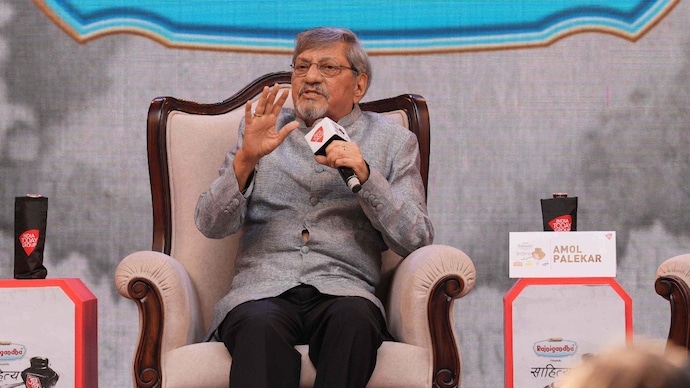

Veteran actor Amol Palekar started a new conversation on nepotism during his session at Sahitya Aaj Tak 2025. Speaking at the Dastak Darbar session, he said that although family connections can make it easier to enter the industry, real success still depends on one’s work. Sharing examples from cinema and politics, Palekar said recommendations can only take a person so far – after that, talent and perseverance decide the journey.
On nepotism, parallel cinema
Palekar talked about nepotism and said that this debate is not new. “Family background can help one get in, but it cannot guarantee success. There are many examples of this. After admission, only your work speaks.”
While discussing cinema today, he expressed his dissatisfaction with how commercial success is measured. With humor and honesty, he said that earlier, different types of films existed together – big entertainers like ‘Amar Akbar Anthony’, relatable middle-class stories of Hrishikesh Mukherjee and Basu Chatterjee and action-packed films of Dara Singh. “Today, you are told what you like based on box office numbers. There is never any discussion on whether the film is good or not.”
Sandhya Gokhale further said that today many good films struggle because they do not get screens. Even if they are released on streaming platforms, they are not counted as commercial successes.
Palekar questioned the current definition of success, saying, “If a film made for Rs 15 or Rs 20 crore earns Rs 70 crore, shouldn’t it be called a success? But today, we are told that if it doesn’t cross Rs 100 crore then it is a failure.”
When asked whether parallel cinema was over now, he disagreed. “Good films are still being made – they just don’t reach audiences the way they used to. That’s the real concern.”
swimming against the tide
Additionally, the senior actor and filmmaker also reflected on his life, cinema and creative journey. He discussed his recently released memoir, which was published in three languages – Avaaz in Marathi, Amanat in Hindi and Viewfinder in English. Sharing the gist of the book, Palekar said, “Those who believe in protest will enjoy it.” He attended the event with his wife, writer Sandhya Gokhale.
During the session, Palekar was asked how he could become the voice of the opposition. He said that he never saw himself as a rebel when he was younger. As he grew up, he quietly realized the value of not following the mainstream. He said, “The mainstream always moves in one direction. I found the other path interesting. I dedicate this book to those who follow that path.”

The actor also pointed out how many people only know him because of his soft-spoken, relatable characters and not as a person. Using the famous story of the blind men and the elephant he said, “Cinema is just one part of my life. There are many other parts that people don’t know. If you read this book, you can finally see who I am.”
On his acting career
He took a moment to look back at how acting accidentally entered his life. Before films, Palekar was a painter. His girlfriend worked in theater and one day, theater legend Satyadev Dubey unexpectedly offered him a role. “He told me, ‘Don’t think I’ve discovered your talent. I just see that you have time. If you join the theatre, you can do something worthwhile.’ I had no plans to act. So I call it a happy accident.”
At the time of the filming of one of his most memorable films, Rajnigandha, Palekar was working as a bank clerk. He told how he will balance between his office job and rehearsals. “Today’s world asks young people to choose a clear path. But at the time, I studied art, worked in a bank to pay the bills, and did theater in the evenings.”
He shared that when Basu Chatterjee offered him a role in a film, he initially refused because he believed that if he was selected, the filmmaker should introduce him to the production house – not send him to wait in a queue. Chatterjee later returned and insisted that he play the role.
Amol Palekar’s session ended with loud applause.