



Neelira review: Somethran’s anti-war film is a portrait of the human cost of war
Neelira Movie Review: Director Somitharan’s Neelira, starring Naveen Chandra, Roopa Koduvayur and Sananth Reddy, is a chamber drama set against the backdrop of the Sri Lankan civil war. The film is a straightforward documentation of the effects of war on the lives of ordinary people.

There is a scene from director Somitharan Neelira Where a group of children are playing outside in the midst of the Sri Lankan Civil War in 1988. One of them, engaging in a shooting sport, shouts, “What’s a sport without a gun?” All it takes is a visual to put everything into context. These are the kids who should be playing hopscotch or hide-and-seek. Instead, they’re thinking about shooting each other.
Neelira, which translates to “A Long Night” in English, is a quietly devastating film about the human cost of war in Sri Lanka. Set almost entirely inside a single house, it traces the events of one night as a family prepares to host a wedding the next day. That night, a group of Indian Peace Keeping Force (IPKF) soldiers accidentally arrived at the house and were asked to stay there until morning to avoid rising tensions with the rebels.
One night. A family was taken hostage. An impending marriage. There is a war going on in the background. at 100 minutes, NeeliraWithout showing the actual war, it takes the audience into a world where there is no guarantee of life from one minute to the next.
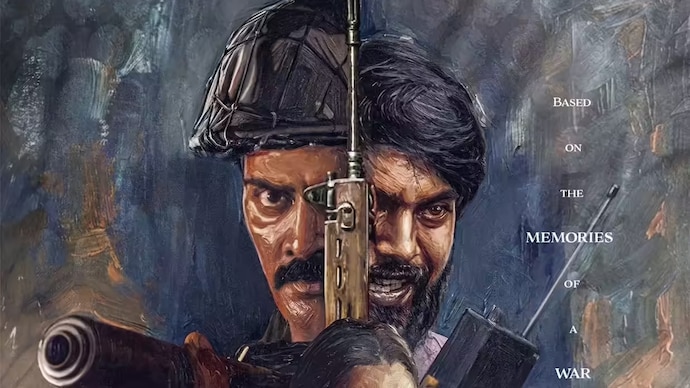
Director Sometharan, a Sri Lankan filmmaker, has billed Neelira As a fictional story rooted in the memories of a war child. Authenticity is reflected in every frame. The surrounding environment, the house, the objects inside it – everything gives a feeling of being lived in. You can hear the chirping of chickens, the rustling of leaves, the rattling of pots and pans – all carrying the burden of uncertainty. Every dog’s barking warns of danger, almost like an alarm to save life and protect what is left. Each gunshot signals a possible confrontation within seconds, the tendency to dive into the bunker and hope to survive.
Amidst all this, marriage is a ray of hope – but maintaining it also feels overwhelming. The family steals small moments of happiness wherever possible. Men are busy with wedding preparations while women wear jewelery and choose sarees for the ceremony, finding warmth in the familiar rituals of life.
Their happiness is short-lived when Indian Army soldiers enter the house. His exchanges with the family laid bare the consequences of the war with calm accuracy. In one dialogue, a character says, “War is war, where does peace come in between?” – A line that reflects the weight of everything the film produced. Instead of confining ourselves to the drama of survival, Neelira Reaches further. There is a grandfather who took his memories of the conflict in World War II into a new memory. It features a track that tells the story of a couple separated by war, their story a quiet pain running beneath the surface. And there are the rebels themselves, humanized rather than demonized, fighting a war that has decimated everything around them.

The film acknowledges the misdeeds of the IPKF and also humanises its soldiers through the character of the Captain played by Naveen Chandra. It’s a careful, deliberate balance – one that refuses to caricature either side. When the army knocks at the door, the women of the house instinctively put on several shirts. The matriarch burned all evidence that might indicate her sympathy for the rebels. This is not a dramatic act. They are the quiet, practiced survival instincts of people who have lived for a very long time in the shadow of war.
Neelira Tells and shows a lot in its short run time without feeling rushed or preachy. Its anti-war message comes not through speeches, but through lived moments – small, specific, and deeply human. It keeps the tension up throughout, and by the time it ends, you find yourself invested in these lives in a way that lasts long past the end.
❮❯