



MIT study says 12 percent of jobs could already be replaced by AI, with finance, health and services most affected
A new study from MIT shows that artificial intelligence is capable of replacing about 12 percent of US jobs, with finance, healthcare and professional services seeing the greatest impact.
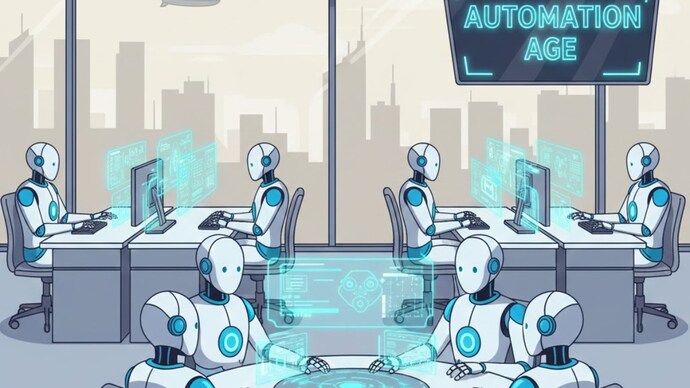

As machines become smarter, the fear of them replacing human jobs is becoming increasingly apparent. In fact, a new report shows that artificial intelligence is already capable of replacing about 12 percent of jobs in the United States. And the sectors most vulnerable to disruption include finance, healthcare and professional services.
These shocking figures are coming out from a new study by the Massachusetts Institute of Technology. In the study, researchers created a detailed labor simulation model called the Iceberg Index, developed in partnership with Oak Ridge National Laboratory, to measure how closely AI skills overlap with nearly 1,000 occupations in the US workforce. And based on today’s AI capabilities alone, the study estimates that approximately $1.2 trillion in annual wages is now exposed to automation.
The Iceberg Index reportedly simulated how all 151 million US workers interact with emerging AI tools, mapping specific tasks and skills most vulnerable to automation. The system offered a detailed view of potential disruption down to the zip-code level, which would allow policymakers to clearly understand which communities and industries were most at risk. “Essentially, we are creating a digital twin for the American labor market,” said Prasanna Balaprakash, director of the Oak Ridge National Laboratory and co-leader of the research for CNBC. The researchers note that they have already shared this tool with state governments to support workforce planning, reskilling initiatives and long-term economic strategies.
Mass layoffs are not being predicted
Importantly, the researchers also emphasize that the study does not predict mass layoffs. Instead, the MIT team looked at what today’s AI systems can already do — and how it’s quietly reshaping job tasks. Their analysis shows that the impact of AI is already reaching far beyond headline-grabbing tasks like writing code or drawing pictures. Routine work in logistics, office administration, human resources and financial services is increasingly being put on AI systems trained to handle documentation, data analysis and workflow automation. In healthcare, AI is also taking over scheduling, claims processing and other administrative duties, freeing up physicians to focus more on patient care.
AI will eat up repetitive tasks
The report highlights that roles that rely heavily on documentation or repetitive analysis are among the first to see structural change. “Financial analysts will not disappear, but AI systems may demonstrate capability in important parts of document-processing and routine analysis work,” the researchers note. “It reshapes how roles are structured and which skills remain in demand, without necessarily reducing the workforce.” Although the total number of jobs may not decline immediately, the nature of work within those roles is set to change – pushing employees to upskill faster than before.

Tech jobs are already facing the impact
The study also suggests that technology businesses are already showing early signs of this transition. With AI models now capable of generating “over a billion lines of code each day”, companies are rethinking their recruiting pipelines and reducing their reliance on junior programmers. “These observable changes in technology businesses indicate a broader restructuring of work that extends beyond software development,” the report said. Similar but less publicized changes are unfolding in HR, logistics and back-office functions – the essential but often overlooked engines that keep businesses running.
As AI continues to weave itself into everyday workflows, the new MIT study once again highlights the inevitable truth: Automation may not immediately eliminate millions of jobs, but it is already reshaping work, and which skills will matter most in the years to come.