



Acrimonious diplomatic talks have erupted between the UAE and Iran after Iranian Foreign Minister Abbas Araghchi accused the UAE of carrying out “aggression” against Tehran. The claim was quickly rejected by senior Emirati officials, who described the allegation as misleading and insisted that the UAE’s actions had been defensive in nature amid a rapidly escalating regional crisis.The dispute comes at a time when the Gulf region is already grappling with increased instability following missile and drone attacks linked to the broader conflict involving Iran, Israel and the United States. Against this volatile backdrop, the UAE has sought to clarify its position, urging restraint and diplomacy.
Amidst war with America-Israel, UAE hits back at Iran’s allegations
The latest dispute began when Iranian Foreign Minister Abbas Araghchi accused the UAE of participating in hostile actions against Iran. In response, Anwar Gargash, diplomatic advisor to the UAE President, publicly rejected the claim and said the allegation reflected a misunderstanding of the situation and ignored the reality of the ongoing attacks on Gulf states. Gargash argued that the UAE was acting in self-defense rather than aggression. He said Iran’s allegations are particularly shocking given that Gulf countries have faced numerous missile and drone attacks during the current conflict. According to Emirati officials, the country is emphasizing restraint while reserving the right to defend its territory and citizens.The diplomatic confrontation cannot be separated from the broader geopolitical crisis currently unfolding in the Middle East. The situation deteriorated following a series of recent military confrontations involving Iran, Israel, and the United States. These developments triggered retaliatory attacks across the region and pushed the Gulf countries into a tight security situation. The UAE has reported intercepting missiles and drones targeted at its territory, while several civilian infrastructure sites have been targeted during the conflict. The attacks have caused numerous casualties and disrupted travel, energy infrastructure and business operations across the Gulf. These developments have turned the UAE into an unexpected frontline state in the broader geopolitical conflict.
UAE says it is acting in self-defense amid Iran vs. US-Israel war
In response to Tehran’s accusations, Gargash stressed that the UAE’s policies are based on defensive measures rather than escalating tensions. He said the country retains “the right to defend itself” against attacks but continues to prioritize restraint and diplomatic solutions.This position reflects the UAE’s long-term strategy of balancing strong security responses with calls for regional de-escalation. Officials argue that protecting infrastructure and stopping incoming threats does not constitute aggression, but a necessary response to protect civilians and national assets.
Iran’s claims and regional tensions amid war with America and Israel
However, Iran has said that Gulf countries, including the United Arab Emirates, have indirectly supported military action against it by allowing Western allies to operate in the region. Tehran has also alleged that some facilities in the Gulf state were used to launch attacks on Iranian targets, but Emirati officials have strongly denied this claim.The dispute reflects a military conflict as well as a broader information battle, with both sides attempting to shape international perception of responsibility for the escalating violence.
UAE calls for de-escalation amid Iran vs US-Israel war
Despite the harsh rhetoric, the UAE has repeatedly urged all parties involved in the conflict to adopt a diplomatic solution. At international forums, Emirati representatives have called for an immediate reduction in hostilities and a return to negotiations. He warned that continued tensions could destabilize the entire Gulf region and jeopardize global energy markets. The Gulf remains strategically important as it hosts some of the world’s most important oil and gas shipping routes, particularly through the Strait of Hormuz. Any disruption in the region could have significant consequences for the global economy.
Impact of Iran vs. US-Israel war on the Gulf and beyond
Tensions between Iran and the Gulf countries have already caused wide-ranging impacts in many regions. Airspace closures and security concerns have forced airlines to cancel or divert flights in the Middle East. Fears of conflict near the Strait of Hormuz, through which about a fifth of the world’s oil supply passes, have caused volatility in global oil prices.Many Gulf countries have increased defense measures after stopping missile and drone attacks. These developments demonstrate how quickly a regional dispute can affect global trade, travel and energy markets.

UAE’s strategic balancing act between Iran vs US-Israel war
The UAE’s response highlights the delicate balancing act it faces in the current geopolitical environment. On the one hand, the country maintains strong strategic partnerships with Western allies, including the United States. On the other hand, it has historically sought to maintain diplomatic channels with regional powers such as Iran.This dual approach, combining security cooperation with diplomatic outreach, has been a cornerstone of Emirati foreign policy for years. The UAE appears to be continuing this strategy, by rejecting Iran’s accusations as well as calling for de-escalation.
Information war and misinformation between Iran vs. US-Israel war
Another dimension of the conflict is the spread of misinformation online. Authorities in the United Arab Emirates have warned against sharing unverified content related to the crisis, arguing that misleading narratives could fuel panic or undermine national security. In the latest crackdown, authorities arrested dozens of individuals accused of spreading fabricated footage or false claims about the conflict on social media.
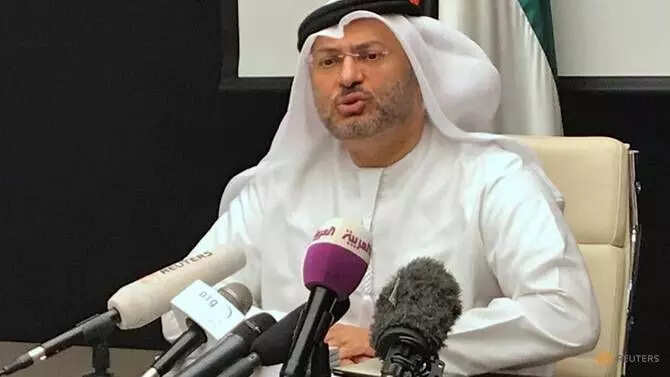
Anwar Gargash, Diplomatic Advisor to the UAE President and UAE Minister of State for Foreign Affairs
Officials say maintaining accurate information is essential during a crisis when rumors can spread rapidly. With tensions still high, analysts have warned that diplomatic confrontation between Iran and Gulf states could escalate if the broader regional conflict continues. However, many experts believe that Gulf countries, including the UAE, will continue to insist on a diplomatic solution rather than direct military confrontation.The UAE rejects accusations of aggression and emphasizes that any defensive action is aimed only at protecting its territory and citizens. The diplomatic dispute between the UAE and Iran underlines the fragile security environment in the Gulf today. While accusations and counter-allegations dominate the headlines, many regional leaders continue to stress the importance of restraint, dialogue and international cooperation.