





Meta can read your WhatsApp chats, lawsuit claims; Elon Musk’s response: The story in 5 points
A US lawsuit claims Meta could access WhatsApp messages despite end-to-end encryption promises. Meta has denied the allegations, while Elon Musk has questioned the security of WhatsApp. Here is the whole story in 5 points.




Update: WhatsApp’s Global Head Will Cathcart has responded on this matter. He said, “This is completely false. WhatsApp can’t read messages because the encryption keys are stored on your phone and we don’t have access to them. This is a meritless, headline-grabbing lawsuit brought by the same firm defending NSO when their spyware attacked journalists and government officials.”
A fresh lawsuit filed in the US has brought Meta and WhatsApp into the privacy spotlight again, raising serious questions about how secure users’ messages really are. The case, filed by an international group of plaintiffs, challenges WhatsApp’s long-standing claim that its messages are protected by end-to-end encryption and are inaccessible to the company. As the controversy escalated, Tesla and X boss Elon Musk responded sharply, and used the moment to promote his own messaging service. Here is the story in five key points.
Meta can read your WhatsApp chats, lawsuit claims; Elon Musk’s response: The story in 5 points
1. Lawsuit raises questions about WhatsApp’s core privacy promise
The lawsuit, filed Friday in U.S. District Court in San Francisco, accuses the Meta platform and WhatsApp of misleading users about the privacy of their messages. The plaintiffs argue that despite WhatsApp promoting end-to-end encryption as a default feature, Meta can allegedly store, analyze and access a large portion of users’ private communications. According to the complaint, these practices directly contradict WhatsApp’s in-app messaging that claims only participants in a chat can read or share content. The plaintiffs are accusing Meta and its leadership of defrauding billions of WhatsApp users around the world.
2. Global users, including users from India
The case has been brought by a group of plaintiffs from several countries, including Australia, Brazil, India, Mexico and South Africa, Bloomberg reported. This international scope gives added importance to the lawsuit, as it shows that the alleged privacy concerns are not limited to one region or legal system. The complaint also claims that Meta employees were able to access the essence of WhatsApp communications, an allegation that, if proven, could have a serious impact on how encrypted messaging services are regulated and trusted globally.
3. Whistleblowers are mentioned, but details are vague
The lawsuit states that “whistleblowers” played a role in bringing these alleged practices to light. However, it does not identify who these whistleblowers are or provide specific details about their disclosures. This lack of clarity could become a major issue as the case progresses, especially if the court demands strong evidence to support the claims. For now, the mention of whistleblowers adds to the intrigue but leaves many questions unanswered.
4. Meta called the matter ‘trivial’ and reacted strongly
Meta has strongly denied all allegations and dismissed the lawsuit as baseless. The company has indicated that it plans to seek sanctions against the lawyers who filed the case. Responding to the claims, Meta spokesperson Andy Stone said, “Any claims that people’s WhatsApp messages are not encrypted are clearly false and absurd.” He further said, “WhatsApp has been end-to-end encrypted using the Signal protocol for a decade. This lawsuit is a work of frivolous fiction.” Meta has consistently stated that it cannot read users’ messages, a stance it has reiterated during previous privacy controversies.


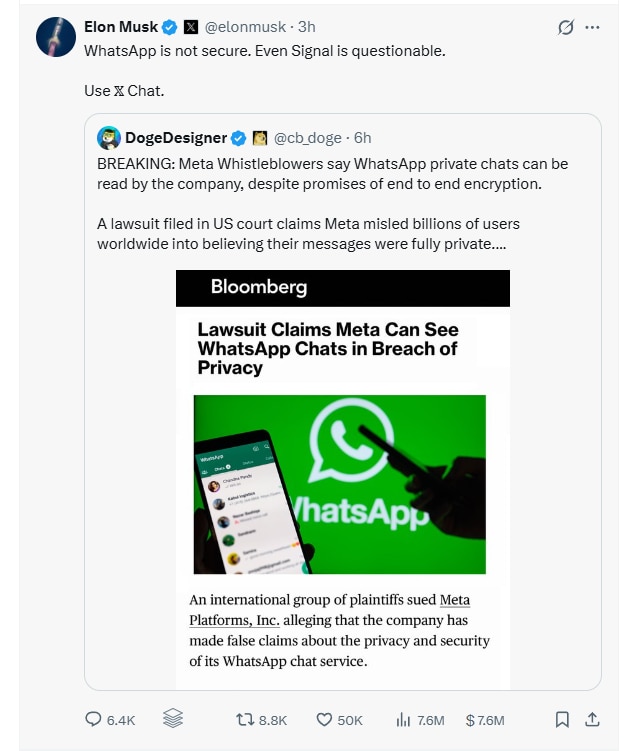
5. Elon Musk came forward and promoted X-Chat
As the lawsuit began to gain attention online, Elon Musk responded by raising questions about the security of the popular messaging platform. In a post on X, he wrote, “Whatsapp is not secure. Even Signal is questionable. Use X Chat.” Musk’s comments quickly gained popularity, adding a competitive edge to the debate around encrypted messaging.
