





Mahavatar Narasima trailer: The epic story of Lord Vishnu and Prahald is alive
The trailer of ‘Mahavatar Narasimha’ has been unveiled, which shows a grand and emotional illustration of a decisive mythological story focused on Prahlad’s devotion and divine intervention. Ready to release in 3D in five Indian languages in July 2025, the film also marks the beginning of the ambitious Mahavatar cinematic universe.

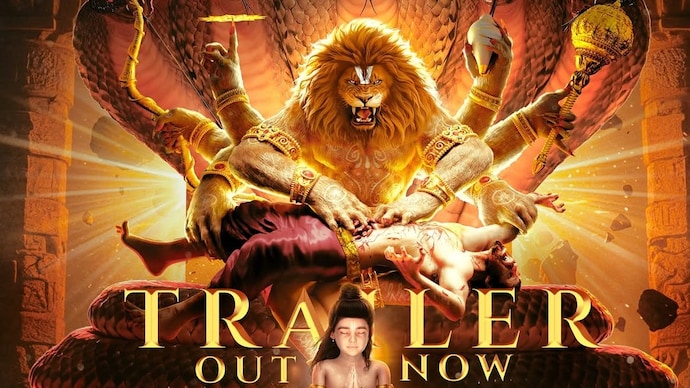


The much -awaited trailer for ‘Mahavatar Narasimha’ was recently unveiled, offering a visually stunning and emotionally charged illustration of a major chapter from Indian mythology. Directed by Ashwin Kumar, the film will be released in 3D in five Indian languages on July 25, 2025.
A set against a mythological background, Katha revolves around Prahlada, a righteous follower of Lord Vishnu, who defies his father, Hiranyakashipu – a powerful atheist blesses with immortality by Lord Brahma. The trailer captures this central struggle, which is amidst a terrible family opposition amidst the unwavering devotion of Prahlad.
The views are largely grand, with powerful imagination, showing the divine dynasty of Mahavatar Narasimha, an incarnation of Lord Vishnu, who interfere to protect Prahlada. With a developed background score and rich production design, the trailer sets tone for an epic retailing of this mythology.
See the trailer here:


‘Mahavatar Narasimha’ is produced by Shilpa Dhawan, Kushal Desai and Chaitanya Desai under the Claim Productions banner, in which the project is offered with homebell films. The film has a powerful mixture of mythology and cinematic story.
Adding enthusiasm, the manufacturers also announced the launch of the great cinematic universe, pointing to a big vision that can expand the story beyond this initial chapter.
The official release calendar includes ‘Mahavatar Narasimha’ in 2025, followed by ‘Mahavatar Parshuram’ (2027), ‘Mahavatar Raghunandan’ (2029), ‘Mahavatar Dhakadhesh’ (2031), ‘Mahavatar Gokuland’ (2033), ‘2033),’ 2033), ‘Part 2’ (2037).