





Last note of the golden age: Asha Bhosle’s defiant, fearless tune
Asha Bhosle’s journey from living in the shadow of tradition to becoming the leader of a musical rebellion defined an era. With unparalleled range and flexibility, he transformed cinema’s fringes into its heartbeat.

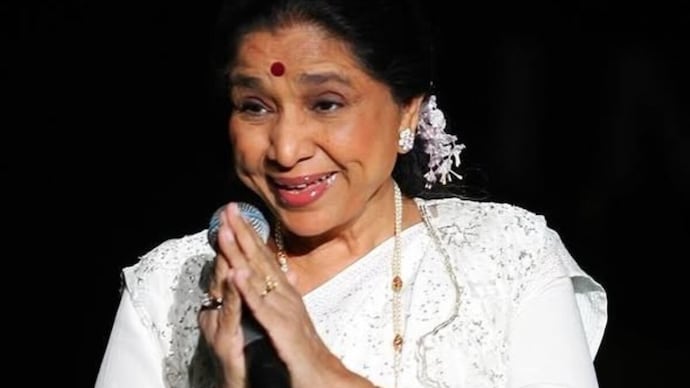


In 1981, director Muzaffar Ali gave Asha Bhosle a challenge she had never faced before. Umrao JaanHer adaptation of Mirza Hadi Ruswa’s Urdu novel about a prostitute in 19th-century Lucknow required a voice that could carry the full weight of not just classical harshness but a particular kind of female suffering that was more than tragedy without redemption.
Composer Khayyam presented the songs in almost architectural beauty. And Asha, who had built her reputation on fierceness and courage, responded with something even more difficult: peace. Creations- what is heart thing, in the joy of eyes, Justuju Jiski was – These were not performances in Bollywood terms. Asha Bhosle sang Umrao’s tragedy not as mere melodrama but as resignation, the grief of a woman who has seen too clearly and for too long.
❮❯
It was a depth she would draw on again and again in a career of staggering breadth, range, volume and personal tragedies.
last of the legends
Asha Bhosle sang for eight decades. India listened. With his death, the golden age of Indian music finally, irreversibly ended.
It was an era that began with KL Sehgal, that trembling, opium-haunted voice of the 1930s who first showed India what a song could carry, and continued through the divine purity of Mohammed Rafi, the melodic brilliance of Kishore Kumar, the painful clarity of Mukesh, the whispering silk of Talat Mahmood, the sovereign authority of Noor Jehan and the crystalline perfection of Lata Mangeshkar.
One by one they went away. Hope was the last one. Now she also left and the lineage was completed. All that remains is the recording, and the silence where that world used to be.
A voice made in adverse circumstances
Asha Bhosle’s father Pandit Dinanath Mangeshkar was a famous classical singer and theater actor. When he died suddenly in 1942, leaving the family without any income, nine-year-old Asha and her elder sister Lata turned to singing to survive. It was a beginning born of necessity. What followed was a career of art, defiance and an extraordinary need for joy.
He recorded his first song for a Marathi film in 1943 at the age of 10. Her Hindi film debut came soon thereafter and by the late 1940s she was making minor appearances in the competing recording studios of Bombay. But she always remained in the formidable shadow of Lata, who was fast becoming the country’s most beloved voice.
second time
At the age of 16, Asha made a decision that would define her life, and almost derail it: she eloped with Ganpatrao Bhosle, a man almost twice her age, despite strong objections from her family. The marriage was extremely unhappy, producing three children before ending in separation in 1960.
Hope was left largely alone to raise the children, struggling to find recording work in a tough industry that had little patience for a young woman raising children alone.
It was this adverse situation that shaped the character of his art. While Lata was given first choice of the purest, most classical roles, Asha took whatever she got. She pioneered cabaret numbers, vamp songs, bold and sensual tunes that other singers stayed away from. He sang them with such fire and intelligence that they made them the most memorable songs of his generation.
Rebel voice: OP Nayyar and a new identity
Musician OP Nayyar was the first to see what Asha really was. He refused to work with Lata and chose Asha as his inspiration. Their partnership produced some of the most intoxicating music of Bollywood of the 1950s and 60s. songs like Come sir, let your hair fly.And crazy cloud There was a swagger and playfulness about him that was completely new to Hindi film music.
This collaboration established her as a singer of unusual range and daring. She was no longer Lata’s younger sister. She was, by now, unmistakably herself.
Pancham Da and the music of life
If OP Nayyar gave Asha Bhosle her identity, it was Rahul Dev Burman (Pancham Da) who gave her immortality. The two began working together in the mid-1960s and what happened over the next two decades was one of the most famous creative partnerships in the history of Indian music. Burman’s compositions were unlike anything Bollywood had heard: jazz-influenced, funky, Western in rhythmic sensibility yet deeply rooted in Indian melodies. And Asha’s voice was the perfect instrument for them. they both created together Piya, come now, blow hard, you have stolen my heart, this is my heart.And dozens of other songs that redefined Hindi film music.
Their professional relationship blossomed into love and in 1980, Asha and RD Burman got married. The union of exceptionally creative souls lasted until his death in 1994. People who knew her said she never recovered from losing him. But she kept singing.


12,000 songs, 20 languages, one voice
The sheer scale of Asha Bhosle’s output is beyond comprehension. In a career spanning more than eight decades, he recorded more than 12,000 songs in more than twenty languages. He sang for great heroines of every generation – Madhubala, Meena Kumari, Rekha, Zeenat Aman, Sridevi, Kajol, Urmila Matondkar and countless southern stars.
What makes this section remarkable is not its size but its extent. She sang classical thumris and ghazals with the toughness of a trained prostitute. She sang folk songs with the worldliness of a rural woman. He sang jazz numbers with the ease of a bebop musician, and pop songs with the ease of someone for whom reinvention was simply a way to breathe. When young musicians like AR Rahman came to him in the 1990s, he gave them Rangeela Ray And lonely lonelySongs that sound as fresh as anything I recorded when I was thirty.
His two National Film Awards reflect his seriousness: one for a ghazal-drenched soundtrack Umrao Jaan (1981), haunting, another one for the minimalist some of my stuff From permission (1987). permission The song is so emotionally complex that for many it is the greatest solo recording of his career.
suffering and existence
His life was not without deep sorrow. Her daughter Varsha died by suicide in 2012, while Asha was performing at a concert in Singapore. Her elder son Hemant died of illness in 2015 while she was performing abroad. He bore these losses with such indifference that his fans found it almost unbearable to watch. She did not step back. She didn’t stop. He sang.
He started his acting career in 2013 at the age of 79. motherplaying a mother suffering from Alzheimer’s disease, and critics praised her as subtle, poignant, and completely unsentimental.
The Dadasaheb Phalke Award came in 2000; Padma Vibhushan in 2008. In 2026, a few weeks before his death, his voice appeared on the Gorillaz album MountainA final, impossible reminder that she remained a living, collaborative artist to the end.
what does she leave behind
Asha Bhosle has left behind a bottomless archive of her voice that is the closest we can get to a complete self-portrait of an individual and an era in Indian popular music.
Asha Bhosle was not a safe choice. She was the voice who took risks, who sang songs no one else wanted to, who transformed the margins of Hindi cinema into its most electric centre. Where others were cautious, she was courageous, where others were merely skilful, she was warm and always alive in every phrase she sang of the joys and sorrows of being human.
His sister Lata Mangeshkar, who died in 2022, was his closest rival for decades and, ultimately, his closest companion in the world of music. Now the two Mangeshkar sisters are gone, and with them the last surviving thread of Sehgal’s time, of the era when the Hindi raga was being invented, note by note, in small Bombay studios by people who had no idea they were creating something eternal.