



Is LinkedIn sexist? Women say LinkedIn promotes bro-coded male profiles
LinkedIn users are reporting big jumps in reach after changing their gender to male or adopting “bro-coded” language, raising fresh concerns about algorithmic bias on the platform. LinkedIn denies any gender-based influence in its feed.

If you’re on LinkedIn, you may be getting more impressions based on your gender, or at least that’s what a series of user-led experiments is alleging. These tests have raised uncomfortable questions about whether LinkedIn’s algorithm favors men, or at least people who write like them. Over the past few weeks, dozens of women on the social networking platform have reported dramatic increases in visibility and engagement after changing their listed gender to male or rewriting their profiles in aggressively assertive, jargon-heavy “bro-coded” language. However LinkedIn has strongly denied any gender-based weighting in its ranking system.
The trend reportedly started with posts from women who said their reach had dropped significantly following LinkedIn’s recent algorithm change. In response, some people decided to test the system directly, as reported by The Guardian. These women changed their pronouns, names or profile gender, while others changed their general tone to more stereotypically masculine language, peppering their bios and posts with booster verbs like “drive”, “accelerate” and “transform”. And they were surprised to find that the results showed that how you present yourself on stage matters as much as what you actually say.
LinkedIn user Phyllis Ayling wrote, “I told LinkedIn I’m a man and my impressions doubled. It can’t be a coincidence. Maybe it’s just ego serving me the posts I don’t like, but my feed is filled with posts from women who have changed their gender to male here and seen their engagement increase.”
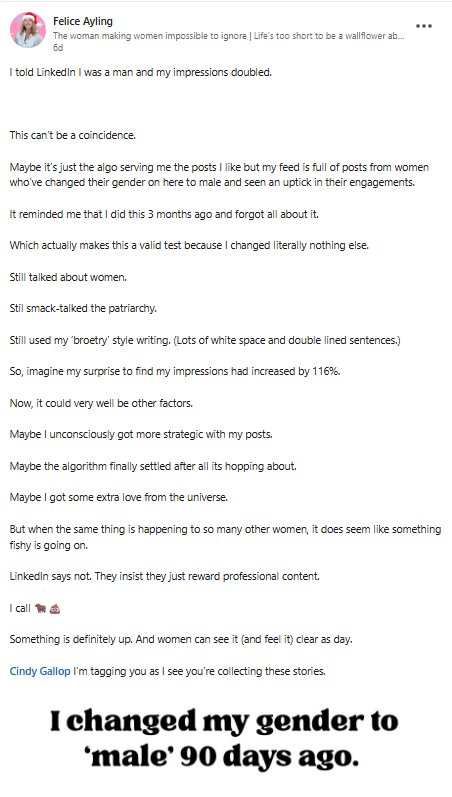
Her testimony is one of many now widely circulated.

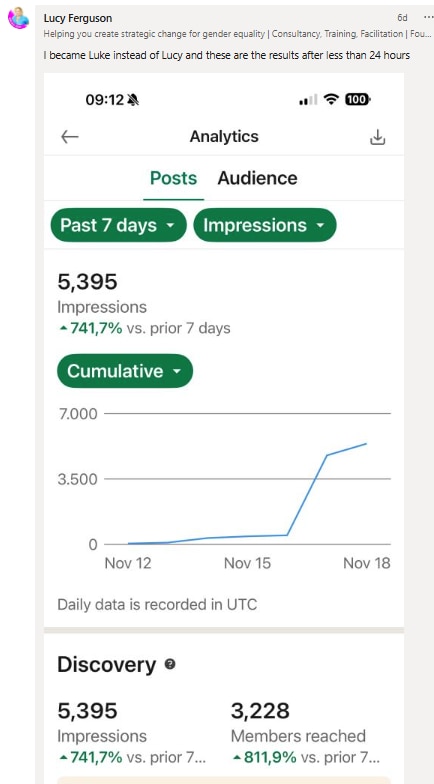
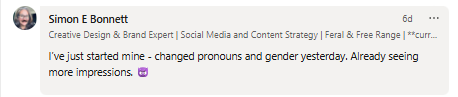
Recent reports of algorithmic bias come amid widespread concerns about how LinkedIn’s feed prioritizes content. Participants claim that female creators in particular have seen a significant decline in visibility compared to their male peers who post similar updates. LinkedIn, which uses AI-powered ranking signals to determine what appears in each user’s feed, says the platform is not penalizing women. In a statement to The Guardian, a LinkedIn spokesperson said the company regularly tests its systems for gender-related disparities and attributes any recent changes to an increase in overall activity — including a 24 percent increase in comments and an increase in video posts — rather than demographic factors.
Despite this, the results reported by users are hard to ignore. Some say adopting a “bro-coded” tone, long posts, sharp claims, heavy lead-talk, seems to give the algorithms something to latch on to. Others believe that the platform elevates everything it reads as authoritative, no matter who is speaking. LinkedIn says it considers “hundreds of signals” when ranking content, but emphasizes that gender is not one of them. “Changing the gender on your profile does not affect how your content appears in search or feed,” a spokesperson said recently. But anecdotal evidence is clouding that claim.
For now, LinkedIn continues to deny any kind of gender bias in its algorithms. But as users continue to run their own tests, and share numbers, the platform faces growing questions about how its invisible systems may be shaping what is heard in the modern workplace.