



India sees a big decline in maternal and child’s death: report
According to the latest Sample Registration System (SRS) 2021 report released by the Registrar General of India, the country saw a decline in maternal and child mortality in recent years.
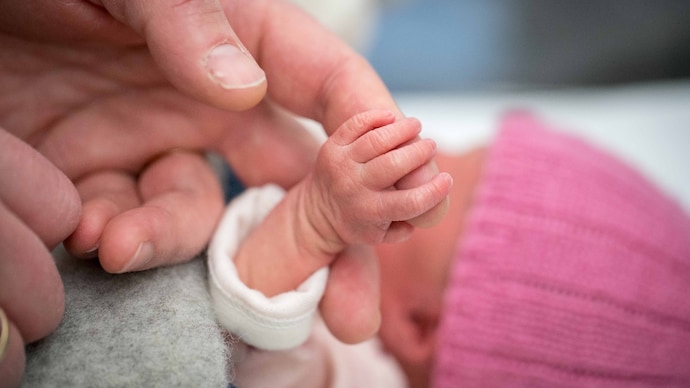
India has shown progress in improving maternal and child health. According to the latest Sample Registration System (SRS) 2021 report released by the Registrar General of India, the country saw a decline in maternal and child mortality in recent years.
Major improvement in maternal and child health
The maternal mortality rate ratio (MMR), which shows the number of maternal deaths per one million living births, fell from 130 in 2014-16 to 93 in 2019-21.
Child health indicators have also improved:
- Infant mortality (IMR) fell from 1,000 living births in 2014 to 27 in 2021.
- During the same period, the newborn mortality (NMR) fell from 26 to 19.
- Under-five mortality (U5MR) fell for 45 to 31 per 1,000 living births.
- In 2014, in 2014, 899 girls have increased to 913 in sex ratio in sex ratio.
- The total fertility rate (average number of children per female) remained stable at 2.0 in 2021, below 2.3 in 2014.

Many states and center regions met the global sustainable development goals (SDGs) to meet the goals to reduce maternal and child mortality, before the 2030 deadline.
For maternal mortality, the Sustainable Development Target Target Matri Mortance Rate Ratio (MMR) is to reduce 70 or less deaths to one million living births.
Kerala topped the list of less MMR of 20, followed by Maharashtra (38), Telangana (45), Andhra Pradesh (46), Tamil Nadu (49), Jharkhand (51), Gujarat (53), and Karnataka (63).
These states progressed in ensuring safe conception and better maternal care services, resulting in less women due to pregnancy -related complications.


In terms of child health, under-five mortality (U5MR), which is the number of deaths of less than five children per 1,000 living births, is a target of 25 or less.
Twelve states and center states already brought their U5MR within this target. These included Kerala and Delhi, both of whom included only 14 deaths per 1,000 living births, as well as Tamil Nadu and Kashmir, Maharashtra, West Bengal, Karnataka, Punjab, Telangana, Himachal Pradesh, Andhra Pradesh and Gujarat.
These areas have shown improvement in child healthcare, vaccination and nutrition, which helps more children to survive beyond their early years.

Similarly, the newborn mortality rate (NMR), which measures deaths within the first 28 days of life, aims to 12 or less 1,000 living births.
Kerala stood outside with just 4K NMR. Other areas achieving this goal were both Delhi (8), Tamil Nadu (9), Maharashtra (11), and 12 in Jammu and Kashmir and Himachal Pradesh.
These states strengthened newborn care services, including better distribution practices, newborn intensive care units and early detections and treatment of complications, which are important to save newborns life.
To track progress, the Ministry of Health promoted digital platforms to collect real-time health data, evidence-based decisions and where necessary.