


India AI Impact Summit defines Indian tech ambitions, see it beyond the chaos
While the chaos created by the huge crowd and the initial teething problems in logistics were real, the India AI Impact Summit 2026 subtly achieved something bigger: it proved that this was no longer just an AI data market, but an emerging global platform for collaboration, investment and innovation.
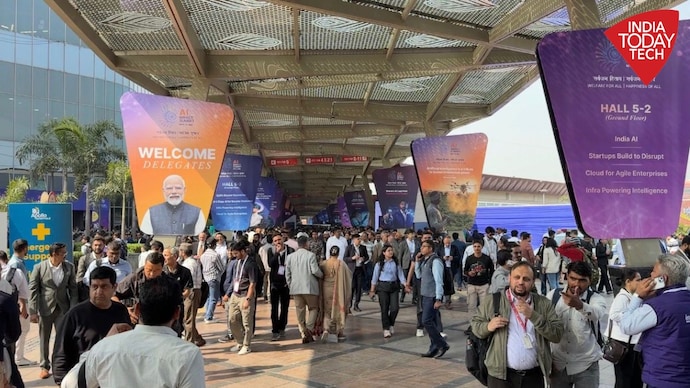

If you have followed the online conversation about the India AI Impact Summit 2026, you have probably seen videos of crowded corridors, confused attendees, and frustrated participants trying to enter the packed hall. Criticism came immediately and in many cases fairly. The program struggled to manage its sheer scale, especially on its first day.
But step away from the viral clips and controversies for a moment, and some important stories begin to emerge.
❮❯
Taking a broader perspective, you need to understand that India has rarely seen such success at a technology event in the past: a global AI gathering that was too big for the venue, too ambitious for the expectations, and too important to ignore.
Wandering the hall and talking to a few people, we learned that the summit revealed another profound fact – India’s AI moment has come faster than India expected.
And ironically, the very chaos that people complained about may be the strongest sign of that change.
tremendous response
One of the summit’s most notable moments came before many of the sessions had even started: registration had to close after the second day. The organizers could not accept this overwhelming response.
In global tech circles, oversubscription is not uncommon. I was at CES in Las Vegas just a few weeks ago and it seemed there were no issues with crowd management at that event. Tech summit events have seen packed auditoriums and long lines in the past, but even major developer conferences from major tech companies are not regularly attended by attendees due to high demand, so this is not unusual.
What made this moment different was geography.
For years, India hosted technology conferences that were largely attended by domestic audiences or industry insiders. This summit felt different. The crowd was not just developers or corporate representatives, but also included founders, students, policy makers, researchers, venture capitalists and international observers trying to understand India’s AI trajectory first-hand.
One startup founder I spoke to described it simply: “It felt like everyone who wanted to be a part of India’s AI story came together at the same time.”
India as a destination, not just a market
Perhaps the biggest change visible at the summit was psychological. India has long been seen as a huge consumer base for technology and an important market where global companies launch products, expand services and acquire users.
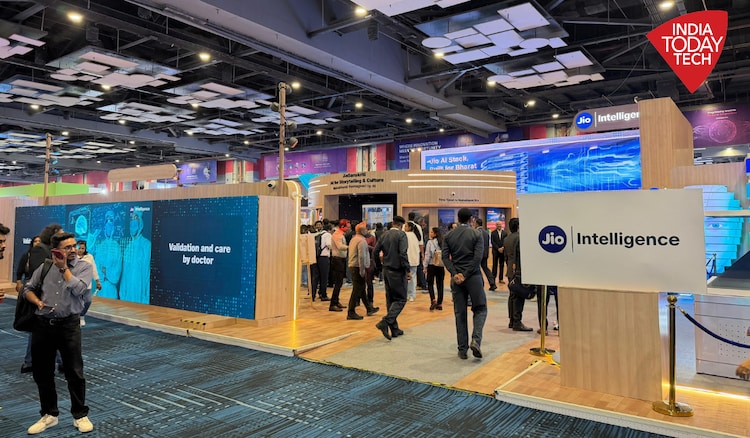
Top global technology leaders didn’t just arrive to deliver keynote speeches. Conversations on panels and private meetings revolved around partnerships, infrastructure investments, AI deployment and co-development opportunities.
One investor who attended the summit told me that the energy felt higher at early cloud computing conferences than at traditional policy summits. “People weren’t just talking about AI, they were trying to figure out how to build it here,” he said.
The global technology ecosystem evolves as the conversation moves from theory to execution. The summit suggested that India was entering that phase.
Indian startups got the spotlight
If global participation was one pillar of the event, Indian startups were the second pillar. Companies like Sarvam, BharatGen and many emerging AI players continued to attract attention throughout the summit. Unlike previous conferences, where Indian startups often remained on the side stage, here they were at the center of discussions around Indic language models, sovereign AI and local innovation.
Neysa CMO Sujit Janardhan described the scale of participation as the best. “I had no idea that we could have the entire Indian AI ecosystem under one roof,” he said, adding that over the four days, everyone from early-stage startups to organizations building large language models for government, defense and research were present. In his view, almost every meaningful AI effort currently happening in India found representation at the summit.
The founders talked less about catching up with Silicon Valley and more about solving problems uniquely suited to India: multilingual AI, low-cost deployment, integration of public digital infrastructure, and scalable AI for governance and education.
Even attendees outside the startup ecosystem noticed the change. Govind Singh, a student who participated in the program, said that seeing big companies share their experiences with small innovators helped him understand how ideas move from experimentation to real-world deployment. Listening to industry tours is helping them chart their own path, he said. “I hope to return to the top someday showcasing my innovations,” he said.
A researcher attending several sessions noted how international delegates were actively seeking interaction with Indian teams rather than the other way around. “The power dynamics have changed,” he said.
networking behind the scenes
Despite logistical constraints, networking at the summit was unusually intense.
The founders exchanged ideas with policy makers. Students contacted venture capitalists. Researchers debate the challenges of deployment on coffee queues. Delegations from different countries explored opportunities for cooperation in an informal setting.
For many young attendees, this access became a defining achievement. Vansh Khatri, a BTech student at Bikaner Technical University, described the summit as one of the most impactful technology events he has attended, largely due to the opportunity to receive career guidance and build direct relationships with industry professionals. Similarly, student participant Utkarsh described how small companies presenting their work with global participants created unexpected networking opportunities.
One early-stage entrepreneur told me he met more potential partners in two days than in months of virtual meetings. “You can’t walk ten steps without meeting someone relevant,” he said.
Industry professionals also expressed the same sentiment. Amit Shukla, CTO of Space Matrix, described this incident as very interesting because a lot was happening simultaneously. Coming across several exhibitions and discussions at once, he admitted that despite spending a lot of time there he still had not managed to cover everything. In many ways, chaos forced participation. People talked because they had to wait together, move forward together, and deal with uncertainty together.
A signal to the global tech ecosystem
The India AI Impact Summit sent a clear message: India wants to be part of shaping AI, not just consume it.
The presence of international leaders like Sundar Pichai, Sam Altman and Dario Amodei along with India’s policy ecosystem reinforced the idea that AI development is becoming geographically distributed.
India’s strengths were repeatedly highlighted during the conversation. Its digital public infrastructure, huge developer base, multilingual challenges that demand innovation, and growing compute investment were key points.

What stood out equally was how accessible these discussions were to the audience. Rituparna Sengupta, director of communications and outreach at Wadhwani AI, noted how even non-technical participants were able to engage meaningfully. He described meeting people who explained complex technologies in simple terms, turning the summit into a collaborative learning space where partnerships emerged organically as attendees shared experiences from different fields.
One academic attendee described the summit as a “coming-of-age moment”, comparing it to the time when global attention first turned to China’s manufacturing ecosystem or Europe’s regulatory leadership in technology.
Whether this comparison proves accurate remains to be seen, but the ambition was undoubted.
Criticism and success can co-exist
It would be dishonest to ignore operational issues. Yes, some attendees struggled with access, schedule confusion, and crowded venues. Many sessions started late or were difficult to access.
Yet global technological history shows that early versions of ambitious gatherings are rarely perfect.
Fast-growing ecosystems often exceed organizational capacity before processes can catch up. The first iterations of major global conferences, not just in India, were disorganized, unpredictable and sometimes chaotic.
Interestingly, not all attendees viewed the experience negatively. Harsh, a student participant, felt that despite the huge turnout the venue reflected significant effort in the organisation, suggesting that scale rather than intention created many challenges.
The summit showcased the demand for AI on a scale that India had never seen before. A policy professional I met summed it up well: “Yes, it was chaotic. But without momentum you don’t get anarchy.”
Human energy behind AI
It cannot be denied that the enthusiasm was clearly visible among many people. Students line up hours before sessions, founders spontaneously present ideas, researchers passionately debate ethical frameworks in the corridors.
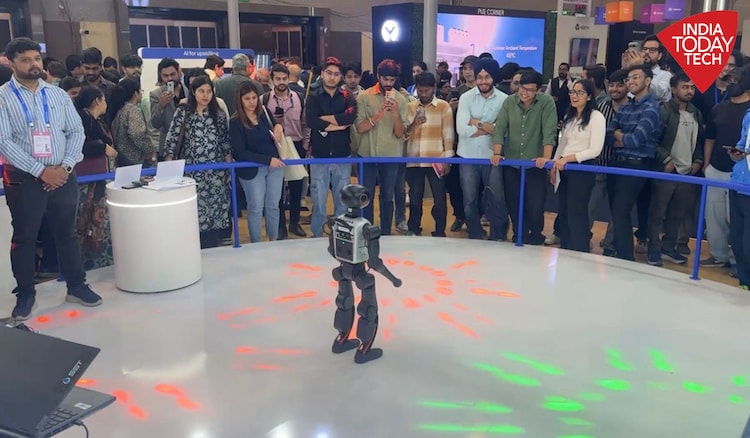
For many attendees, the practical experiences became defining moments. Ankita Singh, a student visitor, recalled experimenting with AI demonstrations such as real-time voice translation, where her recorded speech could be heard instantly in different languages – a moment that transformed abstract AI conversations into something personal and real.
This enthusiasm reflects a broader shift in India’s technology narrative. AI is no longer an abstract concept discussed only in specific industry circles. It has entered mainstream aspiration.
Yes, India can host a global tech summit
Beyond the announcements or panels, the summit proved to be something symbolic – India can host events that matter globally.
The scale, focus and participation demonstrated that the country is capable of organizing conversations that influence the future direction of technology.
Yes, performance should improve. Infrastructure, planning and crowd management will need to develop rapidly if such events are to become recurring global events. That’s not to say there won’t be obstacles in the second iteration, but it’s important to accept criticism and take a step toward improvement.
The good thing is that its foundation has been laid. And perhaps this is the real story, which is surrounded by controversies.