



If you’re successful in India, it means you’re making the right product decisions: Asus
In an exclusive interview with India Today Tech, Sascha Krohn, Technical Marketing Director, Asus, gave an insight into the best products it is bringing to the market after the showcase at CES 2026. Read more.
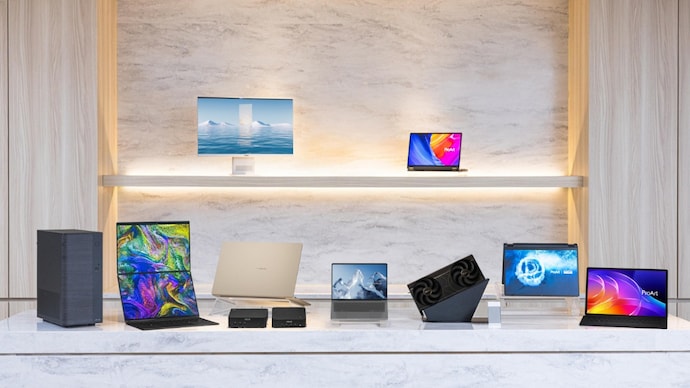

In the fast-paced, high-risk world of consumer electronics, the path to global dominance increasingly runs through India. For Asus, the Taiwanese tech giant famous for pushing PC hardware year after year, India isn’t just another region on a spreadsheet – it’s the ultimate proving ground.
In an exclusive interview with India Today Tech, Sasha Krohn, Technical Marketing Director at Asus, highlighted the company’s roadmap for 2026. From the neon-lit floors of CES to the tough demands of Indian consumers, the message was clear: “If you’re successful in India, it means you’re making the right product decisions.”
Sasha is not your typical corporate executive. After a decade at Asus, working at AMD, Foxconn and Cooler Master, he has described his role in a permanent “tech documentary”.
“I have the wonderful and amazing job of taking a deep dive into every new device we’re bringing to market and why we’re bringing it to market,” Sasha explains. Their day-to-day involves acting as a bridge between the “cool engineers” and the end-users who actually have to live with the products.
This internal transparency is a cornerstone of the ASUS culture. Unlike the rigid, siled structures found at many American or European tech firms, Asus operates with an open-door policy. “I can go to any kind of team internally,” says Sasha. “We have a robotics team — if I have time, I can go to them and ask them, ‘Hey, what are you guys working on?’”
This culture of curiosity translates directly into a product philosophy that rejects a “one-size-fits-all” approach.
more is more
While many competitors have spent the last few years streamlining their portfolios to maximize profit margins, Asus has gone in the opposite direction. It openly admits to having the most comprehensive lineup in the industry – a feature that can be a double-edged sword.
“Yes, this is our weak point: we have a huge range of products,” Sasha admits. “This makes it difficult for customers to decide which one they should buy. But the good thing is, if you have very specific needs… we probably have a device that is perfect for you.”
This philosophy stems from the company’s founding by engineers who were frustrated by the limitations of existing technology. Today, this is manifested in distinctive regional products. For example, in Japan, Asus sacrificed some battery life to meet local demands for portability, creating a version of the ZenBook A14 that weighed just 899 grams – 100 grams lighter than the global version.
2026 roadmap
At CES 2026, Asus is preparing to set trends for the entire year. While other companies often show off “concept” devices that never see the light of day, Asus prides itself on launching commercial-ready innovations.
The most consistently improved feature in the 2026 lineup is the screen. “Almost all 14-inch and 16-inch devices are getting a display upgrade with new OLED displays with 1000-nit HDR peak brightness,” Sasha revealed. This represents a twofold increase in brightness compared to 2025, which is a huge leap forward for content creators and HDR enthusiasts.
The ZenBook Duo is no longer an experiment. This is a mainstay. The 2026 model will be lighter and more refined, with a new hinge design that will reduce the gap between the two 14-inch screens. For gamers, the Zephyrus Dual 16-inch will emerge as a flagship with up to an RTX 5090.
Asus is hedging its bets across the board. The 2026 lineup will feature a mix of Intel Core Ultra 300 series, AMD Gorgon Point (Ryzen AI 400 series), and Qualcomm Snapdragon X2 Elite and Elite Extreme processors.
The ZenBook A16 is expected to be exceptional, weighing only 1.2 kg with a full metal chassis, while the Snapdragon X Elite Extreme runs on a high 65W CPU TDP.
challenge of 2026
The tech industry is set for a tough year in 2026. Global economic pressures are driving up the cost of components, which inevitably leads to higher retail prices. Sasha is clear about the reality: “Prices will not be very good in 2026. Prices are rising.”
In this environment, “commodity” products – laptops where you simply replace an old chip with a new chip – will struggle. To justify the higher cost, Asus is leaning toward “metamaterials” and unique form factors.
One of the most important innovations discussed was ceraluminum. Unlike traditional anodized aluminum, which involves toxic dyes and sludge, Ceraluminum uses a process of high-voltage oxidation.
“It’s a metamaterial,” explains Sasha. “You rearrange the molecular structure, and as a result, you get properties that no other metal has.”
The result is a surface that is scratch-resistant, corrosion-resistant, and feels like “polished sandstone.” Asus is investing heavily in this material, bringing it to the ZenBook Duo, S14, S16, A14, and A16 in 2026. It’s a rare trifecta. It looks better, lasts longer and is much better for the environment.
Additionally, Sasha highlighted some “wildcard” products that reflect the brand’s creative freedom. First up, there’s the ROG Flow Z13 Kojima Edition, a special collaboration with renowned game designer Hideo Kojima. Sasha predicts that it will become a rare collector’s item, with many units being sold as investments. Then there’s the ROG G1000 gaming desktop, an ultra-tower with an “anime holographic display” on the side panel, which allows users to overlay digital art onto their physical components. Last but not least, Asus is also launching ROG AR Glasses with an aim to expand the gaming ecosystem.
Addressing AI Fatigue
No conversation in 2026 would be complete without AI, but Sasha offers a refreshing, skeptical perspective on the current state of the market. He admits that “AI fatigue” has set in.

He says, “People are really tired of hearing AI and starting to roll their eyes… because we’re exposed to too much talk about AI and most of it isn’t actually AI.”
However, he believes that 2026 will be the year when AI turns from a buzzword to a utility. Right now, AI can tell you how to change a setting or where to book a ticket, but it can’t do it for you. Sasha predicts that these “walls” will disappear.
“It will become more and more seamless…It will become less simple to have AI do something for us rather than just giving us information.” In other words, the most successful AI in 2026 will be the AI you don’t even realize you’re using.
Why is India the biggest piece of the puzzle?
The headline of Asus’ strategy remains its relationship with India. India is now the largest market by market share for Asus in the entire APAC region (covering 16 countries).
Sasha credits this success to the nature of the Indian consumer. “Indian consumers do a lot of research and are very conscious about how they spend their money,” he says. Because the market is so competitive and consumers are so discerning, it acts as a litmus test for brands’ global product decisions.
Historically, Indian consumers have been frustrated by launch lag – it takes weeks or months for a globally announced product to reach Indian shores. Sasha explained the logistical mountains they have to climb, including the task of BIS certification and the need to satiate a huge supply chain before a unit can be sold.
“You usually can’t bring our products to the Indian market immediately because it takes time to scale up production,” says Sasha. “Most companies launch into a market only when they actually have enough supply to saturate that market.”
However, things are changing. With the RTX 5000 series and recent handhelds like the ROG Ele, the difference has dwindled to almost zero. “Asus India is really bringing (products) to market as quickly as possible, including gaming and non-gaming models. We’re really not lagging behind here.”
It’s clear that Asus has no interest in being the safe option. It’s paying attention to the complexity of its lineup, the high performance of its silicon, and the experimental nature of its designs. By using India as its primary feedback loop, Asus is betting that if it can satisfy the most demanding, research-heavy market in the world, it can satisfy anyone.
“Whatever we announce at CES will come to India sooner or later,” promises Sasha. “It may not be there on day one, but it’s all coming.” For Indian PC enthusiasts who live for specifications and clarity, 2026 looks to be an incredible year indeed.