



Idli Kadai Review: Drama on returning home in melodrama peak in bow
Idli Kadai Movie Review: Written, directed, and starred by Dhanush, ‘Idli Kadai’ is a family drama about homecoming and select non -violence to fight their fight. The film has the correct message, but melodrama and predictability reduces it.
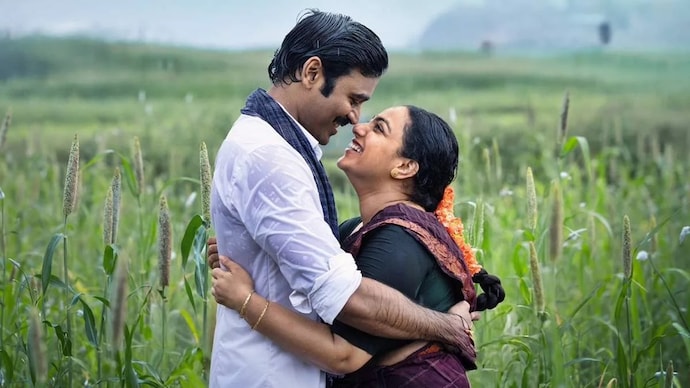

As an actor and director, Dhanush has a strong track record for the creation of family plays that shocking heartbreaking. From ‘Velayilla Patthari’ to ‘Thirchmabalam’, many of his filmography films have a recall value that makes for a right weekend clock. Dhanush is now back with ‘Idli Kadai’, who is his fourth director venture, promising another solid drama filled with emotions.
Murugan (Dhanush) is an unhappy employee in a restaurant in Bangkok. He is in love with Meera (Shalini Pandey), daughter of Vishnu Vardhan (Satyaraj), the owner of the restaurant. His son, Ashwin (Arun Vijay), is an arrogant man and child who constantly throws his weight around. Murugan’s father, Shivanesan (Rajkaran), owns Idli Shop in Shankarapuram, and their shop is the identity of the village.
For Shivanesan, this is not just a shop – this is its temple. He wants to be right for his craft, so much that he does not want to expand his business. Even when Murugan suggests the idea, Shivneson declined, saying he did not want anyone else to run a business for him. An incident brings Murugan back to his village. What happens after returning to Shankarapuram, which takes us through an emotional journey about homecoming, non -violence and goodness found in simple village life.
Traceing Dhanush’s films as a director, you understand that emotions are their strongest suits. ‘Idli Kadai’ is no exception. The film begins on an unstable note, discovering Murugan’s unhappy and mechanical life in Bangkok. Even a completely shaped at work reminds him of soft Idli Her father makes – a feeling he returns to continuously. And you can understand why. His father, Shivanson, talks about making Idli And Sambar with such passion that it draws you inside.
However, ‘Idli Kadai’ is heavy on melodrama. It makes the life of the village proud and portrays those who live as morally superior in their hometown. In contrast, Vishnu Vardhan is struggling to handle his bawa son Ashwin, which he has never reprimanded since childhood. They use their money, power, and everything in the middle, which is meant to secure petty victory, even if it means committing a crime. Contraindications between these worlds provide a wide canvas for increased feelings.
Nevertheless, ‘Idli Kadai’ resides for mediation. It plays it safely with minor bets and forecasted story Beats. For example, inside the boxing ring there is a view that includes Ashwin and Murugan. As soon as the scene ends, you know that there will be a callback later – and it does. Similarly, another arc involving the composite is all very approximate.

The only arc that surprises is the role of Parthiban as a police. Over the limited screen, he manages to leave an impression. One who works best and enhances this melodramatic circle is a committed performance of the bow. Nithya Menon gets a role in a control, for which she must have a column of support to the bow of the bow, and she does it effectively. Dhanush, Nithya Menen, and Illavasu have sometimes laughing between all heavy feelings, when ‘Idli Kadai’ is really frightening.
‘Idli Kadai’, in addition to its performance, the message is correct. This indicates that one can take a high road, emphasize non -violence, and encourage dialogue to resolve disputes. Veteran actors Satyaraj, Rajakran and Geeta Kailasam bring honesty to their characters. Shalini Pandey’s performance as Mera could have been more impressive. However, the scene where she directly handles her breakup by facing Murugan, deserves a special mention.
The music of GV Prakash has a heavy ‘thirchitrambalam’ hangover, especially in the background score. Kiran Kushik’s cinematography alive the peace and colors of the village life.
Despite all its good intentions, ‘Idli Kadai’ is a forecast relationship with minimal surprise and innovation.