



High-tech robots showcased at CES 2026, but they aren’t entering homes anytime soon
At CES 2026, robots took center stage with companies showcasing advances in humanoids, companion bots, and practical home automation. Although true mainstream adoption is still years away, we have seen glimpses of the future.


At CES 2026 in Las Vegas, a clear shift was seen: Robots were not only featured, but also one of the central themes of this year’s tech festival. Robots were on show in several halls (mostly the West Hall), which were connected to AI, automotive and smart home technology, underscoring a collective theme that is shaping up to define the next decade of physical AI technology.
Humanoid robots were seen not just as prototypes, but as more practical options that could realistically enter homes and workplaces in the coming years.
Many companies, from startups to industry giants, took advantage of CES as a global platform to unveil new robotic platforms. These ranged from Chinese innovators and established robotics giants to startups and small home electronics leaders. India Today Tech had the opportunity to see some of these innovations at CES this year, getting a first-hand look at where robots are headed in 2026 and beyond.
Household robots like CLOiD are closer to practical use
One of the headliners at the event was LG’s CLOiD, a wheeled humanoid designed to assist with tasks like laundry, fetching items, and interacting with connected smart home devices. It used its arms with multiple degrees of freedom and performed household tasks using human-like hands. An improved version of the CLOI robot demonstrated in 2018, it was a bold approach to embedding it in everyday life.
However, during the demo, I noticed that CLOiD seemed intentionally slow and cautious, highlighting the current limitations of autonomous home robots.
The demo served more as a vision for the future than an immediate consumer product, showing both the promise and practical challenges of robotics in everyday environments.
Switchbot and the practical home assistant
CES 2026 wasn’t about over-the-top demos, with some companies focusing on more practical home automation robots. Switchbot’s Onero H1 robot, which looked like a CLOiD twin, combines mobility with arms capable of grasping, pushing, and interacting with household objects. Its design was positioned less as a futuristic humanoid and more as a useful smart home assistant that could be shipped in realistically limited quantities this year. With the Onero H1, I can see a future where robots like this will be doing household chores in 2026.

Similarly, robot vacuum manufacturers continued to develop their technology. Robots like Clutterbot Rovi, designed to pick up toys and floor clutter, and stair-climbing vacuums like Roborock’s Saros Rover highlight the ongoing progress in home cleaning automation.
companion and pet robots
Beyond functionality, robot companions continue to attract interest. Companion bots like Luna Deskmate and Petbot provide interactive experiences using AI that can recognize owners, communicate responsively, and adapt to environmental cues. DeskMate allows users to use their iPhone as a lovable robotic companion at their work or home desk.
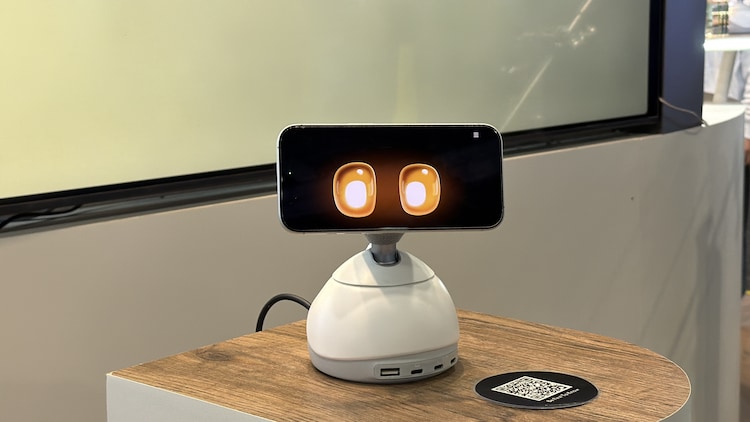
While not cutting edge, these robots were a gentle approach to lovable, friendly, and emotionally engaging companions, highlighting a future in which people could welcome robots not just for services, but for companionship and well-being. We think this year may see an influx of such affordable companion robots and this could disrupt the toy industry as well.
Chinese robots: a strong performance
This year’s CES also revealed an impressive presence of Chinese robot companies, which stood out for their ambition and uniqueness. Unitri Robotics brings its entire G1 robot lineup, featuring agile and balanced designs for both industrial and consumer markets. These robots took the internet by storm in 2025 and it was amazing to see these machines working live.

EngineAI’s humanoids, often featured in dynamic demos (including simulated battles and autonomous navigation), added a touch of performance flair and engineering confidence. The robot seemed to be a more sophisticated version of the G1, standing at about 5 feet tall and wowing the audience at the booth.

The widespread perception was that Chinese companies were investing heavily in robots, advancing capabilities in design and innovation that worried rival companies in the US. Whether this momentum will translate into global market leadership depends on commercialization, but the pace of innovation was unambiguous. I would not be surprised if China dominates the commercial robot market in the coming years.
Robots are evolving, but not there yet
The new atlas is here! Perhaps the most headline-grabbing moment of CES 2026 was the live public debut of Boston Dynamics’ next-generation humanoid robot, Atlas. After years of research publicity, the production-ready Atlas was shown walking, balancing, with a fluid gait that distinguished it from earlier concept robots.
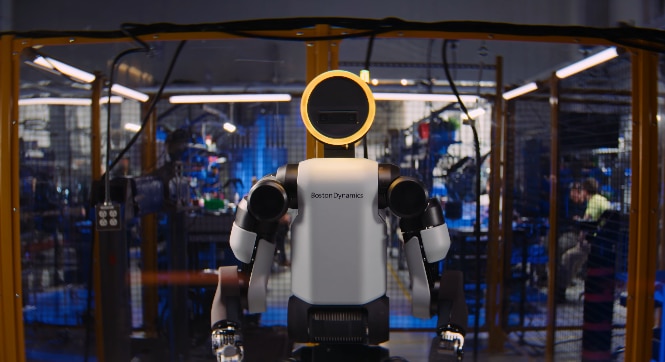
The Atlas series has been the benchmark for advancements in robotics and this year’s robots with extended functionality mark a milestone in the evolution of robotics, showing that rather than simply being the stars of stage demos, such robots are now being designed with specific roles in manufacturing and logistics.
However, the idea that these robots will soon come to your homes is far-fetched. We still need a lot of work and collective data to ensure that such robots are safe to walk among humans in open environments. It’s a sentiment that’s echoed across the industry.
broader human perspective
In addition to Atlas, other humanoid players included Realbotics, an American company, which displayed 3 robots at their booth and which were the most human-looking prototypes I saw at the event. I even chatted with one of the robots, which honestly looked like an unfinished rendering rather than a finished product.

Despite improvements, the consensus was clear: while humanoids have made great strides, they are still not ready for widespread consumer use. Challenges remain in autonomous decision making, movement in uncontrolled environments, safety and cost. Even robots that can kick or dance in demos still struggle with simple real-world tasks like picking up clutter or operating household spaces reliably.

What about quadrupedal and mobile robots?
While humanoids captivated the imagination, practical robots with immediate applications emerged, particularly in service, logistics, and industrial roles.
Four-legged robots, such as Unitri’s quadruped, are constantly evolving, providing improved agility and payload capabilities. These platforms are ideally suited for tasks such as inspection, remote monitoring and rough terrain navigation in environments where wheeled robots struggle.
Other mobile robots such as autonomous delivery bots, warehouse assistants, and maintenance robots show that these machines are already solving real problems in logistics and facility management.
Tesla absent on the grandest stage
One observation that was echoed repeatedly on the show floor was the absence of the Optimus robot by Tesla. At an event where there were robots everywhere, Tesla’s omission from showcasing its technology was noticeable, leading to speculation that it missed a chance to confirm leadership in the field.
Whether this signals a strategic shift or simply a scheduling decision is unclear, but for attendees focused on robotics trends, it was a noticeable absence.
Where are the robots going?
The excitement at CES 2026 created a strong sense that robots will enter everyday life in the next few years, not as human companions but as purpose-built machines such as:
- Robot vacuums and stair-climbing cleaners.
- Lawn mowers and outdoor maintenance robots.
- Distribution and Logistics Assistant.
- home automation assistant
These robots are already in the early stages of commercialization, with realistic paths to market in 2026 and 2027.
Over the next 5-10 years, we may see robots with greater situational awareness, whether as advanced home assistants or as collaborative units in workplaces. So, will we see robots walking on the streets in 2026? Seems impossible.
Humanoid robots like Atlas point to a future of human-robot collaboration, where robots assist in manufacturing, logistics, health care, and potentially in our homes. But it was clear from CES 2026 that this approach is still unfolding; Solid progress is being made, but mainstream adoption is still a few years away.
However, robotics is no longer a subplot. Rather, it is firmly in the spotlight, and 2026 may be remembered as the year when robots transitioned from sci-fi demo to serious reality.