


Google DeepMind chief says AI development may soon reach tipping point, here’s why
Artificial Intelligence is developing rapidly, companies like Google and Anthropic keep bringing more advanced models from time to time. However, Google DeepMind CEO Demis Hassabis warns that one factor could block all this growth.
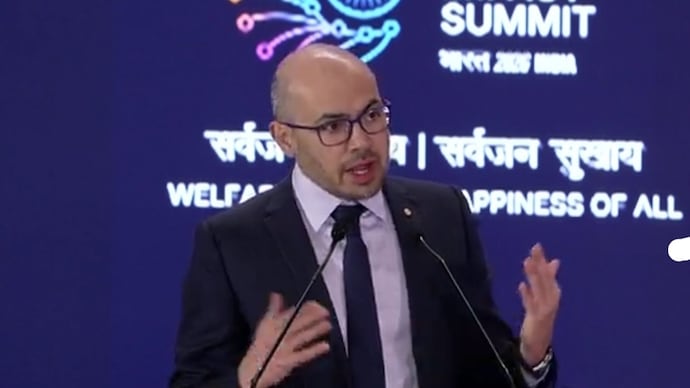

It’s 2026 and artificial intelligence (AI) models are better than ever. Google recently released Gemini 3.1 Pro, its most advanced model to date, which even outperforms Anthropic’s Cloud Opus 4.6 in some benchmarks. However, Google DeepMind CEO Demis Hassabis believes that this rapid growth may be stalled due to one factor – memory.
In recent weeks, we’ve heard talk about memory loss. AI data centers require thousands of GPUs and computing power to run AI models. This has created a shortage in supply, causing prices of various electronics, including smartphones, to skyrocket.
❮❯
Demis Hassabis says AI may reach tipping point
Hassabis expressed concern that this shortage in the supply of memory chips could become a major obstacle to AI progress. “You need a lot of chips to be able to experiment on a large scale on new ideas so you can actually see whether they’re going to work or not,” he told CNBC. The Google DeepMind chief described it as a potential “choke point”.
Earlier, Meta CEO Mark Zuckerberg had said that AI researchers want “the maximum number of chips possible.”
At a time when AI companies are pursuing larger models and greater computational power, constraints on memory chip supply are creating significant headwinds for the industry as a whole.

Google also suffers from this deficiency
Google makes its own Tensor Processing Unit (TPU) and has the advantage of proprietary chip designs, which helps reduce its reliance on third-party suppliers like Nvidia. However, Hassabis stressed that the company also faced a problem. “In the end, it really depends on some suppliers of some key components,” he said.
Demis Hassabis even claimed that Google was constrained to a point where it couldn’t actually keep up with demand for its Gemini models.
This memory crisis has forced companies like Google and Microsoft to send officials to South Korea in an effort to secure more supply. There are three major players in memory chip production in the world – Samsung, Micron and SK Hynix. Micron has announced plans to stop producing chips for personal electronics to focus on AI chip production.
Industry forecasts suggest the chip shortage is unlikely to ease any time soon. Google recently revealed plans for significant capital spending on AI infrastructure, estimating spending of $175 billion to $185 billion for 2026, as it prepares for further growth in this area.