



Frankenstein review: Guillermo del Toro injects soul into monster story
Guillermo del Toro’s ‘Frankenstein’ is a haunting reimagining of the classic that brings together science and sadness. Starring Oscar Isaac and Jacob Elordi, it trades horror for humanity, exploring the love, loneliness and fragile hearts that define us all.
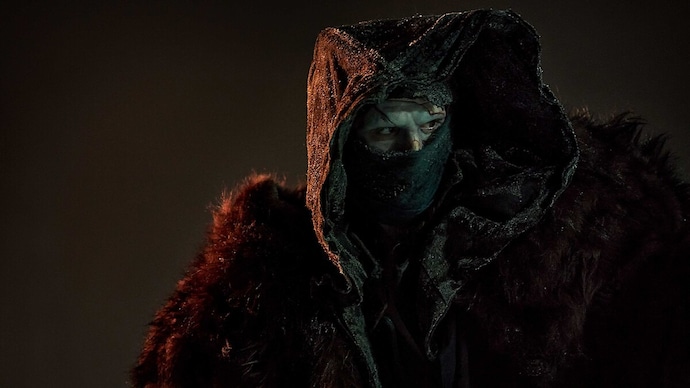

If you remember reading Mary Shelley’s Frankenstein in your school or college days, Guillermo del Toro’s new adaptation will feel like revisiting an old nightmare, only this time, it is told with quiet beauty and unexpected compassion. Del Toro’s ‘Frankenstein’ isn’t your typical tale of thunder, graves and terror. It’s a haunting reimagining of the classic, a film that replaces horror with heartbreak and spectacle with soul.
Del Toro, who has long toyed with the story’s myth, finally delivers his most personal film to date. One that beats not with the rage of a demon, but with the pain of loneliness and lost love. Set in a world of candlelight and sorrow, it is a haunting story about creation, cruelty, and the need for understanding. Led by Oscar Isaac and Jacob Elordi, this ‘Frankenstein’ doesn’t just raise the dead – it revives the human heart.
The two-hour-thirty-minute film unfolds like a stage play of science and farce. Victor Frankenstein (Oscar Isaac) faces a tribunal where his daring experiments are both praised and condemned.
From there, del Toro defies easy answers, creating a story that feels like a moral stage play. He fills it with powerful moments – a dazzling display of science that turns to pride, a brief attempt at kindness that turns to betrayal, and a scene where the creature steps into the sunlight only to be faced with fear and violence. These moments form the heart of the film, showing that del Toro’s ‘Frankenstein’ is not about monsters in the dark, but about the monsters within us. Del Toro balances the story between the creator and his creation, giving the film moral depth.
Oscar Isaac plays Victor as a mix of brilliant scientist, proud showman, and wounded son. Her discoveries seem like grand accomplishments, but underneath, they come from a need to escape her painful past. In the tribunal scene, where his pride and defiance take center stage, we see not only a scientist on trial, but also a man traumatized by loss. This makes his rejection of the creature even more tragic – he is trying to rebuild a broken family, but when his creation does not meet his idea of perfection, he becomes cruel. Isaac beautifully depicts Victor’s contradictions: a man pursuing greatness while failing in love.
Jacob Elordi’s creature is the film’s biggest revelation. Hidden beneath elaborate prosthetics, he brings both quiet intelligence and deep sadness to the role. In early scenes, we see him exploring simple human things – reaching out a hand, feeling water, trying to read a face – and it’s impossible not to see him as more than a monster. His heartfelt prayer for “a home, a companion, a grave” expresses in a few words all that he desired.
Del Toro handles these moments with tenderness: every time the creature tries to connect, it is met with fear or cruelty, and every rejection makes its pain feel overwhelming. Elordi’s performance is amazing not only in its physicality but also in its emotion. Every glance and gesture speaks of a being that only wants to connect with him.

Mia Goth as Elizabeth provides human tenderness to the film – combining its dark themes with a quiet humanity. Her calm presence contrasts beautifully with Victor’s restless energy and the creature’s aching vulnerability. In the simpler moments, she gives the story a touch of tenderness that feels genuine. Through him, del Toro reminds us that beyond all the grand experiments and moral questions, the heart of Frankenstein is something very simple: the need for kindness.
Visually, the film is quintessential del Toro: rich, detailed, and full of texture. The set designs – gears, copper tubing, damp stone corridors – speak of a world where invention flirts with decay. If the film falters, it is because of its slow pace. The first half takes time to build up mood and detail, which may test the patience of some viewers.
But this chaotic rhythm also allows emotions to build quietly. So when the creature’s confusion eventually turns to anger, it feels natural, not rushed. In the final act, del Toro avoids overt drama, instead turning the story into a heartbreaking portrait of a broken bond – a creator and his creation trapped in the same cycle of pain.
Del Toro’s ‘Frankenstein’ doesn’t try to answer who the real monster is, but instead makes you realize why the question still matters. With performances that alternate between the gorgeous and the deeply personal, and scenes that bring together beauty and decay, the film shows that the true horror lies not in stitched flesh but in the lack of compassion. It demands patience, but rewards it with quiet strength.
‘Frankenstein’ is now streaming on Netflix.