



Explained: How Taj Story Poster Row saw the Taj Mahal controversy again
Following the poster of Paresh Rawal’s ‘The Taj Story’, the origin of the Taj Mahal instigated the latest debate, depicting a Shiva idol inside the memorial. Here is why the poster is increasing the storm.
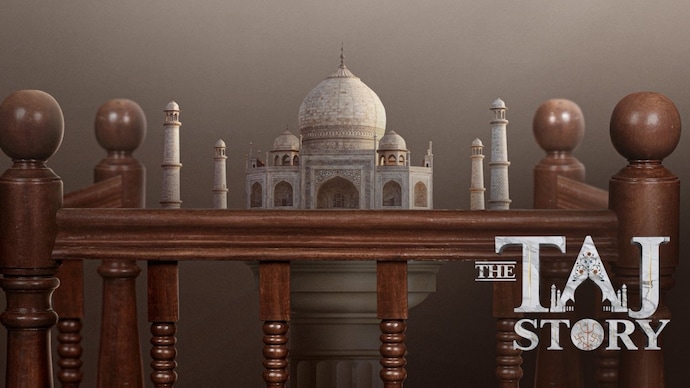

The Taj Mahal has been a matter of debate for a long time. While it is often observed as a symbol of love, claims have been revealed for years, suggesting that the iconic monument was originally a Shiva temple.
In 2018, the Archaeological Survey of India (ASI) filed an affidavit, stating that the Taj Mahal is the tomb of Mughal Emperor Shahjan and his wife Mumtaz Mahal. This was expected to end the dispute. However, posters of the upcoming film ‘The Taj Story’, have been set to release in October, 2025, dismissed the controversy.
What did the latest backlash incite?
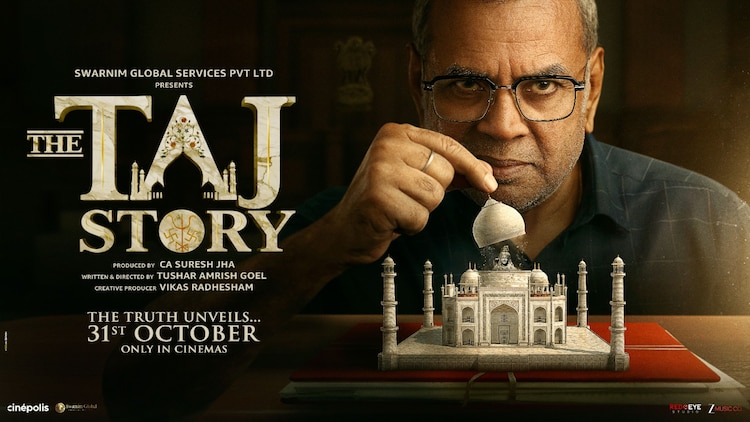
The recent film shared by actor Paresh Rawal on social media shows a Lord Shiva idol from inside the dome of the Taj Mahal. This scene has widely criticized a part of social media. After backlash, Rawal removed the post and released a statement from the film’s makers and clarified his position.
Here’s the poster:
Film makers response
The production team of ‘The Taj Story’ issued a disclaimer on September 30, saying, “The film’s producer The Taj Story makes it clear that the film does not deal with any religious matters, nor claims that a Shiva temple remains within the Taj Mahal.
Origin of Shiva temple claim
The claim that the Taj Mahal stands at a place where a Shiva temple was originally standing, sometimes called ‘Tejo Mahalya’, has been operated over the years, often fuel by viral WhatsApp forward and social media posts. Most of the controversy have returned to a book by self-style historians PN Oak, who argued that an old monument was built by the Hindu ruler Jai Singh long before the Mughals.
Since the publication of the book, this dispute increases its head again and again.
Political voices and renewed claims
The Taj Mahal, commissioned by Shah Jahn in the 17th century, has often been at the center of such debates. In recent years, many BJP leaders have publicly questioned the origin of the monument:
In 2022, Rajneesh Singh filed a petition demanding a fact-khoj panel to examine the history of the Taj Mahal and investigate 22 seal rooms for Hindu sculptures.
The first claims were made by Kapil Mishra in 2020 and Vinay Katiyar in 2017.
In 2022, Dia Kumari, BJP MP from the Jaipur royal family, also claimed that the land on which the Taj Mahal is standing was of its ancestors.

William delerimple distinguished theory as ‘malicious nonsense’
As the debate intensifies around the upcoming film ‘The Taj Story’, many people assuming that the Taj Mahal was once a Shiva temple, the notes said that historians have stepped down to clarify the facts.
Historian William Delimple, especially speaking to India, completely rejected the claim.
Dalrymple stated that the historical record around the construction of the Taj Mahal is well documented. “We know the details of the land that was built the Taj and there is no record of which there is a Shiva temple. We also have all the details of the construction of the Taj by Shah Jahhan, know the name of the architect and have reliable eyewitness details of its construction.”
He further criticized the origin of theory, traced it back to PN Oak, whose claims have been widely debated. “Nobody should be fooled by this nonsense, first dreamed by Ludikrus PN Oak, who also suggested that Argentina was originally named Arjun Tina and Salisbury Shiv Puri.
Historian Ruchika Sharma also criticized the filmmakers of ‘The Taj Story’ on Instagram. He wrote, “Sadly, he has made a film on the fake myth of Tejo Mahalya, as the video has zero historical evidence.”
He rejected Tejo Mahalya Siddhant and shared that it was first proposed in his book in 1989 by PN Oak, where he claimed that the Taj Mahal was originally a Hindu temple in the fourth century. However, when historians challenged this, they argued that the technique for such architecture was no one in the fourth century, they withdrew their claim.