





Economy of outrage: The math and psychology behind Bollywood’s negative PR surge
As the line between organic reaction and manufactured outrage continues to blur, Bollywood is facing a new era of negative PR. Low-cost memes and algorithmic cycles now shape public perception faster than trailers, leaving actors to navigate a digital landscape where reputations are often engineered.



There was a time when scandals in Bollywood used to come with planning. A leaked romance would emerge just before release, a dramatic fallout would dominate glossy covers for a week, and even the outrage over it had subsided. The Internet has not only changed that rhythm, but has completely erased it.
Today, controversy no longer waits for a publicist’s approval or a magazine’s print cycle. A meme emerges in the morning, becomes discourse by afternoon and by evening it transforms into public perception. Amidst the fan wars, anonymous troll accounts, fury-four tweets and suspiciously synchronized meme drops, Bollywood discovered a new publicity language – a language where negativity spreads faster than any carefully cut trailer.
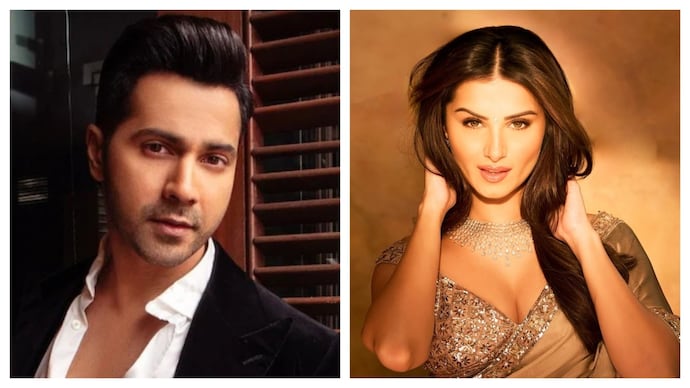
And in recent months, actors like Kartik Aaryan, Varun Dhawan, Tara Sutaria and even Arjun Kapoor found themselves stuck in a constant trolling loop. Nationwide memeification has forced the industry to confront an uncomfortable question: Is this chaos organic, or is someone quietly making noise? India Today decided to delve deeper into the mechanisms of negative PR.
What’s in trend?
Monk Entertainment’s talent manager Ayush Tiwari sees this not as a conspiracy but as a pattern. Sitting alongside the phenomenon as an observer of the industry and as a regular audience member, scrolling through the same timelines as everyone else, he presents negative PR less as a sinister invention and more as the latest social media trend cycle — intense, concise, and always hungry for replacement. “A new trend comes in, people move on, people want some new buzz in life. I look at it like little episodes of whatever is happening,” he tells us, almost shrugging at the predictability of it all.
But what feels like routine is also fundamentally different from the past. Earlier, creating stories took time; Now they are assembled in real time. Ayush highlighted how campaigns, whether organic or not, are now integrated into everyday scrolling. He says, “Since social media has become a tight platform. So, a lot of stories are promoted through memes, people plan their campaigns around it.”
business module
That plan is what actually makes the present moment unstable. Because for the average viewer, the line between genuine reaction and manufactured outrage has almost disappeared. By the time one stops and questions its authenticity, the story has done its damage. “You don’t know which part or parcel of PR is actually true or fabricated because once it goes on the internet, it causes harm,” says Ayush.
And damage to this ecosystem doesn’t require a massive budget. In fact, one of the most shocking truths insiders quietly admit is how little money it can take to bring something to visibility. Industry experts say even a few hundred rupees per post can start a chain reaction. This seems absurd in an industry where crores are spent on film promotion, but scale on the internet is not bought through grand gestures alone. It is pushed into motion through repetition: small movements that trigger much larger organic waves.
Cultural researcher Balram Vishwakarma describes a complex web of agencies, sub-agencies, and what he generically calls “delivery managers” – people whose job is less about publicity in the traditional sense and more about spreading narrative. He says, “From bots that boost the visibility of meme pages willing to post for surprisingly small sums, the infrastructure of amplification is both organized and cheap. Twitter trends can be whipped into existence for just a few thousand bucks. Fan clubs can be mobilized with modest payments. Entire online feuds, especially in the reality-show ecosystem, may not be as seamless as they seem.”
good attention, bad attention
He also outright rejects the obvious notion – that all publicity is good publicity. Digital medium experts also mention how a negative trend can cause actors and content creators to lose brands and work, especially on the digital medium. He says that in the new economics of fame, the celebrity ecosystem runs as much on endorsements and brand protection as it does on the box office: “Continued negativity not only hurts sentiments; it also jeopardizes revenues. Casting rooms become alert. Campaigns quietly move elsewhere. The algorithm may reward outrage, but advertisers never do.”


However, Balram believes that some meme waves, including the recent one involving Varun Dhawan, seem less like fabricated stories and more like the unexpected humor of online culture colliding with celebrity image. He says actors at the top often amass not only fans but also dedicated haters, communities based on admiration as well as opposition. In that environment, negativity can perpetuate itself without spending a single rupee.
psychology aspect of it
Sometimes the conversation shifts from strategy to psychology. Because while audiences debate authenticity, the people at the center of these storms are still human beings. Ayush does not hesitate when asked about mental problems. “100% it affects them. Even when you know that, maybe it’s fabricated, it still has an impact. After 5% inorganic push, there’s 95% organic pull. In a normal day, a hate comment can sometimes boggle the mind. So if something that’s becoming a national news story, it really makes an impact.”
Which returns to the most troubling truth both professionals, in very different ways, indicate: Negative PR today is not a single phenomenon. This is a spectrum. At one end is deliberate manipulation, and at the other end is pure algorithmic behavior – where repetition turns jokes into judgments and visibility gets mistaken for consensus.
Bollywood, an industry that has always known how to attract attention, now finds itself inside an attention mechanism much bigger than its own publicity playbook. Where a meme can outlive a movie, a trolling cycle can shape perception more powerfully than a performance, and reputation can fluctuate by the hour.