





Doctors say
A new AI-operated stethoscope developed in Britain can detect heart failure, atrium fibrillation and heart valve disease in only 15 seconds. Researchers say that the device may change early diagnosis and treatment.

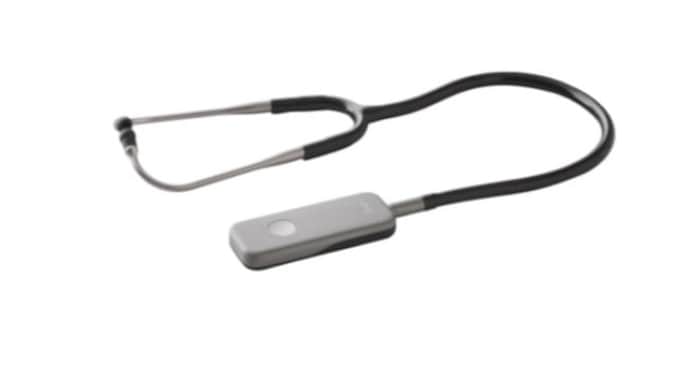


For decades, stethoscope has been a reliable tool of doctors, which helps them to hear heart sounds to diagnose the disease. Nevertheless, in all these years, this piece of medical devices has not seen much changes. Now, however, AI is changing everything and even giving a major upgrade to this humble stethoscope. Researchers in the UK now have a new AI-competent stethoscope that can detect three serious heart conditions in 15 seconds.
It has been developed by the new AI-in-operated stethoscope US-based EKO Health and tested by researchers at Imperial College London and Imperial College Healthcare NHS Trust. The device combines traditional hearing with modern computing power. In contrast to its 19th century anterior, which was invented in 1816 and depends on the ear of the doctor, this AI stethoscope uses a microphone to take the heartbeat and subtle changes in the bloodstream that is inaccessible to humans. At the same time, it records a quick electrocardiogram (ECG) (through the British Heart Foundation) by measuring the electrical signals from the heart (through the British Heart Foundation).
The data collected is then safely uploaded to the cloud, where thousands of patients analyze the trained algorithm results at tens of records. Within seconds, the system may flagged whether a patient is at risk of heart failure, atrium fibrillation – an irregular heartbeat that causes stroke risk – or heart valve disease. A test result is sent directly to a smartphone, allowing GPS to work immediately.
The study now included more than 200 GP surgery in London using this AI-steroscope, a Tricarder, which covered a patient population of about 1.5 million people. Overall, more than 12,700 patients such as breath, fatigue, or leg swelling were examined using an AI device, and their results were compared to surgery patients, who were not using the equipment.
And the results were impressive. Doctors revealed that patients who were evaluated with the AI Stthoscope were likely to be 2.3 times more with heart failure, 3.5 times more atrial fibrillation is likely to be diagnosed, and is almost likely to double with heart valve disease within 12 months.
According to doctors, such innovations are important because heart failure often reveals only patients only after being taken to the hospital in an emergency. They throw light on the fact that half of these patients had earlier symptoms that could be taken in primary care. Finding earlier problems means that patients may be prescribed drugs and treatments before their condition deteriorates.


However, doctors may take time to adopt it completely. Despite the promising results, the rollout is facing obstacles. The study found that about 70 percent of GP practices stopped using devices, or sometimes used them after a year. Researchers say that integration and additional training in existing workflows will be important if technology has to become mainstream.
There is also an issue of false positivity. There was no position when there was further tests when there was potentially heart failure as about two-thirds of patients flagged by the device. Although this can cause unnecessary anxiety and additional tests for some, researchers argue that it is still better for missing cases that will go otherwise inadvertently.