



Cursor CEO says AI vibe coding is not good coding, soon everything will start going bad
Cursor CEO Michael Truel has expressed skepticism towards “vibe coding”, a method of AI-assisted programming. He cautioned that excessive reliance on AI to write code could weaken the foundation of software systems.
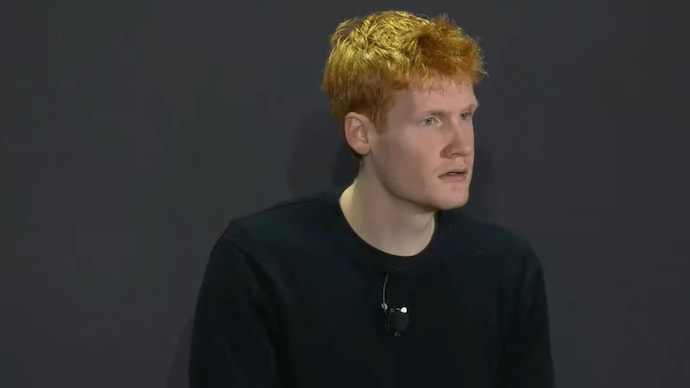

Ever since artificial intelligence became popular in the coding world, a new trend has taken hold among developers: vibe coding. The idea is that you can simply describe what you want and let the AI build the software from start to finish. For many software engineers, this seems simple, productive, and effective, as they can generate large blocks of code without actively writing or reviewing each line closely. However, regardless of how much AI is helping with code creation, it may not be a good idea to rely solely on this approach. This warning is coming from the CEO of Cursor, who suggests that vibe coding can be a risky habit and can cause serious problems over time.
Speaking at the Fortune Brainstorm AI conference earlier this month, Cursor co-founder and CEO Michael Truel warned that over-reliance on AI-generated code could weaken the foundation of software projects. As systems get larger and more complex, those weaknesses could eventually cause everything to “fall apart,” he said.
Truel explained how programming has evolved over the past decade. He explained that previously, developers spent most of their time manually writing and reviewing lines of code inside text editors. However, with generative AI, that process has changed. Engineers can now step back and ask AI tools to handle entire tasks, from writing tasks to refactoring large chunks of code. This change has undoubtedly made development faster and more accessible, especially for newcomers.
However, Truel cautioned that holding back too much creates blind spots. “”If you were coding vibes, you would close your eyes and just build a house. You won’t check the foundation, you won’t look under the floorboards, and you won’t look at the wires,” he said.
Using a construction analogy, Truel explained that vibe coding is like building a house without checking the foundation, wiring or structural support. “If you close your eyes and don’t look at the code and when you add another floor, and another floor, and another floor, and another floor, and another floor, you have AI building things with unstable foundations, things start to fall apart,” Truell explained.

That approach may be acceptable for small prototypes, hobby projects or quick demos, Truel said. But this becomes dangerous when applied to serious, large-scale software. As new features are added on top of poorly understood code, the risk multiplies. Each additional layer increases the chance of hidden flaws being exposed, making systems fragile that are difficult to maintain or fix.
Interestingly, the CEO’s warning is particularly impactful given the cursor’s own rapid rise. Founded in 2022, Cursor integrates AI directly into the development environment, helping engineers generate code, debug issues, and move forward faster. This tool is now used by professional engineering teams working on complex, high-risk projects, including enterprise software and infrastructure systems. Cursor has grown rapidly, reaching over one million daily users and a billion-dollar business.