



AR Rahman blames Bollywood for his decline, but films post-2015 have damaged his legacy too
In a recent interview, AR Rahman blamed non-constructive regime change and communal whispers for his recent Bollywood slump. The truth is that his failures after 2015 contributed to his downfall.
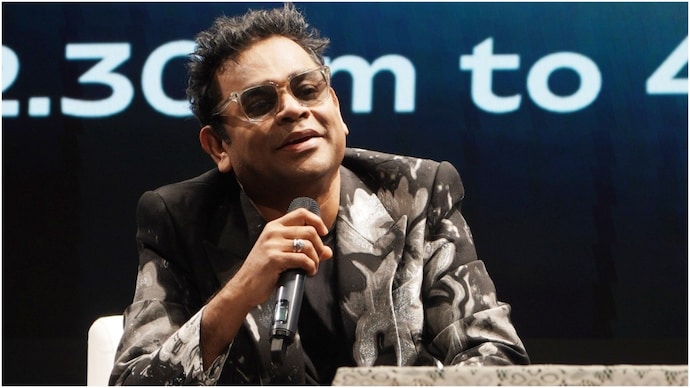

AR Rahman is the best thing to happen in Hindi cinema after Amitabh Bachchan. Not as an actor, but as a sound architect who changed the DNA of Indian film music.
Like Bachchan in the 1970s, from 1992 to 2015, Rahman’s name on an album was a seal of inevitability: the music would define a generation, the songs would become cultural anthems, and the film would have a fighting chance solely because of his involvement.
When Rahman recently revealed that he has faced a significant decline in Bollywood work over the last eight years due to the change in power, where non-creative people now control the decisions, it was not just a personal lament, it was an indictment of an industry.
But here’s an inconvenient truth that needs to be said: Rahman is also complicit in his Bollywood downfall. His post-pageant (2015) Work in Bollywood has been surprisingly inconsistent, and much of it forgettable.
a star is born
Before Rahman, Hindi film music was predictable and pirated. Musicians like Anu Malik, Anand Milind, Viju Shah shamelessly snatched music not only from across the world but also from maestros like Ilaiah Raja.
The irony is that by stealing Rahman’s creations, Bollywood reached its lowest point. For gentleMalik removed Rahman’s original Tamil soundtrack, rejecting allegations of plagiarism by saying: Why can’t two great men think alike?
with RozaThe entire sound landscape of India suddenly changed. For the next two decades, Rahman’s name on the album was a cultural guarantee: the music would dominate broadcasts, the songs would be played on loop in every home, taxi and wedding, and the film would have an automatic profit at the box office.
His compositions became the soundtrack of people’s lives: first dates, road trips, heartbreaks, patriotic moments. From Bombay To from the heartFrom rent To rockstar, Rehman He not only made hit films, he also made memories. Each album was an event, each release a national celebration.
And then he left Bollywood without actually leaving Bollywood.
Sunset Boulevard
Let’s do an honest audit of his Hindi work since 2015. After the success of RaanjhanaaRahman made a useless call mohenjodaro. It was literally a pile of dead songs: widely publicized, generic, dated – ineffective chaos.
Around the same time, he recycled his own work ok darlingremake of okay Kanmani. The music was pleasant but forgettable.
There came a time in Bachchan’s career when even die-hard fans of the first-day-first show (like this writer) stopped watching his films and then started liking his films. red king embarrassing. For Rahman’s loyalists, that phase began after his post-pageant Descent into mediocrity.
heropanti 2was a complete disaster, his red king Moment. Even Rahman’s die-hard fans couldn’t defend this mess give up, watery And whatever he added to the album.
amar singh bright There was a kind of redemption. Of the rest? Forgettable.
Let’s be honest: which of Rahman’s post-2015 Bollywood albums do you actually remember? Can’t do it? Most people can’t even do it.
twin trough
In his recent interview, Rahman blamed corporate takeovers and multi-composer albums for his lack of opportunities. He also hinted at being an outsider and communal whispers.

These are all legitimate systemic issues that have plagued Hindi film music. But they don’t explain his decline, his inability to consistently deliver magic. Does not explain why he wrote such works heropanti 2and why 99 songsHis passion project, a complete failure. Perhaps the problem is not just Bollywood.
southern excellence
Despite a significant decline in Hindi cinema, Rahman’s South Indian work continues to be excellent. For example, Ponniyin Selvan I and II (2022-2023) was a masterclass. Epic, layered, instantly iconic. The real difference? In the South, Rahman still works with directors who challenge him, and projects that are prestigious. In Bollywood, he is taking up low paying jobs (heropanti 2) and vanity projects (99 songs).
The Rahman of the 1990s and 2000s was tireless. He worked on five to six films a year, experimented constantly, collaborated obsessively with lyricists and singers and treated every project as a chance to do something new.
Rahman of 2016-2024? He is selective to the point of invisibility in Bollywood, and when he comes, it is often half-baked.
Rahman’s decline reflects the creative decline of Bollywood. Once a factory of evergreen hits, the industry is now awash in formulaic noise: multi-composer mishmashes, playlist-friendly snippets of entire songs, and soulless remakes chasing virality. Corporate suits prioritize algorithms and streaming metrics over artistry.
The tragedy is not that Bollywood rejected Rahman. The tragedy is that Rehman first half-heartedly rejected Bollywood and then, when he moved on, blamed the industry.
we yearn to return
Bachchan did not fade into irrelevance; He reinvented himself from thoughtful anti-hero to elder statesman, proving that giants either adapt or die. Rahman has the talent to do that. But only if he gives up the half-measures and regains his fire, and starts composing the way he used to – from the heart.
Bollywood has suffered losses to itself, but its solution lies in the hands of Rahman. Will he emerge like the Mozart of Madras, or fade into a footnote of what could have been? Oh innocent bird, come home. The songs are waiting.