



Andhra King Taluka review: Ram Pothineni gives his strongest performance yet
Andhra King Taluka Movie Review: Andhra King Taluka captures the purity of fan devotion with heart and honesty, even if predictable writing and business choices keep it from being a truly great film.
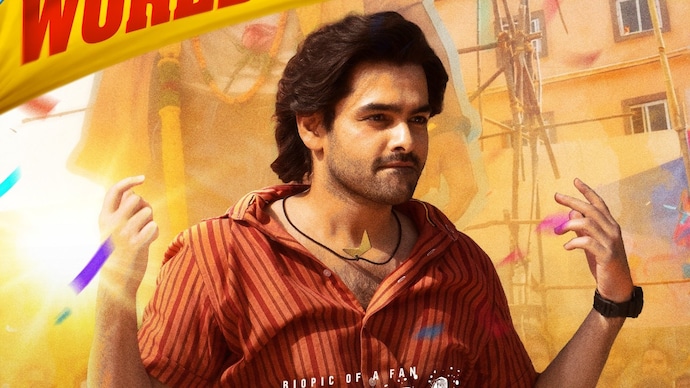

Cinema has often told stories about cinema: stardom, the glamor behind the lights, the chaos and triumph behind the scenes. But films about fans, their emotional makeup, the private worlds they create and the strength they get from the heroes they worship are rare. it is right here Andhra Raja Taluka To stand out. This doesn’t just show a fan; It believes in him. It treats his devotion not as comedy or exaggeration, but as something that shapes him, protects him, and sometimes even becomes the only sanity he knows.
Director P Mahesh Babu enters this world with surprising tenderness. He doesn’t poke fun at the fad or amplify it to broader effect. Instead, he tries to understand why someone begins to look to a star the way other people look to a guiding force. Why does a line from a movie become a mantra? Why does a poster become a comfort? The purity of that feeling becomes the film’s greatest strength.
The film begins in the 1990s, when superstar Suriya (Upendra) is struggling to complete his 100th film. The budget runs out, support disappears and the project stalls until a mysterious fan deposits three crore rupees. Surya’s journey to find this fan becomes a bridge in the life of Sagar (Ram Pothineni), a boy from a small island village in East Godavari.
Sagar grew up without electricity, proper education and amidst constant discrimination, but with a powerful presence: Surya’s cinema. His childhood panic attacks, his fears and the injustice around him melt away as he watches Surya fight, cry, love and rise again. It is not the hero that changes him, but the belief that such a person could exist and that someone like him could become something else. The film gets this right. The introduction scene, where Sagar saves the cut-out of his hero from falling, mirrors Suriya’s real-life struggles, reflecting thoughtful writing.
The scenes of Sagar’s childhood are the most impressive. The repeated panic attacks during the interval are staged with sensitivity. This is emotional writing, not clever writing, and Mahesh Babu deserves credit for that restraint.
Sagar’s love for Mahalakshmi (Bhagyashree Borse), daughter of the village theater owner Purushottam (Murli Sharma), also starts with great love. There is innocence in the way he looks at her, hesitation in her reaction, and insight in how Rao Ramesh interprets their dynamic through the beautifully written Ramayana context. Their dialogue in the temple scene is one of the standout moments of the film. It’s a reminder that rural drama can evoke timeless emotions with the simplest of words.
However, as the film progresses the love story becomes uneven. The initial setup is beautiful, but the finale relies heavily on familiar business tropes. The emotional potential is there, yet the writing simplifies rather than deepens it.
The film finds its central conflict when Sagar challenges Mahalakshmi’s father by promising to build a 70 mm theater in their small village. The villagers’ shaking hands, the quiet sacrifice, the collective longing: these are the moments where the film really shines. It’s slow, but it’s the kind of slowness that grows on you.
Ram Pothineni has given the best performance of his career. Her innocence feels believable, her emotional moments feel alive, and her passion never feels pretentious. For the first time in years, he disappears into a character rather than playing a variation of his screen persona.
Upendra brings dignity to Surya, playing him with the grace of a man who understands the responsibility of being a hero. His hero-fan formula is one of the most effective elements of the film. Bhagyashree Borse is charming in her romantic parts, and Rao Ramesh shines in his every scene.
For all its honesty, Andhra Raja Taluka Comes with noticeable flaws. The pace is uneven, especially in the first half. Rural conflicts follow predictable occupational patterns. The villain track is weak, and many of the challenges feel too convenient. In a setting like Lanka, inserting a flashy set song seems unnecessary. Some of the VFX moments are distracting and the cinematography doesn’t always match the emotional tone.
The way the pre-climax portions, especially Sagar’s resolution and the final moments involving Mahalakshmi have been handled, feel convenient. The rationale for the construction built around Mahalaxmi’s track is unconvincing. The struggles Sagar faces in making theater often seem too simple, which diminishes the weight of his emotional journey.

But the biggest drawback is predictability. You always know where the story is going, even when emotions are at play. The director is careful with the many subjects, touching everything on a surface level, and avoiding choices that could have added depth and complexity.
Here is the trailer:
Andhra Raja Taluka It’s not a perfect movie, but it is a deeply honest movie. It understands the emotional landscape of fans with clarity and affection. It celebrates the unspoken bond between a star and a fan without mocking or exaggerating it. It reminds you how cinema becomes a part of people’s lives in a way that can’t always be expressed.
The heart of the film is spot on, the acting is heartfelt and many scenes land with real emotion. Its shortcomings stem from predictable choices, not a lack of intention. For anyone who has ever looked up at a star and felt hope, comfort, or courage, Andhra Raja Taluka Will resonate.
3 out of 5 stars for Andhra Raja Taluka.