



AI takeover coming? AI could handle half of tech support cases in India by 2027, report warns
A recent study by Salesforce predicts that AI will handle 50 percent of India’s customer service cases by 2027. Despite security concerns, the report shows that many professionals are already using AI for higher job satisfaction and see it as a tool to handle routine tasks.
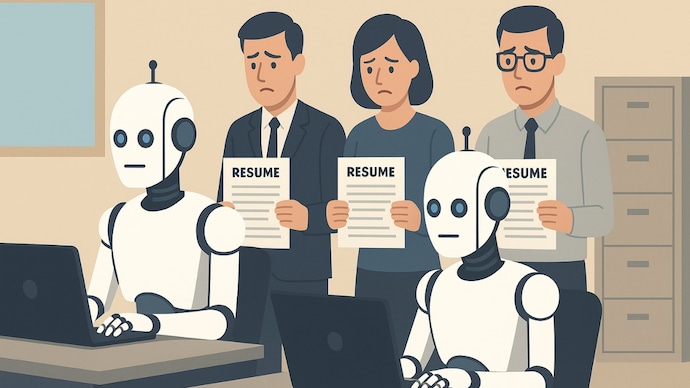

As artificial intelligence is becoming smarter day by day, the fear of it replacing human jobs is increasing. Researchers now warn that this change could come sooner than expected, and would disrupt markets around the world, including fast-growing markets like India. A new study from Salesforce shows that India’s tech support sector is headed for a major AI takeover, with 50 percent of all customer service cases in the country expected to be handled by artificial intelligence by 2027. Right now, service teams estimate that AI handles about 30 percent of support cases, and the report estimates that this adoption will almost double in just two years.
Salesforce recently revealed its State of Service report, which forecasts the growing acceptance of AI and its potential to replace the human workforce in the future. According to the report, AI has become the second biggest priority for Indian service leaders after improving customer experience. The report also points to the rise of “agent enterprises,” workplaces where AI agents work alongside human employees, increasingly becoming the norm in both startups and established companies.
According to the research, Indian service professionals expect AI to take over routine and repetitive tasks, allowing human agents to focus on more complex queries and higher-value interactions with customers. In other words, AI can handle the basics while humans can deal with complicated, emotional or decision-based matters.
The survey, conducted between April and June 2025, collected responses from 300 Indian service professionals. Of those who are already using AI in their roles, about 69 percent said they feel “very positive” about their career prospects. In comparison, only 12 percent of those who did not use AI felt the same way. Researchers say people who work with AI feel more confident as they are acquiring new skills, handling more strategic tasks and remaining relevant in an evolving job market.
Service teams using AI also expect to improve business. The report shows that the industry could see a 16 percent increase in upsell revenue along with better productivity, faster onboarding for new employees, and overall higher job satisfaction. Respondents also noted that AI helps reduce repetitive tasks and helps new team members get up to speed more quickly. These benefits of AI are especially evident in fast-moving sectors like fintech, logistics, and e-commerce.

Still, concerns remain. Nearly half of Indian service leaders admit that security risks have slowed or restricted their AI roll-outs. Others are concerned about accuracy and reliability as customer-facing AI becomes more embedded in everyday support tasks.
Despite this, trust in AI is not waning. Salesforce notes that many organizations now believe that AI can actually strengthen cybersecurity efforts. And importantly, 90 percent of Indian companies using voice-AI say the transition between AI agents and human employees is seamless, which is critical for customer trust. The report also notes that 44 percent of teams are already using multimodal AI capable of understanding text, voice, and images, indicating a shift toward more advanced AI tools.
Interestingly, Salesforce’s findings about AI’s potential takeover of human jobs are not isolated. They align with broader workplace trends. A separate 2025 study by AIResumeBuilder.com found that three in 10 companies globally plan to replace human roles with AI in 2026, especially in areas like customer support, administration and basic technical roles. Industries like IT, banking and retail are likely to see the most disruption.