


AI Impact Summit 2026: A closer look at India’s homegrown AI models
India is building its own foundational AI stack under the IndiaAI mission, developing models trained on local languages, domestic datasets and large-scale India use cases.

The Indian AI ecosystem has taken a giant leap forward as homegrown startups, policymakers and global leaders converge in New Delhi for the India AI Summit 2026. The summit brings together governments, industry leaders and startups to showcase the country’s rapidly growing AI ecosystem.
Earlier this year, IT Minister Ashwini Vaishnaw had commented on the launch of a stack of sovereign models at the AI Impact Summit. India Today identifies this and explores how each is driving India’s AI story.
The event is positioned as India’s largest platform to launch homegrown AI models. It showcased tools designed to work in multiple Indian languages and serve large populations simultaneously.
The summit is based on the national incentive under the IndiaAI Mission, a government-backed initiative that funds startups developing computing resources, research and indigenous foundation models. The mission focuses on AI systems trained on Indian datasets and languages, aiming to reduce dependency on global platforms.
As the Press Information Bureau reported, in July last year the government selected and funded four startups to develop India-specific AI models. These companies were tasked with building the foundational systems for large-scale language, voice, and enterprise AI applications. Sarvam AI, Socket AI, Gyani AI and Gun AI were selected to create India’s foundational AI models. These models are expected to be open source, enabling other startups to develop India-centric applications on top of them.
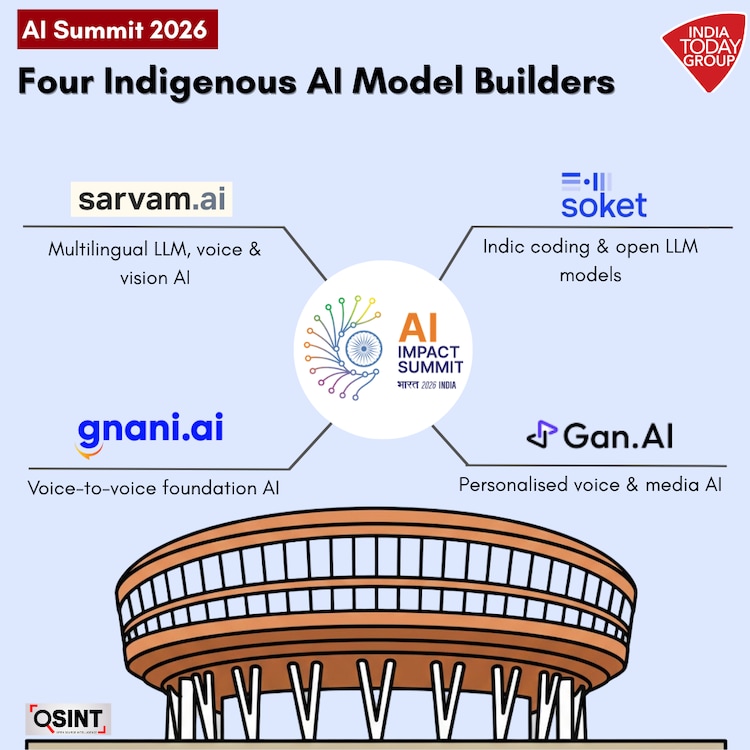
While the global race is dominated by familiar names – ChatGPT, Gemini, Grok, DeepSeek – India’s “sovereign model” pitch is trying to say one thing: the local context isn’t cool, it’s the product.
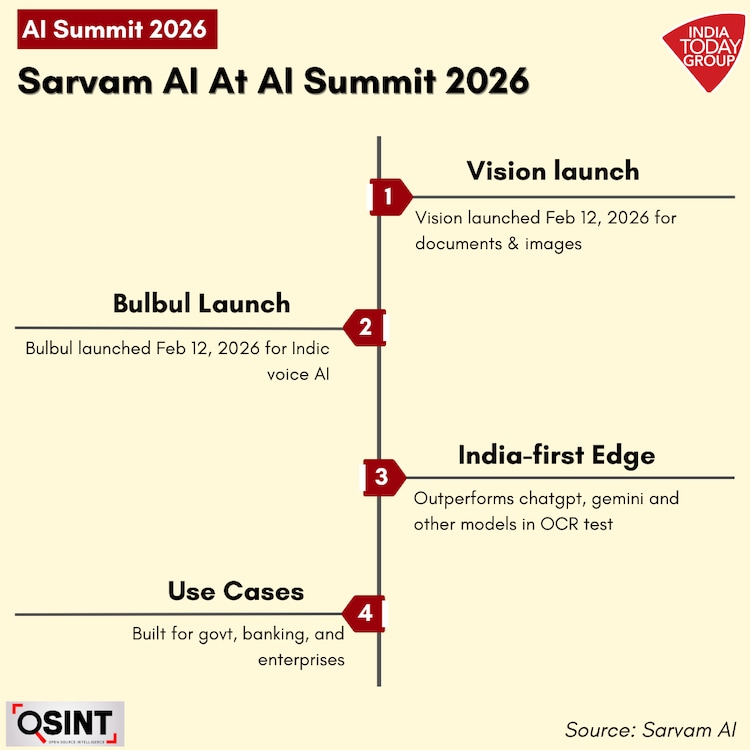
Sarvam AI is the toughest in that argument. Supported by the IndiaAI mission, it is building India-centric language and vision models, and claims that in side-by-side tests against larger global systems, its outputs appear more culturally aware, stable in Indian languages, and sharper on local facts. At the summit, Sarvam is expected to showcase its multimodal stack – showing not only what it can write, but also what it can do Look And understand in an India-first setting.
Socket AI is taking the debate in a different direction: CAN AI code Not just translations into Indian languages? Under the IndiaAI programme, it has developed the Eka language stack with support for 45+ languages, and is pursuing research that aims to make Hindi and regional language coding and reasoning more practical – a direct challenge to the English-first bias in most coding models.

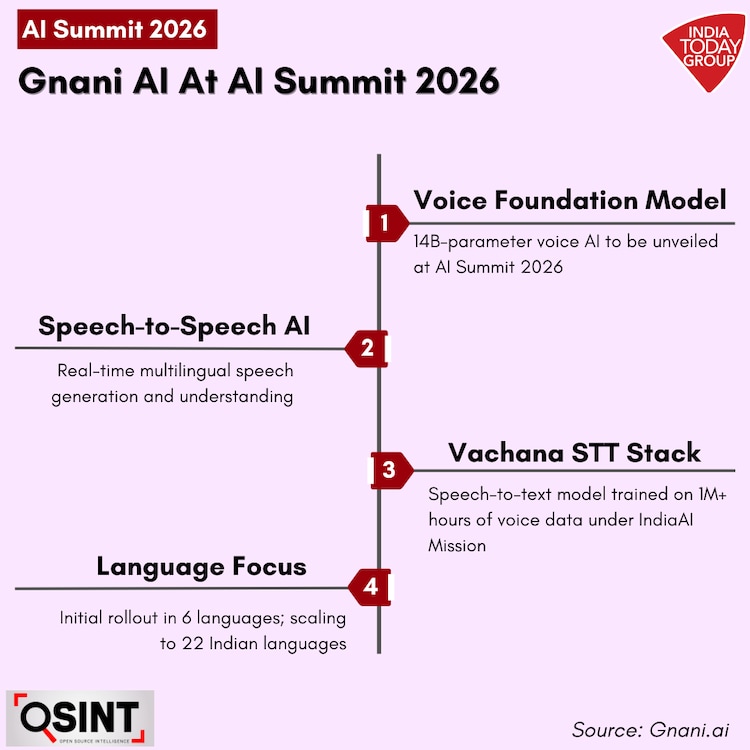
If Sarvam is about context and Socket is about capacity, then Gyan AI is about the one layer that global models in India are still struggling with: voice. It is building a voice-to-voice foundation model for real-time conversations across different dialects and accents – aimed at telecom, enterprise, and public-service use cases where a clunky voice bot is not only annoying, but unhelpful.

And then there’s GAN AI, which is focused less on “model warfare” and more on the delivery game — personalized voice and media systems, synthetic speech, and tools that can push multilingual content at scale. The promise is simple: If language is a barrier, voice and personalization are shortcuts – especially for enterprises trying to reach users beyond English and metro audiences.
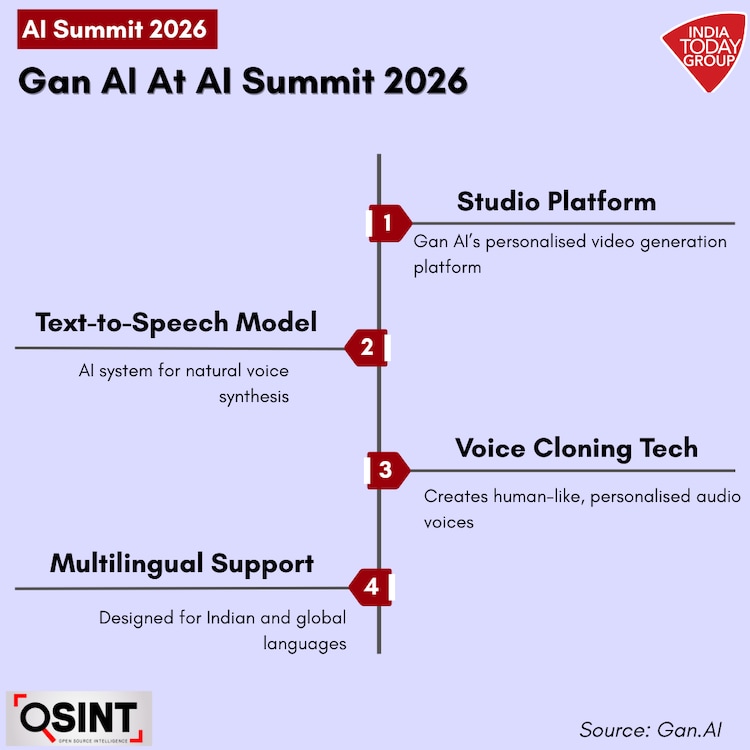
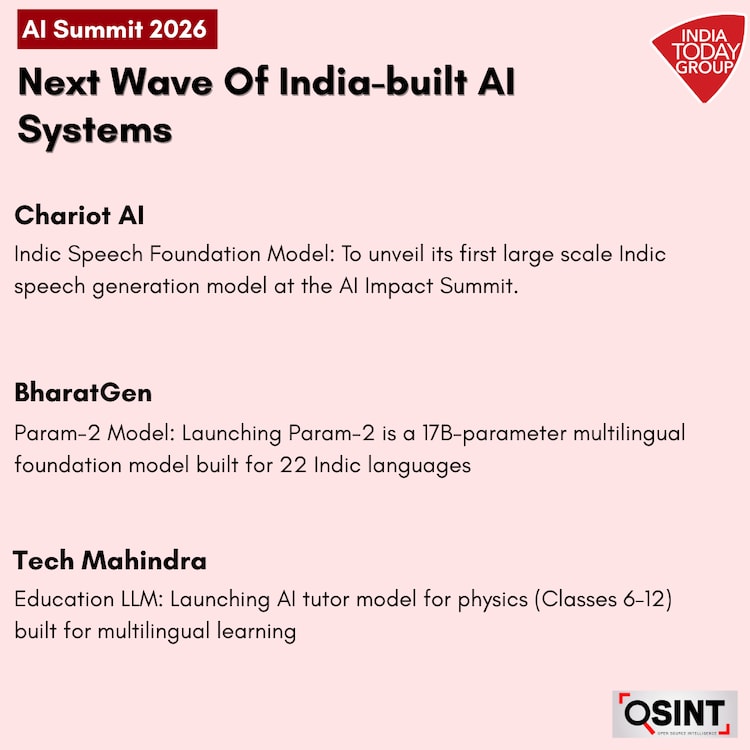
Apart from these leading startups, many other AI developers are also showcasing models at the summit. For example, BharatGen is introducing PARAM-2, a large multilingual model for Indic language applications.
Tech Mahindra is set to introduce an education-focused AI Tutor, designed to teach Physics to students in classes 6-12 through interactive, multilingual learning systems.
The summit is also seeing significant international participation. Government heads such as Prime Minister Narendra Modi and French President Emmanuel Macron will participate along with global tech executives including Sundar Pichai (CEO, Google/Alphabet), Sam Altman (CEO, OpenAI), Demis Hassabis (CEO, DeepMind) and leaders from Microsoft, Qualcomm, Anthropic and other leading AI firms. The gathering underlines India’s ambition to shape global AI governance while building domestic technical capacity.
As the summit begins today, it represents not just another tech gathering, but a milestone in India’s effort to establish a sovereign, multilingual AI ecosystem that is designed for its population and scalable for the world.